
the history of latino immigration with Dr. Steven Rosales.
Dr. Steven Rosales traces Latino immigration to Arkansas, exploring how labor demands, U.S. policy, and corporate expansion drew Latino workers to Northwest Arkansas and what it means for belonging today.
season 2, ep. 30.
listen.
episode notes.
For decades, Latino immigrants have come to the United States in search of stability, opportunity, and a better future. But what brought them specifically to Arkansas—and to Northwest Arkansas in particular? In this episode, we sit down with Dr. Steven Rosales, Associate Professor of History and Director of the Latin American and Latino Studies Program at the University of Arkansas, to trace the broader arc of Latino migration and the forces—economic, political, and corporate—that shaped where people went and why.
Dr. Rosales helps us understand how U.S. immigration policy has long oscillated between invitation and exclusion, welcoming Latino laborers in times of need and then pushing them out once their work is no longer deemed essential. We look at the Bracero Program, the emergence of right-to-work laws, and the rise of poultry and construction industries in the South—especially in Arkansas—as key to understanding why this region became a new gateway for Latino communities.
This conversation lays the groundwork for what comes next in our season, connecting labor, immigration, and corporate power to the deeper questions of who belongs and what it costs to stay.
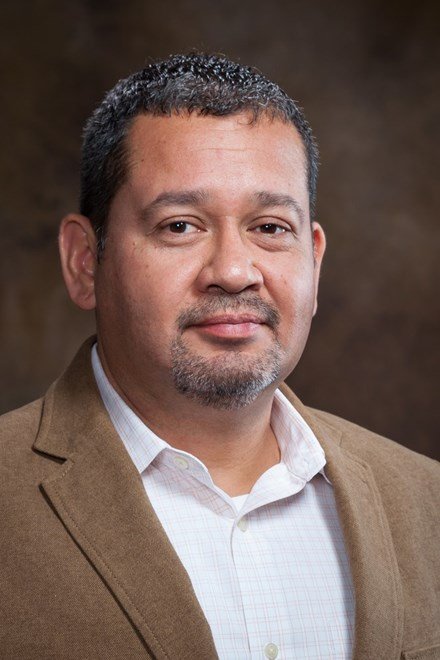
about Dr. Steven Rosales.
Dr. Steven Rosales received his Ph.D. in U.S. History from the University of California, Irvine in 2007. He is currently an associate professor in the Department of History at the University of Arkansas and the program director of Latin American and Latina/o Studies. His manuscript, Soldados Razos at War: Chicano Politics, Identity, and Masculinity in the U.S. Military from World War II to Vietnam, was published in 2017 with the University of Arizona Press.
His research and teaching interests include 19th and 20th Century US Immigration, Chicano/Latino History, Civil Rights Movements, Critical Men's Studies, War & Society, the US military, and oral history methodology. Dr. Rosales is also a mustang Lieutenant Commander in the U.S. Naval Reserve with thirty-seven years of combined active duty/reserve service.
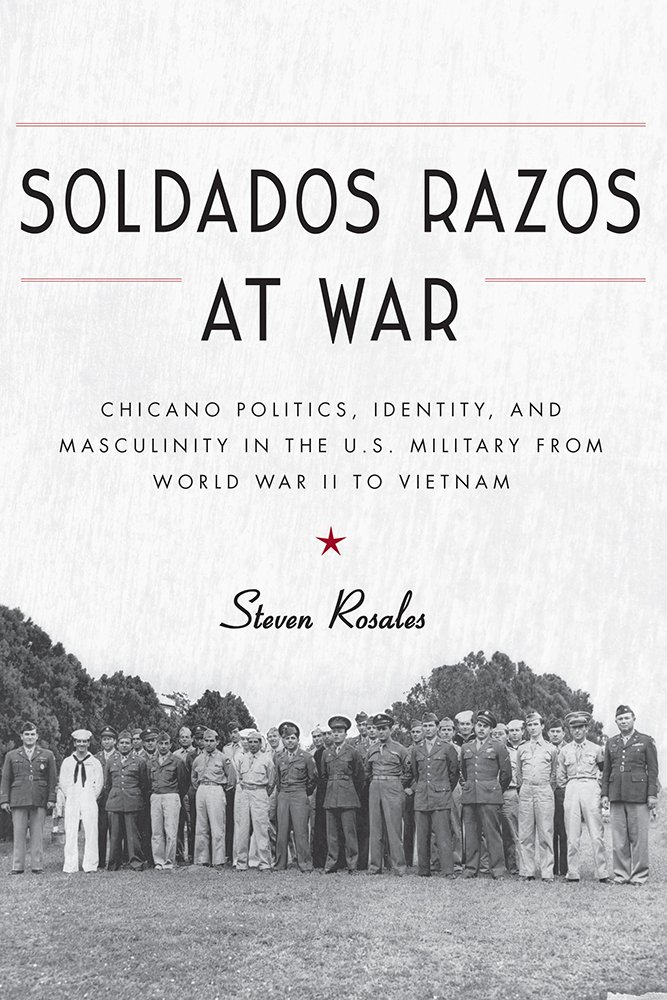
About
What were the catalysts that motivated Mexican American youth to enlist or readily accept their draft notices in World War II, Korea, or Vietnam? In Soldados Razos at War, historian and veteran Steven Rosales chronicles the experiences of Chicano servicemen who fought for the United States, explaining why these men served, how they served, and the impact of their service on their identity and political consciousness.
As a social space imbued with its own martial and masculine ethos, the U.S. military offers an ideal way to study the aspirations and behaviors that carried over into the civilian lives of these young men. A tradition of martial citizenship forms the core of the book. Using rich oral histories and archival research, Rosales investigates the military’s transformative potential with a particular focus on socioeconomic mobility, masculinity, and postwar political activism across three generations.
The national collective effort characteristic of World War II and Korea differed sharply from the highly divisive nature of American involvement in Vietnam. Thus, for Mexican Americans, military service produced a wide range of ideological reactions, with the ideals of each often in opposition to the others. Yet a critical thread connecting these diverse outcomes was a redefined sense of self and a willingness to engage in individual and collective action to secure first-class citizenship.
Purchase at Más Libritos Bookstore

episode notes & references.
- Dr. Steven Rosales (LALS, U of A): https://lals.uark.edu/directory/index.php?uid=rosales
- Soldados Razos at War (Univ. of Arizona Press): https://bookshop.org/p/books/soldados-razos-at-war-chicano-politics-identity-and-masculinity-in-the-u-s-military-from-world-war-ii-to-vietnam-steven-rosales/9335025?ean=9780816539642&next=t
- University of Arizona Press – Soldados Razos at War: https://www.barnesandnoble.com/w/soldados-razos-at-war-steven-rosales/1125089156
- Bracero Program Archive: https://braceroarchive.org/
- “Latinos in Arkansas” – Encyclopedia of Arkansas: https://encyclopediaofarkansas.net/entries/latinos-4723/
- Poultry and Latino labor dynamics in Arkansas: https://southernspaces.org/2022/invisible-hands-labor-and-poultry-industry-arkansas/
- Pew Research – Hispanic population shifts: https://www.pewresearch.org/hispanic/2005/07/26/hispanics-a-people-in-motion/
- “Fearless Conversation” event at U of A featuring Rosales: https://news.uark.edu/articles/41352/u-of-a-hosts-fearless-conversation-panel-on-immigration-and-migration-tomorrow
- LALS Symposium on Latinos in the U.S. South (Mar 2025): https://news.uark.edu/articles/76983/symposium-latinos-in-the-u-s-south
episode outline.
- Introduction to Dr. Rosales and Episode Context: 00:00–06:45
- The Bracero Program and Early Migration Patterns: 06:45–14:10
- Why Arkansas? Agricultural Shifts and Southern Migration: 14:10–22:35
- The Rise of the Poultry Industry in Arkansas: 22:35–31:25
- Right-to-Work Policies and Anti-Union Strategy: 31:25–38:40
- NAFTA, Tyson, and Targeted Labor Recruitment: 38:40–46:55
- Latino Community Formation in NW Arkansas: 46:55–54:30
- Housing Insecurity and Economic Barriers: 54:30–1:01:15
- Resistance, Organizing, and Structural Challenges: 1:01:15–1:09:00
- Reframing Immigration, Labor, and Belonging: 1:09:00–1:15:00
- Outro and Bridge to Corporate Power Episode with Olivia Paschal: 1:15:00–End
episode transcript.
[00:00:00]
episode preview.
[00:00:02] dr. steven rosales.: This is the magnet. It's always has been. This is the melting pot. This is where you can go, you, you get exploited along the way to get here. There's obviously something about this country that has served as a magnet for people for all over the world, if not for themselves, at least for the children, right? To set up a foundation for posterity and I don't know why you would be surprised that also hasn't included Latin America, but who you are, where you come from, how you look plays a role in how receptive people here are to you.
[00:00:32]
episode intro.
[00:01:15] mike.: You are listening to the underview, an exploration and the shaping of our place. My name is Mike Rusch and today we're tracing one of the most significant and often untold stories in the formation of modern northwest Arkansas, the history of Latino immigration and the powerful forces, economic, political, and cultural that shaped it.
[00:01:33] mike.: My guest today is Dr. Steven Rosales, the associate professor of history and the director of the Latin American and Latino Studies Program at the University of Arkansas. His work is focused on Latino labor, migration and identity in the US Southwest and beyond, and he brings that lens to help us understand what happened here in Arkansas and in this region.
[00:01:52] mike.: This episode invites us to consider what was it about the United States and specifically the US South, and even more specifically Arkansas, that drew so many Latino families in search of stability, safety in a better future.
[00:02:04] mike.: What made this region attractive not only to those seeking work, but also to the companies that needed a steady low cost labor force to power their growth.
[00:02:13] mike.: As we heard in the last episode, the Ozarks underwent another seismic transformation in the late 20th century, shifting from agrarian independence to corporate consolidation. But economic transformation doesn't happen in a vacuum. It requires people, and for the poultry industry and construction and food processing and other essential industries across northwest Arkansas, those people were, and continue to be mostly Latino immigrants.
[00:02:36] mike.: Today's conversation with Dr. Rosales is about that movement, but it's also about what followed the creation of communities, the rising of families, the founding of churches and small businesses. It's about how these communities took root, often with little structural support and how they redefined what Northwest Arkansas is and what it might become. And it's about reckoning with the reality that we cannot tell the story of this region without the story of our Latino neighbors. To do so would be to neglect the very people whose labor, culture, and presence have built so much of what Northwest Arkansas is today.
[00:03:08] mike.: Alright, we got a lot to work through. Let's get into it.
episode interview.
[00:03:13] mike.: Well, I have the privilege today of sharing a table with Dr. Steven Rosales, who is a associate professor in the Department of History here at the University of Arkansas, and also the program director of Latin American and Latino studies here. And Dr. Rosales, thanks for sharing the table. Thanks for being here. Welcome to the conversation.
[00:03:27] dr. steven rosales.: Thank you for having me, Mr. Mike. I'm, I feel privileged to, to be asked to be one of your episodes on your podcast.
[00:03:35] mike.: The privilege is mine. And so thank you for being here today. Let's start, we can start wherever you want, but I'd love to start with who you are, your background and maybe move us towards why this area of study has been important to you.
[00:03:46] dr. steven rosales.: Geez, I, do you want the full spiel?
[00:03:48] mike.: I'll take whatever you're
[00:03:49] dr. steven rosales.: willing to share.
[00:03:51] dr. steven rosales.: February, 1970, birth date and month, Los Angeles, California. Born into poverty. Born in east La, Los Angeles, right? East the eastern side. East side of la. Mom is at Tejana from West Texas. That's where my family roots are. My grandmother.
[00:04:06] dr. steven rosales.: It's, it is a border story if you go back far enough, I think everybody's got a border story, unless you're Native American. But my grandmother was born in Los Angeles, 1918. big old drive against Mexicans- repatriation drive to kick out in the thirties during the Great Depression. About a half mill to a mill is the rough estimate. So my family got, actually got kicked out in the thirties. My grandmother had six children overall, the first four born in Mexico, Chihuahua, Northern Mexico. And then the last two, my mother, number five, and my aunt number six were born in Texas, El Paso. They were there through the late forties, fifties, sixties.
[00:04:47] dr. steven rosales.: My grandmother came back, she was kicked outta the country in 1933. She came back in 1946, so she was gone for 13 years. And so when she came back, she had four kids, had five and six, including my mother. And in the late sixties, they all started to head back to Los Angeles. So my mother had, had left El Paso for Los Angeles 1967, and then I was born there February, 1970.
[00:05:10] dr. steven rosales.: Inner city life, what do you want me to say? I don't, I'm not gonna paint a rosy picture for you. Went to bed hungry pretty much, almost every day. Saw my mother cry herself to sleep almost every day asking, pleading, where the source or she thinks I'm gonna sleep, where the source of her next meal's gonna come from.
[00:05:27] dr. steven rosales.: Right. The, The Guadalupe, the Virgin Mary's kind of big for those of Mexican ancestry, so she had a particular affinity for praying to the vi, the Virgin Mary Vi, the Guadalupe. I can I remember them now talking, sitting here talking to you. And so it came young to me. A kind of consciousness, I don't know how to describe it fully, completely a kind of awakened consciousness.
[00:05:49] dr. steven rosales.: Why do I live this way? Why does my mother cry all the time? Why is every day such a grind? 'cause poverty's, grinding. And so I knew I was gonna do something with education. I knew, I just knew it. I just knew a bachelor's whenever it happened. A ba an ma was not gonna be enough. I just knew I was gonna go on and get a PhD, but I went into the Navy first. It's way out, right? It's way out, right? You get three hots and a cot. Paydays first in the 15th. It was the way out. I was a little timid, intimidated by the Marine Corps. Almost went army. Almost went Army. And the last second, I just chose the Navy 'cause I didn't know anything about the water.
[00:06:30] dr. steven rosales.: So I did four years active duty right outta high school. Literally graduated on a Wednesday, Monday left for bootcamp. I did Desert Shield. That was my first deployment. Active duty Desert Shield, desert Storm. Left was discharged in June of 92. So I did my four years, stayed in the reserves that August. I, so another component to me. So as I went in my civilian life, as I left active duty and then started on my career in academia. 'cause then I I got my BA from UC San Diego, 1998. And I got my PhD from UC Irvine, so West Coast Story in, and I was stationed in San Diego. I got my PhD in 2006, right? 2006.
[00:07:12] dr. steven rosales.: And along the whole way, I stayed in the reserves. It was extra income, it was a weekend away or more, a couple of weeks in the summer I traveled all throughout the Pacific into the Persian Gulf on 2, 3, 4 weeks of what we call annual training at. It was summer money and then along the way an opportunity for commissioning showed up.
[00:07:31] dr. steven rosales.: So those are my two halves. I'm Prof Steve, as I tell my students to call me and I'm also Sailor Steve. And oh 8 0 9 an opportunity came up for a commissioning for a to put in a commission packet to be com, a packet to be commissioned as an officer.
[00:07:45] dr. steven rosales.: I took my oath as an officer August of 2010. And my first gig outta grad school was a liberal arts in Grand Rapids, Michigan Grand Valley State. And then my wife at the time was at the University of Kansas. Just north of here and Arkansas was willing to hire us both what we call a spousal accommodation. This is a research one institution in the world of academia. It's at the upper rung, right? So that's what brought us both here in the fall semester 2013. She into the English department where she still is. And then me into the history department, which is where I'm still at. My focus within my PhD is the US West in particular. The modern US west. So Mexican American war, gold, gold rush era. 1845. 1850 Ford within that. 'cause I can be construed and, 30 years ago I would've been construed as ethnic studies.
[00:08:44] dr. steven rosales.: Ethnic studies closes doors, narrows your opportunities, right? Basically you're gonna be coastal in this country if you have a PhD in that, if you regard it as ethnic studies, the pulling of ethnic studies into the more academic mainstream has been a process. In other words, it's taken time.
[00:09:00] dr. steven rosales.: And so I went into the two front doors to get to my community. So I went into my PhDs in US History. Door one, and then my regionalization is US West, a biggie like the US South, right? So that's door two. And then to give me credentials to gimme cred. And then from there I went into the Chicano Southwest as a field of study. And why I've driven, it's my contribution, my analysis, my critical analysis, whether or not that's well received, I. But I'm the poor kid who went to bed hungry every day and saw his mother cry herself to sleep almost every day. I knew I was going to get a PhD and I knew it was gonna be the study of my people. I just knew it. And it, it was only a matter of turning it into reality. And then on top of that, so my book is so I don't wanna be vain here so that Raso Chicano politics, identity masculinity in the US military from World War II to Vietnam. So I'd look at Mexican American men from 19 40, 19 75. And so even further than that, that other big community in my life, right? The US Navy, the US military overall. My field of studies, what we call and added an additional field like a one, a field of study is war in society. Moving beyond just combat 'cause that's the overwhelming arc of military histories. Just combat. There's nothing wrong with that. Yes, mainstream academics do tend to frown on that. But moving beyond that and looking at the social aspects of warfare, including not excluding combat, but also including other aspects to service GI bill race, gender, et cetera.
[00:10:36] dr. steven rosales.: Except big biggies, right? Biggies. And I kind of brought all that together, coming here right, in academia, but also it came together while here, the field of studies, my community, my two communities in my life Mexican American, within the world of Latino, Mexican American in particular, right? We're not all, we'll get to that, but we're not all the same. We didn't get lumped together, but we're not the Brady Bunch, the Brown Brady Bunch that we are not. There's tensions there, there's solidarity. There's tensions too. And then the military, especially the US Navy. And so my first book dealt with military service from World War II to. Vietnam for 19, 14th and 75. My next book project takes off where I left off from 75 4. But in that one, if I can continue, just gimme a little bit more to still be vain I would be remiss if I only focused on Mexican Americans. It, the community's just simply way too diverse now. It has diversified. All the old historical patterns are all gone, or at least changing. And so I, I have to look at all Latino groups. So South American, central American, Mexican, American, Puerto Rican, Caribbean, I have to, and women, right? I got a little bit of flack for not including, and we're in a time period, right? the latest data, 22% of all discharges are female. So I, I have to include Latinas, right? Just have to, I would, I got a little bit of pushback with the first book. I would def I'd get crucified. I would get crucified by my fellow academics, women in particular. Sure. If all I did was exclusively in my examination of the Latinos and military, now if I only looked at men, I would get crucified.
[00:12:17] dr. steven rosales.: I've been doing oral histories, collecting oral histories. It's part of my research. Amazing stories by women, amazing stories. But that is book project number two. So it's a conflation of the personnel is political is often said. Not everyone accepts it. The i the you, the individual tends not to get looked at in academia, right? You're supposed to be the neutral observer in theory if you wanna follow the rules to the profession. But I was driven by my experiences in childhood to study my community and to study it in adulthood. And I was driven. I am Mexican American, I am who I study, but I'm also United States sailor.
[00:13:03] dr. steven rosales.: So I, it just came together. I hope I've done a decent job of explaining it. But experiences from childhood through adulthood, I focus on Latinos, specifically Mexican Americans, and I focus on war and society and the Navy, but the military overall. Yeah.
[00:13:21] mike.: Dr. Rosales I could see as you work through this conversation that yeah, it's deeply personal to you, and this is your story. And I would argue with anybody who says this is not the quintessential American story. And so I think that's the purpose of our conversation today, is to frame this a little bit, to understand from your perspective, what does it mean to be Mexican American, to be a veteran to live in the way in your story that you have in a way that furthers our understanding of what it means to be a citizen to be a, an American and to be a member of this community as well too. And so I just wanna say thank you for your service. Thank you for your story, for who you are. And I know this is deeply personal and so
[00:14:03] dr. steven rosales.: Yes. That it is. Yes. It isn't just my job, it's my life. It can sometimes be rare where you're bringing the two together, right? Yeah. But I have, I've had the pleasure of being able to do that, right? My job reflects my own personal story stories, right? Service and service in the military, but also being a member of the Latino community, Mexican American in particular.
[00:14:26] mike.: I can think of no better foundation from which to start this conversation. And so maybe within that context, maybe let's start, I'll defer to you on the framework that we want to set, but when we start to think about immigration to the United States and Latino immigration to the United States, can you maybe help give us a framework of how do we start to think about that within the studies that you've done within your own life? What's the framework we should be starting to think about?
[00:14:52] dr. steven rosales.: I teach a course on US immigration history. Of course. I include Latin America, right? I start off at Ellis Island, some of the other ports like the New Orleans, right? And locally here, Tontitown, that's where the Italian immigrants come through is New Orleans. There are other ports of entry. I start off with the European immigration. I think I'm deliberate in that regard. I do the slave trade, the great migration. And migration doesn't have to be external sourced. It can be internal within a country. So like Arkies and Oakies going out to California, right? John Steinbeck, the grapes of wreath. African Americans leaving, going up to, although they're coming back, a lot of people are coming, tag, as I say in my class, on the history of Latinos in the US with regards to the south tag you are it. 'cause they're coming here, brother. They've been coming here for a while and they're going to, it said, you haven't seen anything yet.
Texas borderlands.
[00:15:38] dr. steven rosales.: I do immigration from Asia, then I end with Latin America. And there's a vast sea of possibilities with regards to Latin America, including longevity as a stress with students. There's a tendency to one of you, Latinos within the prism of the last generation or two, you all just got here 20, 40, 50 years ago. Of course that grouping is here of course, and Arkansas has that. It's an immigrant community. But within that vast sea of possibilities also is also 400 years, right? The old, what we call the old Texas borderlands. It's also been called New Mexico Borderlands too, but mostly Texas Borderlands. So it's the western half of Texas, New Mexico, eastern, half of Arizona, up to up through the southern half of Colorado, up to Denver.
[00:16:29] dr. steven rosales.: That's old Santa Fe. And right smack in the middle of that Texas borderlands is Santa Fe. Boom, 1598. To a lesser extent, Albuquerque and El Paso, 'cause El Paso will emerge as a main entryway. It was a main, it was really the only city in the inhospitable terrain, desert terrain. It was the only city that people could funnel through. Now folks, and for some time now, folks don't care. They'll cross it at in any remote point. A hundred years ago they did. But right smack in the middle of that is Santa Fe, New Mexico, 1598, which is older than everything on the eastern seaboard. 1607 Jamestown 1619. Carefully stated, the 1619 project and everything up in New England, the Pilgrims , Massachusetts Bay colony. It's the only thing older than Mexican American history is indigenous history.
[00:17:16] dr. steven rosales.: Senator Lee out of Utah, was a deciding vote on whether or not to have a a museum dedicated to Latinos in DC. He voted no. Part of his rationale was that we haven't been here long enough. Can I do that on the mic? I just want to go into the staff office and give 'em a history lesson, right? 'cause the Texas borderlands is older than everything on the eastern seaboard. So in this vast sea of possibilities for Latinos based on nationality, oh based on race, based on gender and sexuality, right? There's all different, all kinds of differences, right? There's also newness, right? There's also recent arrival. There's also 400 plus years that gets completely. Completely ignored that old Texas borderlands, right? Is older than every. We have a very east to west narrative in our mindset, right? East Coast European settlers that marched from sea to shining sea crossed the Appalachians crossed the Mississippi, crossed the Great Plains, crossed the Rocky Mountains. And lo and behold, about 230, 40 years, you run into the Pacific. You got Lewis and Clark in there. You got the Santa Fe Trail, you got Buffalo, you got the railroad. New Mexico border, the Texas borderlines was, there all along And so in the case of not all Latino groups are not all Mexicans, those are Mexican ancestry. But in that vast sea of possibilities lies longevity, lies history. And I stress that a lot, right? So you have a little bit of everything. I don't know that you can focus on one thing, just sheer numbers wise. You're probably gonna focus on the recent stuff. In recent immigrant communities like you have here in Arkansas and Yeah. And the south is it, and so Chattanooga apparently is a biggie now. So it is the modern day Rogers and Springdale. But uh, to get back to your question I, I, I it's a cornucopia. It's a pot of all different kinds of possibilities. You have newness, you have immigrant communities, you have fleeing communism like Cuba, Nicarag, Cuban 59, Nicaragua 79, and then Venezuela, Hugo Chavez, Maduro, et cetera, et cetera. South America is it now, right? You have central, the newest group that overtook Mexicans. You have Central America, especially what we call the northern triangle. So Guatemala, Honduras. El Salvador and the of the three El Salvador the biggest source. But now in the last five to 10 years it's South America now. It's changed. It's, or it's expanded to include South America. Yes. Venezuela and Columbia at the forefront. If you haven't noticed, Venezuela's getting a lot and whatever that crime criminal group is, threat something three something. I forget the name of the group, but Venezuela's getting a lot of attention, but in other words it's hemispheric now.
[00:20:06] dr. steven rosales.: It what was once very Mexican centric included the Caribbean. I'm trying to visualize a map in front of me here but of all Latinos here, roughly 62% of Mexican ancestry, but so very Mexican centric. That then included the Caribbean. And then from the eighties, forward is also expanded to include Central America and south America. Very much a product of even though folks don't want to hear it of recent I don't wanna say globalist, but uh, these trade agreements like NAFTA, CAFTA, central American Free Trade Agreement. I used to say SAFTA, I used to say, you're gonna have a saft, a South American Free Trade Agreement. It's just it's getting these trade agreements from the get go. Were critique by the left, right? Free, fair trade versus free trade, but recently in the last decade, sure. Maybe a little bit more. It's also critiqued by the Right, they're just getting critique, period. And so it's a range. I don't know that I can fix it on one or two things, but it's a vast sea of possibilities that includes lengths and history and also newness and all points in between from the entire hemisphere now. So what was what once might have been one or two sources in now the entire hemisphere, to my knowledge, excluding Brazil, although, don't be surprised that Brazil Brazilians start to show up too. It, this is the magnet. It's always has been. This is the melting pot. This is the, this is where you can go, as we were talking about earlier on a little bit.
[00:21:41] dr. steven rosales.: You, you get exploited along the way to get here. There's obviously something about this country that has served as a magnet for people for all over the world, if not for themselves, at least for the children, right? To set up a foundation for posterity and it's included. Don't be surprised why? I don't know why you would be surprised that also hasn't included Latin America, but who you are, where you come from, how you look plays a role in how receptive people here are to you, right?
[00:22:10] dr. steven rosales.: But every group, including Europeans, the Irish, the no nothing party, right? I teach all of that. Even the Irish Catholicism, oh my the first Catholic nominee for president was the governor of New York. Oh, I'm forgetting his name. 1928. Oh, I'm forgetting his name. But anyways, yeah the anti Catholicism even was horrid. Right Now you had just Biden, he who was critiqued for other reasons, not so much as Catholicism, at least I don't think. But yeah, any Italians or Southern European groups, Eastern European, Slavic groups, Irish were critiqued all sorts of, oh gee, oh Lord. The hostility, the nativism right. Fear of immigrants and what they represent. Directed the yellow peril with regards to immigration from Asia. Chinese Exclusion Act, gentleman's agreement with Japan. The Cooper Act with the Philippines. The Joan, the Reed Johnson Act of 1924 slams the door shut. That is not Emma Lazarus. Gimme your tired, your poor, your hundred masses, rather the opposite. Clearly something about immigration from major set off all sorts of alarm bells. And so the, you have to understand what I teach what I pounded into my students. The willingness to include inclusivity has to be seen in tandem with the capacity to exclude. That's US immigration history. Not one or the other, but both. And if you want to look at sheer size and frequency, the capacity to exclude is bigger and more powerful than the willingness to include and it continues up. Immigration is a hot bot, hot button, hot item issue. It was a hundred, 150. The no nothing parties often considered to be the first nativist organization, specifically dedicated to Irish and Catholicism and its hasn't stopped. I think it's only grown. And I don't know how what am I allowed to say?
[00:24:05] dr. steven rosales.: Say whatever you would like.
[00:24:06] dr. steven rosales.: Our, in our world of grievance, politics, and the border does need some controlling, I'm not gonna, I'm not gonna dismiss that. Yes. But in our world of grievance, politics it works, right? It works there in this theme of people who aren't supposed to be here, right? Like communists, terrorists, the undocumented are every bit as powerful and have been there throughout the whole time, right? And yet they perform jobs that we critically need, right? To declare your poultry workers, critical workers during covid says something right? And they're at the bottom rung of the ladder of the system, get paid the least. But they make the system. They're the fuel to the engine that makes that engine, that economic system run. Okay. And produces profits. This core, what we call this corridor of prosperity here in northwest Arkansas, which is Tyson, JB Hunt Mattel is here, and of course Walmart, how could I forget? Is built on as many other as, if not all corporations is built on cheap labor. That's the histories of US immigration. The face providing that cheap labor is different. Different but of late it's been Latinos. Yes.
[00:25:18] mike.: I think one of the ways that you've laid out this kind of framework for immigration in the United States is incredibly comprehensive. It's incredibly wide. As we think about how that has emerged in the south or in Arkansas or in northwest Arkansas, are there similarities to this? Is this the same story or are there some unique factors at play when we get into the south or into places like northwest Arkansas?
[00:25:44] mike.: That may be more true or less true, or maybe
[00:25:47] dr. steven rosales.: don't follow that trend.
[00:25:48] dr. steven rosales.: There's Texas, right? There's Texas. But probably my step one in trying to answer your question is Texas. And Texas is southern it. What I, as I always like to describe Texas is by regional, it's southern it's identity, right? It's slave state. It's part of the Confederacy. It's a Jim Crow state, but it's also southwestern the Alamo, right? And Tejanos, right? My elders, they're all, and Texans are loud. My get my family, get my aunts and uncles, my mother they're loud, right? White, brown, African American Texans. They're Texans are loud like New Yorkers. They're loud. Texas has a lengthy history with regards to more specifically Mexican Americans. Obviously they're part of that Texas borderland, as I was talking about earlier. So what you're, I would steer your question to the geographically, to the region, and then Florida has its own history too. So I would steer your question geographically to the area between Texas and Florida, that part of the South. 'cause the bookends, if you will, have a lengthy history of Latinos in them. Texas, maybe a little bit more so than Florida. It's the south and the middle that historically just hasn't had it.
Bracero Program.
[00:26:53] dr. steven rosales.: There's been Braceros here. The Bracero program was a World War II measure. 1942 meant only last for the duration of the war providing Mexico was part of the allies. The allies are 44 altogether. Mexico has combat troops in the, in Europe has a squadron or two in the Pacific. But arguably, Mexico's largest contribution are all these single men. It's a binational guest worker program. There's a lengthy history of guest worker programs in this, in the history of this country. And so this, but the Bracero program is the biggest. In terms of size 5.4 million. And in terms of duration only meant to last for, there's two versions. One dealing with the railroad industry, the other dealing with agriculture agribusiness.
[00:27:36] dr. steven rosales.: The one dealing with the railroad version ends in February 46, so it ends right soon after the war ends. The other one was just simply so popular as I often tell my students, right? It's like the heavens open and downend all these Mexican dudes 'cause it's sanctioned by not one government, but by two Mexico City and DC. Six month contracts, renewable for a second, six months or one year max, in theory, undoubtedly could you serve longer than that and just break the rules in the process? Sure. But it's from 42 and it lasts for another 19 years until December 31st, 1964, that guest worker program brought about a quarter of a mil to Arkansas. The first big batch about 50,000, 1949. It continued through the fifties. As it continued 2 thirds of that 5.4 million are from 1954 to the end, 64.
[00:28:22] dr. steven rosales.: There's three stages to the Bracero program, the war years 1945 to 54, and then 54 to 64. So the two thirds of that is 1954 to 64. Just in the case of Arkansas it actually begins, it actually does the opposite. It decreases the first two big batches. Were 19 49, 19 50, altogether about a quarter of a mill. But the program actually decreases.
[00:28:45] dr. steven rosales.: Why, I can't tell you that. I don't know that I have that answer as to why even though the program increases, the presence in Arkansas decreases does Jim Crow probably have a role to play in that? Sure. 'cause then to offer like a scenario or two in the case of Texas, some of the stories of brutality in Jim Crow Texas we're pretty brutal reports got back to Mexico City.
[00:29:09] dr. steven rosales.: And so they actually banned Braceros from Texas 1943 to 1947. It's, it was a guest worker program that overwhelmingly, as any re the relationship between Mexico and the US is a fraught one, love and eight, but DC has all the power, at least the majority of it. Not Mexico City, not Mexico. But in that one instance, Mexico had enough leverage to ban Braceros from Texas for four years and then remove that restriction and they went back to Texas.
[00:29:35] dr. steven rosales.: Undoubtedly stories would've circulated amongst Braceros, probably filtered their way back to Mexico and Mexico City, to the powers that be in Mexico that might have told similar minded stories of lack of tolerance. Can I say it that way? In Arkansas and other parts of the Arkansas, not considered the deep south, but they were all over the south.
[00:29:58] dr. steven rosales.: The first major imprint of Latinos, in this case, Mexicans, Mexican nationals is the Bracero program. There might've been smaller numbers for whatever reason prior to that there was an Im, but once again, there was an Emigre community, especially political exiles from various regimes in Mexico, Cuba, other parts of Central and South America that might have been in Florida and Texas, but the south between the two bookends, Florida and Texas. The presence is small. The first bigger footprint is the Bracero program. And then chicken. What do you want me to say?
Latino and entrance into racialized society.
[00:30:42] mike.: Maybe before you get to that, and tell me to shut up if you want to, if you want to keep talking about it. let, Let me ask real quick if I can, when we look at this program especially into the, to the states within the bookends I like the way that you've laid that out. I, they're entering into a southern place that is, is Jim Crow highly racialized society. Segregated society. How does predominantly Mexican immigrants start to, what does that look like when you enter into a space like this? What kind of table does that set or not set for? Yeah for what that looks like from their role within society in that space?
[00:31:23] dr. steven rosales.: It's complicated, right? It's complex 'cause you're into a preexisting racial binary, black and white. But do also do, keep in mind what we call Juan Crow. A pun off of Jim Crow. You're izing it. Jim Juan. Sure. Not quite the most literal translation, but anyways institutionalized on the, it's complicated, but yeah, I'll go there. Formalized institutionalized discrimination on the part of Jim Crow codified into law as Jim Crow was state law, not federal, with some federal pushes like Plessy versus Ferguson, 1898. With some what's the word? Some recognition on the part of the federal government in with regards to codified state Jim Crow laws.
[00:32:09] dr. steven rosales.: That did not happen in the Southwest yet. You still had racialized violence in the Southwest, yet you still had structural inequality in the southwest. So the southwest, the Chi Mexican American, the Chicano, south Mexican American community in the Southwest was not free of many of the same. If not most of the same characteristics you could find in the Jim Crow South vis-a-vis black bodies does not formally codified into law as it was in the South. Did that make a difference? Does that make a difference that caught that lack of codification? It can to some, but entering into a preexisting system of inequality would not have been new per se necessarily.
[00:32:51] dr. steven rosales.: However, in the south, yes. You have a third group, right? You have white southerners, you have this newly arrived Mexican group, and for a while there you have three different groups at play. I'm not trying to be, give you too much of a history lesson here.
[00:33:07] mike.: Oh, please, please, Please.
[00:33:09] dr. steven rosales.: When during the duration of the Bracero program you have three agents involved. Three groups. You have Mexican Americans, somebody like me, born here, and therefore legal. You got the undocumented illegal. Then you got Braceros also legal for the duration of their contract 'cause they're guest workers. So you got within the Mexican American community, you got three groups that play there for about 22 years now you bring these Mexican ashes into the south. Yeah. You're confronting not just white Southerners and Jim Crow, you're confronting African Americans too.
[00:33:45] dr. steven rosales.: So there's an interplay there. Any un More often than not universally, any community will have its subgroups and each layering will have complexities and difficulties associated with them. How each of the subgroups interact. And so yeah, you're having to navigate white Southern society. You're also having to navigate black Southern society. And I can't tell you what a Bracero might have felt specifically, I can't pinpoint the exact sentiments that a bracero upon arrival or any of the three group, maybe they were Mexican Americans, probably smaller in numbers, maybe they were undocumented, probably in smaller numbers. Now it's bigger of course, but we're talking 80 years ago. Certainly Mexican or Mexican Braceros were there. So any of those three groups that might have been with between the bookends what their exact, I can't pinpoint for you their exact feelings and sentiments, but pro just, it's a process of constant negotiation and having to navigate the immediate environment and situation at hand as you try to earn a living, right as you try to make a livelihood and do what you will with that money sending back to Mexico, whatever the case might have been.
[00:35:01] dr. steven rosales.: In case of these guest workers, they got paid, if I remember correctly, once a month. And there are stories on of, on payday. Paydays can be a day a time of for a lot of these young men that to the chagrin of local groups, law enforcement, community elders, religious elders, paydays can be renowned for their debauchery. You go let loose. That's for any group of men. There are, there is a story or two yes. Of, of payday paydays Mexican men just tearing up the town, getting liquored up and doing what they will visiting, trying to visit local bravos. Yeah. Whatever pre-existing stereotypes might have existed, animosities might exist. Behavior such as that only reinforces it. And so it only makes your. Situation and those still coming, following behind you all that much more worse. I dunno if that process, that that gaze. 'cause it's a gaze, it's a racialized gaze. I dunno if that gaze has completely gone away either. No. And then it extends outward from there. It all, Latinos behave this way. All Latino men behave this way. All Latinos behave this way. And once again it's the Latino is a myth, right? We're diversified in all sorts of different ways. And 80 years ago, there might be an increased willingness to start to recognize for example, there is, there's a, there's distinctions being made now between Central America and Mexican there is. Even Caribbean. And now you gotta throw South Americans into the mix. 80 years ago, probably not. It would've been a blanket a, a blanket assumptions made, right? We tended to, for the longest time, and I used to teach it a lot of my class, we tend to want to have a Mexican gaze. So all of Latin America, they're all Mexican. It's diversified a lot in the last 20, 30 years. 80 years ago. No. We would've had Mexico on the, Mexico would've been on the brain 80 years ago.
[00:36:52] mike.: Let's go back to your comment. Chicken, maybe that is the one word that is the description of what started to draw latino immigrants to northwest Arkansas specifically. You've got pretty big changes in agriculture. Northwest Arkansas starts to emerge within this poultry industry, the need for low cost labor still exists.
[00:37:13] mike.: Can you help paint a picture for, what that does to the story of immigration, maybe to northwest Arkansas, specifically?
[00:37:19] dr. steven rosales.: 1990s, maybe late eighties, but certainly by the nineties. Um, Chicken chicken nuggets, chicken wings, chicken thighs. Out of during and immediately out of World War ii rationing going on during the war continues a little bit after with certain key items. Red meat would've been part of that. World War II is a big push toward poultry. Cheaper, smaller animal, smaller carcass less expensive than the meat processing of, like the swine world, the beef world, et cetera. And then meat processing also the two big centers historically where Chicago, if you're familiar with, up in Sinclair and the Jungle, 1902, for example. Gives a, that sort of, that the, that inside look the journalist that goes undercover and gives that sort of an inside look. Something was done similar here. If you want me to go that route too, I can, you can go whatever route want. Oh,
[00:38:10] dr. steven rosales.: the two big centers were Chicago and Cincinnati. So it's a number of, it's a confluence of different factors, right? And meat processing starts to get decentralized out of mega centers. Chicago, Cincinnati starts to go to more, starts to go to the source, the animal. Right, and you're gonna have vast open spaces for chickens and cows and swine in the south. South's big geographically. So companies start to go to the south and then in the pursuit of the bottom line, not to paint it as evil per se, but any corporation is built on capitalism as a system that's profit driven, the essence of it. By the nineties it begins as a trickle in the eighties, but definitely in full swing by the nineties up to the, so the last 30 years, 35 ish, give or take, that continues into the 21st century up until now. First Mexicans, but then in over time other Latino groups, it's also hemispheric, whether it's Tyson or Pilgrims or what did some of the other ones, the Georges, in pockets and northwest Arkansas is one of them.
round the clock processing.
[00:39:14] dr. steven rosales.: And so Springdale initially, right? What do you want me to say? I'm doing it round the clock as I described capitalism to my modern day, the pursuit of profit is as old as us as humanity, where it becomes systemic and global and round the clock, right? You can mass produce at 2:00 PM or 2:00 AM tables, chairs, cars. You can also mass, you can mass assemble something. You can also mass disassemble at 2:00 PM or 2:00 AM so you can mass assemble table stairs, cars. You can rip apart a carcass of a chicken, right where you disassemble it into its constituent parts, anytime of the day.
[00:39:58] dr. steven rosales.: Word spread as word always does. Humans are creative. I'm not trying to be simplistic, but it spread to Mexico and then from there it spread out throughout the rest of Latin America. Mexicans first start to arrive by the nineties and producing what you have now. So to the point now, the original pockets have pockets.
[00:40:16] dr. steven rosales.: Springdale is old news. Now, I don't know if you southern folk understand that Springdale is old news. It's it isn't the most recent. It's Clarksville ha having driven to Millington. I got to know the state a little bit off the 40. My re one of my reserve centers used to be Millington, so I used to drive across Arkansas. It's Clarksville, Lake Dardenne de Queen Costa Lafayette, which is on, apparently on the Louisiana border. Mona Monet, which is apparently over by Jonesboro. I have a young Mexican American student from the Jonesboro area. Starts with an M, sorry. Yeah, that's the cutting edge actually. Rogers and Springdale are actually old news now. It's all the others. It's all the other places in Arkansas.
[00:41:02] dr. steven rosales.: I get a lot of Latino students. They're the children of immigrants. Their parents came here to pluck chicken. It doesn't pay the most, but there's plenty of work of it. And through sheer volume, overtime and the traditional sources of geographic settlement, like the Northeast Florida the west coast, the southwest west coast, those are all gone now.
[00:41:26] dr. steven rosales.: That, that continues, don't get me wrong, but it's expanded to include the south and then, and once you settle and start a life and get to know the area maybe want more or better choices, you expand from there into construction, into gardening, some of the landscaping into domestic work.
bus stops.
[00:41:47] dr. steven rosales.: Look at the bus stops. I've always told my students, look at the bus stops. 5:00 AM five 6:00 PM at night, five, 6:00 AM Busing into busing up to Bentonville, probably five, six at night. Busing back down to Springdale in any geographic setting. Look at the bus stops. That's where your domestics are at.
[00:42:04] dr. steven rosales.: And so you, from there, poultry might be the initial magnet. From there, you spread out as people will do. People are creative, whether they're from Latin America or any other part of the world. People are trying to make a living.
[00:42:20] dr. steven rosales.: And so chicken is the first big pull. And just over time you spread out and into other sources of employment and maybe even maybe stay with chicken for a while. Reduce your commitment or maybe even leave it all together, right? Because it's grinding work.
37 injuries.
[00:42:35] dr. steven rosales.: Ask me, Mr. Mike, how many emails I've received from students who've lost or have family relatives who have lost fingers or limbs, or have been damaged by working at Tyson and working at poultry factories. Ask me how many
[00:42:54] mike.: I probably don't want to know the reality of that.
[00:42:56] dr. steven rosales.: 37. 37. Emails. Prophet, Professor Prof for short in Spanish. Prophet Profe.
[00:43:07] dr. steven rosales.: My father, my mother, my sister, my brother, my uncle, my aunt, me. Lost finger or two. Lost part of a hand, lost a hand, lost part of an arm, lost a whole arm and something in Dallas. There's medical facilities in Dallas 'cause they all 37 were got sent to Dallas area. So the obviously the aftermath of that physical injury, the medical facilities are there in Dallas apparently, or contracted, whatever the case might be with 37. I've gotten 37 notifications in my, since I've been here in August of 2013.
[00:43:41] dr. steven rosales.: So something like that is also personal for me. Still. Also, 'cause I'm a member of the community. It's a different community now. I'm not southern. I'm Los Angeles and Southern California. I'm a Latino. I'm not a southern Latino. I'm a Latino in the south, but I'm not a southern Latino. But I am getting the students, I'm getting the children as students of immigrant parents. And their stories can be heartbreaking. Sure. And it, it matters to me. It's part of the rationale for taking on program directorship. But I had to do this. I just I had to, I had my own stories that I gave you personally as a Latino, but also as in the military, in the Navy, but also within academia.
[00:44:23] dr. steven rosales.: And arguably given where I'm at, also in the South I'm gonna be as care careful as I could possibly be. It's still coming out of the shadow and the legacy of Jim Crow. It's changed a lot more. Changes still need to occur. It's not done yet. And if you feel like everything's been accomplished, you would be remiss and thinking that, and that preexisting to bring it back, that preexist, to bring it back to an early point that preexisting black, white, binary changing. And I am not going to stand by and be quiet. I'm not. So whether it's in my work or in program director, I'm on a podcast such as this. I will advocate, I will speak truth to power. I'm not afraid of doing that. I fought way too many battles already in childhood, in the Navy to not sit idly by. I refuse. And so the stories like, the number that I gave you, 37 is only further fuel to the fire.
[00:45:26]
[00:45:29] mike.: And today here in Northwest Arkansas, how should we be thinking about what it looks like to build a community where everyone feels like they belong given the history?
[00:45:40] dr. steven rosales.: Oh, I don't know if I can answer that one. That's a big existential question. I would preach tolerance, right? That's what I say to all my students. Tolerance change isn't always well received, but I don't know if that's where you want to go with this podcast, per se.
[00:45:52] mike.: I think at the root of it is this question of belonging. Meaning that the story of immigration in the United States is not a new story.
[00:45:59] mike.: The story of Mexican American I would say, if you want to even call it immigration is older than this country, as you point out, itself. We have a new wave of immigration that's been building over the past decades from different places in around the world, as you said, south America, central and South America.
[00:46:17] mike.: As these immigrants come for jobs, there's a need for low page labor, but there's economic conditions in Central and South America, and even in Mexico today that are driving the need for that.
[00:46:28] mike.: And so as we look at what is happening in northwest Arkansas there, these themes of immigration that seem to have existed since the beginning of this country seem to still persist today. And yet we as a country seem to still be struggling with what it means to welcome someone new to this community.
[00:46:48] mike.: How someone new to this community finds their rooting, finds their belonging. And yet within the south, we still have a lot of historical wounds that have not fully healed around what it, what racism looks like. That seems to always point at the newest arrival or at the immigrant and from a, I think the question rooted in that is how do we, are we, can we get past that? What are the barriers that we have? What's our own blind spots that are preventing, we're creating the situation that we're in today where the immigrant has been and continues to be labeled as the other?
exclusion vs. inclusion.
[00:47:32] dr. steven rosales.: I talked about it a little earlier ago, a little bit, right? The theme of exclusion is every bit as prominent, if not more so than the theme of inclusion. The theme of immigration overall is what we call chain migration has been typified by chain migration. It's been continuous, hasn't stopped. Just the source of the immigrant has changed. But the theme itself is consistent, is as old as the country itself, even prior to the colonial era. So immigration hasn't stopped ever. There might have been lower eras, low points. It's been an ebb and flow. Sure. Some eras massively bigger. 18 80, 19 30, for example. Big one. Big one from all over the world, all of all kinds of mass movement. 18 80, 19 30, you have the great migration outta the south.
[00:48:20] dr. steven rosales.: You have Ellis Island, you have the great migration outta Mexico. So 18 80, 19 30 is one of the bigger ones, maybe the biggest one in terms of numbers in sure size.
[00:48:30] dr. steven rosales.: From about the seventies onward over the course of the 20th century the type of immigrant increasingly became Latin American based of source of origin, became more increasingly brown from about with de-industrialization in the seventies as outsourcing begins to occur. And the rust belt starts to shrink and jobs start to go overseas. Vietnam, Bangladesh, China the world's engine to capitalism is China, right? For the last 40 ish years, give or take. So de-industrialization starts to occur. Yes. It's given a big push from Latin America and and diversified beyond Mexico, as I was talking, also talking earlier, right?
trade agreements & trickle down.
[00:49:15] dr. steven rosales.: So the longest time it's Mexican based, Mexican centric. We had a very Mexican view to all of Latin America. They're all Mexicans for a while there sure just not anymore, right? Not anymore at all. And then you gotta add in globalization. I don't know if I said that specific word earlier. These trade agreements, which were the, which were invoked from the nineties forward, critique from the left immediately. Now we also increasingly critiqued by the right. They're just critiqued, period. Part of the rationale for their creation was that the trickle down theory that the benefits of these bigger blocks, these behemoths would trickle down and everyone would get their fair share, not an equal share, but their fair share of the pie. And that in the process, it would minimize, not eliminate, but minimize the flow of the undocumented.
[00:50:05] dr. steven rosales.: Gross miscalculation. Totally got it wrong. I don't know. I don't know how else to describe it. Just 100% wrong. These bigger blocks. So whether I could show you the visual of the Syrian boy on the drowned on the beach in North Africa. I can show you the picture of the father and daughter from El Salvador on the banks of the Rio Grande in Texas. I can show you the picture of the Indian family in Manitoba, Canada that froze to death. Yeah, gross miscalculation.
[00:50:36] dr. steven rosales.: And they're going to the EU. They're going, still going increasingly going from Middle East Africa to the European Union and it's hemispheric now, right?
[00:50:50] dr. steven rosales.: Expanded well beyond. Mexico's no longer hasn't been for a good 20 years, if not more, of Central America, especially that northern triangle I was talking about earlier. But now at Caribbean to a lesser extent. Remember Puerto Ricans are Citizens. Jones Act. If you're born in the US. 14th amendment, unless that gets reanalyzed.
[00:51:13] dr. steven rosales.: But 14th amendment doesn't matter the status of the mother. So long as you're born in the continental, the us, and I believe the Commonwealth, I believe, don't quote me on that, the five in the Commonwealth, Guam, Puerto Rico, American Samoa, US Virgin Islands, and I forget the fifth one. But if you're born in the 50 US states, by virtue of that birth to child birthright citizenship, right?
[00:51:34] dr. steven rosales.: That child is born into, its his or her citizenship, the status of the mother is irrelevant. But the Jones Act 1917, if you're born in it doesn't matter if you're Puerto Rican, if you're born in the us, you're born in Puerto Rico, you're a citizen.
[00:51:46] mike.: What is what is the future of immigration to the United States or to Northwest Arkansas look like, what should we. What should we expect?
[00:51:53] dr. steven rosales.: It's cheaper. There's plenty of land. It's cheaper than Texas, than cheaper than Texas.
[00:52:01] dr. steven rosales.: It's cheaper than the west coast. California's expensive. Although pricing is getting like a Rogers in the Springdale or Benton County, Washington County, or also price getting a little bit more expensive, right? Housing prices and there's rush hour, there's traffic now. One of the top 10 spots, I believe is Northwest Arkansas in terms of people of growth.
[00:52:22] dr. steven rosales.: And so you got even further out, you go to the Queens and the Clarksville and the Lake Elles, right? And they're coming. They've been coming for about 30 years.
not a single group.
[00:52:33] mike.: May maybe explain a little bit. I heard you talk when I went to the symposium earlier this year, the influence of where people are coming from within central and South America and what that influence really does start to do to the United States politically.
[00:52:47] dr. steven rosales.: Sure. The tendency is to assume that all these others, all these immigrants, all these illegals are gonna go to the Democratic party. Gross miscalculation. Oh my. Gross. And if you are fleeing communist countries like a Cuba, like a Nicaragua, Cuba, 59, Nicaragua 79, and then venezuela the last 20 years, right? That they're gonna automatically run and fully embrace the, be fully embraced by the Democratic party. No, that's a gross miscalculation, right?
[00:53:14] dr. steven rosales.: If they're fleeing communism the data's overwhelming that lens, that experience from dictatorial regimes, very much impacts their political worldview and how they view things, including here in the US and don't paint them. There's also an assumption. Don't, there's also a, an assumption that all Latinos want an open border. Oh my, no, right? No. US was border patrol, 61% Latino everybody. US border, lemme say that one more time. US Border Patrol, the rank and file of the US Border Patrol is 61% Latino brown bodies patrolling the border against other brown bodies.
[00:53:48] dr. steven rosales.: Complexity here, don't be black and white in how you view things. There's complexities and complications all over the place, and yeah, where you flee from in Latin America. Can tinge can influence how you enter into the US political system. Do not assume an automatic affiliation with the Democratic party. No, do not.
[00:54:06] dr. steven rosales.: There is a connection, sometimes bigger, sometimes smaller, but there's a connection to the GOP and to the current MAGA crowd as well too. Including immigration issues and the whole border itself. And it doesn't have to be just recent immigrants. The, my community, multi-generational Mexican American community the one big county, star county down in south Texas. Went Republican for the first time in since reconstruction. And that's my, that's Mexican American though. My aunt, a personal story, my aunt and uncle. In El Paso, there's still, the old family house is still in east El Paso, I believe. It's in, it's, the old house is still there. That one aunt and her husband, my or my uncle, still stayed there. So they're, they got a immediate personal view of who's arriving in from what other part of Latin America. They're all critical of central Americans do not like Central America. These are multi-generational Mexican Americans who were, have been, they could even critique Mexicans growing up when I was a child.
[00:55:09] dr. steven rosales.: But massively critical of Central Americans, massively critical of South Americans, especially Venezuelans. Do not assume solidarity amongst Latino groups. Do not assume that we're all big, one big happy family of the Brady Bunch. We are not. There can be solidarities facilitated by the Spanish language. Let's admit it, right? No other part of the world has that attribute, language. But don't take it for granted either. Don't overestimate that either. It can be downright hostilities as well too, and disagreements and tensions. Maybe the one that maybe here 'cause the communities are bigger, that gets more attention is Central American, Mexican slash Mexican American. There's tension there, there is. But it extends outward to other sources as well too. And from what I understand and what I hear and what I've read in the case of the Caribbean, for example tension toward Puerto Ricans by Dominicans and Cubans. And so there's, don't take it for granted that we all get along and that we're all marching to the same drum beat, right? And all have the same goal in mind. That that you would be remiss in thinking that there's complexities and nuances, soladarities, differences and some of those, politically speaking, given your question.
[00:56:23] dr. steven rosales.: We will steer them toward the Republican party and let's not be naive also too, there's a gender component. Yes. We've had two female candidates in the last decade, both Democratic party. Unless you reincarnate Margaret Thatcher, I don't know that you'll have one in the GOP anytime soon or Margaret Thatcher like but yeah, there, there is a young black and brown.
[00:56:48] dr. steven rosales.: Massive, no, but noticeable that yeah, it was, in my humble opinion, was there also mis, is there also misogyny involved in terms of steering votes away from the Democratic party? I would be remiss if I didn't include that as well. And so I think that was also an additional push. In our world of right, that old d and i, diversity and inclusion is now DEI, diversity, equity, and inclusion. There's a, for right or wrong, however you want to view it, that I leave to you, but there's a a generation or two of young men that are angry. Whether or not they're right to be angry or not, we can discuss that's a further debate and discussion. But they're angry and they're voting with that anger. And then we already have a preexisting system of grievance politics anyways to begin with, and one big community. There's no, you would be wrong to think of universal malehood. There isn't. There's often talk about universal sisterhood by comparison, there isn't either, but that is talked about men just, there isn't, there's a kind of male bonding that you can find like in the military .
[00:57:51] dr. steven rosales.: But universal malehood, no. However, having said that, and the last, and there've been other eras, other moments in US history too, but we're certainly in one, one now. There's a disaffected generation or two of young men that are angry and using that anger to fuel their votes away from the Democratic party, who also happen to have two female candidates and pushing it toward You want me? Can I go there?
[00:58:21] mike.: You can, yeah, a hundred percent if you want.
[00:58:23] dr. steven rosales.: An individual who at least openly exudes, tries to exude bravado, the Trump 1.0 and 2.0. That will also have, its I think I'm being neutral. I think careful here that, that his bluster is, it is its own appeal to a lot of these young men,
[00:58:40] mike.: right?
[00:58:40] mike.: Sure. I would say there's being a resurgence of what it means to be masculine in America. Sure. That being. Yeah. Put back in the center stage in many ways to, to reexamine that.
[00:58:51] dr. steven rosales.: Yes, you are correct. And then other added components over transgender bathrooms. I think all that in the middle of all of that is yes, I think you phrased it pretty well. And then for a while there, masculine, inherently thinking of masculinity as toxic. I think a whole lot of feminists might be angry at me. I think I've been pretty neutral here and some of my colleagues here, female colleagues might be angry. But yes, there's a generation or two of disaffected angry young men that are squarely a part of this debate of over what it means to be a man and what masculinity is in this country over this larger debate over gender and sexuality too.
the future of immigation to the South.
[00:59:31] mike.: When you say there's a, like this form of immigration is not stopping, like help, help maybe build that out a little bit more. Maybe explain that a little bit more. Sure. What do you mean by yeah, that, what does that mean?
[00:59:43] dr. steven rosales.: What you see now is you ain't seen nothing yet. Tag you're, it, they're coming. Whether that sounds ominous to you that I leave to you, but yeah the South is clear and what it's part of the larger, what we call the Sunbelt anyways, right? And it isn't just the fixation on the South, right?
[01:00:03] dr. steven rosales.: The process, the motivation for coming to the US hasn't stopped. You can certainly enforce border regulations more strictly. It is at a lower ebb now, in the first a hundred days of the Trump 2.0. Yes. The message is clear and it's being received if that's what you want to hear. And so it's dipped. Dipped considerably, but they're still coming. Smaller numbers perhaps, but they're still coming. And the south is it? All right. The South is a big hotspot for a while. Now, historically saying this carefully, the south is a place you left historically, African Americans, white southerners, for the 30 ish, last 30 ish years.
[01:00:43] dr. steven rosales.: The South has been it. It's bigger, it's cheaper. There's land. You can buy a house on a working class salary that you just can't in a Southern California, you just can't. You can buy a decent house for a quarter of a mil. You have to go out to Death Valley to do that in California or so you move out to an Arizona, Nevada, et cetera, or Texas. But this is it. Tag, you're it.
[01:01:07] dr. steven rosales.: In the South. Over the last 30 years, the two big hotspots thus far, North Carolina and Georgia, especially Fulton County, Atlanta is exploding as well. Fulton County, the six counties including Fulton County that comprise the larger metropolitan of Atlanta, there are other pockets, and Northwest Arkansas is one of them.
[01:01:26] dr. steven rosales.: But those pockets were at the point where I mentioned were those pockets also have pockets. And so, and as children start as these children of immigrants start to have their own families, the rough estimate nationwide 20 60, 20 70 timeframe, I can't give you the exact date. One third of the country's Latino, you're not stopping that demographic change. You can try and about 15 to 20% the slowly but steadily, the new emerging binary, if you want call it that. A new binary is Latino, A API, Asian American, right? Demographically 20 60, 20 70. Time. About half the country is either brown or Asian American, and that includes the south. And that's through external sources and in we're at, what I'm trying to get at, part of what I'm trying to get at is that internally, the community already here, right? Of that 18.2%, it's also young. I'm an old foggie, right? I'm a that 18.2% 75% of that 18.2%, three quarters of that is 25 or younger.
[01:02:38] dr. steven rosales.: Oh my.
[01:02:40] dr. steven rosales.: So it isn't, you can build that wall, you can patrol the border with brown bodies included. You can try stop the external flow, but the internal flow is, hasn't begun to explode yet demographically speaking, when that starts, 'cause it will when that 25 or younger gets to be, of adult age and starts to have their own families, if. If you have a problem with demographic change, now I don't, what do you want to hear when it's 20 30, 20 40, 20, 50, when they start having kids and they start having grandkids, et cetera, et cetera, et cetera.
[01:03:19] dr. steven rosales.: Because internally already the communities of such a number internally, and it is young that there's an explosion already going to happen from internal sources that's not including external ones. And to the tune of about roughly 20 60, 20 70, about one third of the country is gonna be brown, some type of brown. But once again, you can view that as a threat and ominous, massive complexities within that community that one third of the country's all not gonna be marching the same drumbeat. It's not. And there will be opportunities for employers, companies, communities, community, elders, politicians, political parties.
[01:04:02] dr. steven rosales.: Increasingly the Latino vote, there is no Latino vote. Also among also a myth, but there's opportunities there for everyone to start to curry the favor of this exploding community, Asian Americans too. And how you go about doing that, if you want to go about doing that that I leave to that corporation, to that mayor, to that city council, to the political parties nationwide, et cetera, et cetera. But don't be surprised. The metaphor of a sleeping giant is being used to describe the Latino community. So as the sleeping giant starts to awaken and starts to stretch, it stretch itself it's going to want a seat at the table. And that means confronting both ends of that preexisting binary. That means confronting white America. That means confronting African America too. And that's where it gets a little complic even more complicated. I don't have, I don't have nice and neat for you. It's messy. And that's about the best way I can describe it, right?
[01:05:00] dr. steven rosales.: There's a sea of possibilities and there's, therefore, by extension, there's a range, if not more. Actually, there's a range of methodologies that you can employ to reach out to probably specific Latino groups. But don't assume that Cubans in Florida speak for Mexican Americans in LA or Texas. You cannot assume that, don't assume that Dominicans or Puerto Ricans in New York speak for south Americans in Florida. Don't assume that, right?
[01:05:30] dr. steven rosales.: So I would ask that you be mindful that we tend to want to lump all Latinos together and have a very monolithic view of Latinos. I would ask you to actually start to peel the layers of that onion and look at the preexisting hierarchies and intentions and soar good and bad, and if you're gonna want something from a Latino their labor, their vote, then it would behoove you to start to pay attention to the nuances 'cause that's then how you will ingratiate yourself to that specific Latino group and then realize that probably what you're doing with a group doesn't mean you're doing it for all the group.
[01:06:10] dr. steven rosales.: 'cause what you're doing with one group, another group might not like it or not might not affiliate with it. And so it's messy.
[01:06:18] mike.: Yeah. It has the opportunity to be beautiful though.
[01:06:20] dr. steven rosales.: Sure, sure. But folks don't wanna do the work.
[01:06:23] mike.: Yeah.
[01:06:23] dr. steven rosales.: But I would ask that you do some of that work to make,
[01:06:27] mike.: that's why we're here.
[01:06:28] dr. steven rosales.: Make yourself more aware of the plethora of nuances that are out there. But yes, it's a rainbow. Yes. It's not a monolith in any way, shape or form. I would stress that.
[01:06:41] mike.: Dr. Rosales, thank you. I'll end here with my two final questions and the first question that I try to ask every guest is, what are your fears for this place within your work? Within this community? Yeah. What are your fears,
[01:06:55] dr. steven rosales.: man? How honest can I be? I don't know if I should be.
[01:06:58] mike.: I've asked everyone this, and I will say this like it is some people answer that question out of their position, and some people answer that out of their humanity. And I would say that I. My hope would be you would answer that out of your humanity. You've been very transparent. This is your story and your work, and so your fears I think in many ways the way we were able to vocalize those, to normalize those is something we all have to do if we want to move past them as well.
[01:07:26] dr. steven rosales.: Oh I hear you. I hear I certainly heard the question. Of course. I'm traveling through, this isn't my final destination. I've just got too much California in me and just too much blue California, blue, especially in me. Yes. So at some point in time, I'm going back, I'm being frank, I'm being blatantly, brutally honest. While here, I want to try to leave the place a better place.
[01:07:53] dr. steven rosales.: Yeah, I don't know. I also want to be realistic, right? I have become, I'll be honest, I'm supposed to be, I've become a little jaded over my 10, 11 years here. It's been a challenge being here and being an academic at this institution, being in the south, overall, being in Arkansas overall. In that world of DEI, whether you want to hear it or not just California moves at a faster rate. And so in a place where it is lower or sometimes stagnates, just makes it frustrating. I would just ask for tolerance. As I told my student, I teach, I, I taught the history of Latinos this semester that had just ended this.
[01:08:42] dr. steven rosales.: My final was on Tuesday, two days ago. I would ask for tolerance and informed opinions. And so I literally told my students two days ago, you can disagree. Your opinion is your opinion and no one else's. And I'm not trying to force whether you believe it or not I'm trying, I'm not trying to indoctrinate, I'm not trying to force just be tolerant. You can be an or you can be against the arrival of immigrants. You can be humanitarian and Christian about it. Yes. So be tolerant, but also whatever your final opinion is, have it be an informed one, right? Don't use misinformation or wrong information to inform the opinion that you arrive at.
[01:09:25] dr. steven rosales.: So hopefully a podcast such as this, a class such as mine and other colleagues that teach, there's only so many of us that teach anything remotely Latinos. There's only a small cadre of us. It's not big, but it isn't just me. And I would be remiss if I didn't mention my colleagues as well too, or part of my program, Latin American Latino studies.
[01:09:43] dr. steven rosales.: It just having a fight, an uphill fight. I'm a fighter by nature in all sorts of different ways. I don't run from a fight, can handle myself in a fight. Been doing it since I've been little, so it's almost second nature, unfortunately. But you can get tired of fighting all the time. Yeah. Fighting, quote unquote, not literally speaking, metaphorically speaking. Oh, my. Getting myself in trouble here. And yeah, to be here is to fight an uphill battle a lot consistently, and it gets tiring. You actually can get exhausted. But in the end, I would ask for tolerance on your part and I would ask for informed opinions. Make your opinion yours. Just acquire information that informs your opinion, proper information. And in the case of Latinos, a podcast or class's mine and my colleagues, or a podcast such as this, pick up a book or two.
[01:10:37] dr. steven rosales.: Can I go there? Absolutely. Don't always get at your information from Fox News. No that's not, that would be remiss. Pick up a book or two I would recommend. Perla Guerrero. Perla, P-E-R-L-A, Guerrero, G-U-E-R-R-E-R-O, Nuevo South. It's about everything I just talked about. She encapsulated in her book. She's from northern Mexico, was in LA in her early teenage years, about six years, and then her uncle came out to Fort Smith and her family, her mom and dad followed. And so she went to, um, central Arkansas in Conway for a BA and then went back to USC LA for her PhD. Now she's a professor at American Professor of American Studies in Maryland. University of Maryland. And so Novo South. She talks I actually, where I get a lot of my, not exclusively, but where I get a lot, got a lot of my information that I just gave to you, I, I took from her. 'cause my more immediate focus is the Southwestern Chicano Southwest. But pick up a book such as that and there are others. And read and form yourself knowledge. There's, it's never too late to acquire knowledge. Never. Knowledge is the never ending gift. Whether it's formalized in an academic setting or whether it's picking up a book and reading at Starbucks or at home. Pick up something and read and inform yourself and make it a, and make it an informed opinion, not a misinformed one. 'cause misinformed ones lack tolerance and tend to want to hate or, yes.
[01:12:13] mike.: I think you're moving towards this. I think my last question for you, the that strings all of the question or the concept that we try to use to string all of these conversations together is this idea of wholeness. And so when I use that word and I ask you, what does wholeness look like in this space? You may have touched on this, but let me ask you overtly yeah. What does wholeness mean to you in this space?
[01:12:33] dr. steven rosales.: It isn't just religion. I'll be blunt and direct, right? Religion can be a connection historically, very Catholic, right?
[01:12:39] dr. steven rosales.: A lot of these sources of immigration from Latin America, certainly Mexico, other parts of Latin America too, it can be a connection. Just as long as it isn't the only connection, right? 'cause if you look at someone as a fellow Christian neighbor and treat 'em as such only within a religious context, within a spiritual context, there's a whole material world that also needs dealing with too, right?
[01:13:00] dr. steven rosales.: And that, that is limiting whether you want to hear it or not. It is. So religion can be a, should be a step, maybe even a bigger one. Fine. Within a whole series of steps that hopefully begins to accept and acknowledge. Maybe begrudgingly begins to accept and acknowledge the change reality of your local environment. There can be a theme. I've been run up against it more than a few times of this is how we do things around here. And fear of outsiders.
[01:13:36] dr. steven rosales.: You got massive change on your doorstep for the last 30 years and it's only gonna continue. And how you respond to that change is on you. And I would hope that you just don't use a prism of religion and Christian fellowship to view and accept, try to accept this massive change. But I hope you would views a broader gaze and view to the world. And it's global, right? It is. 'cause it's a systemic it's a system in place. Immigration isn't just specific to us. To the us, my Lord. There's immigration's all over the world when my travels in the Persian Gulf. The Latinos of the Persian Gulf are Indonesians and Filipinos, especially women, right? They're the Latinos of the Persian Gulf. 'cause Saudis, Bahrain, they don't do manual labor over there in Saudi Arabia, right? They don't they rely on Filipinos and Indonesians to do that.
[01:14:33] dr. steven rosales.: So there's immigration to and from all over the world. Think big, think bigger, just don't think local and regional. And in the south it's a changing world, demographically, socially, economically, et cetera. And the south is a part of something bigger. The south within the US as powerful as a theme is immigration. We've covered that is in the history of the US tag. You're it's the South. And what terms like Nuevo South speak to that. Although Nova South is old now, it isn't new. It's actually even a quarter of a century old now. But right around the turn of the century, late nineties. I have heard Nuevo Nuevo South. I have heard it once or twice, but then also Global South is also out there too.
[01:15:18] dr. steven rosales.: So where you sit on that fence, where you sit on that spectrum that I leave to you. But the world is changing. This country is changing, the south is changing. And yeah, change isn't always well received, but part of that change, technological, economic, cultural demographic you will, you and your children and your grand, you and subsequent generations are not gonna be challenge free from all these changes. And I would hope that you respond as humanitarian in, in, in as humanitarian and Christian a manner as possible. But that choice is yours and not mine.
[01:15:55] mike.: Dr. Rosales incredibly humbled to be able to sit, share a table with you. Thank you for the work that you do. Thank you for yeah, this conversation that you've been a truth teller, and I think we need that in our world. Our community is better because of your voice in it. And so I'm thankful Yeah, to be able to sit here and to try to understand in a new way what does it look like to build an inclusive community where everyone belongs.
[01:16:17] mike.: And I, I think the challenges are ahead, but I just absolutely appreciate your voice in this as a guide. And that wisdom is something that I need and I think our community needs to continue to find that pathway forward. So thank you for being here. I appreciate it.
[01:16:31] dr. steven rosales.: Thank you, Mr. Mike. Thank you jirene, Mike, Devil Dog. Go Navy. Baby. Go Navy.
[01:16:35] mike.: I didn't make any Marine Sailor jokes at all, so
[01:16:38] dr. steven rosales.: go Navy.
[01:16:39] mike.: All right. Thank you, Dr. Rosales. Appreciate you.
[01:16:41] dr. steven rosales.: Of course. Thank you.
episode outro.
[01:16:46] mike.: Well, a deep thank you to Dr. Rosales for guiding us through the layered history of Latino immigration to the United States and into Arkansas. His insight helped us see how migration is never just about movement. It's about labor and law, and the shifting definitions of who is welcome, who is used, and who is excluded.
[01:17:03] mike.: We heard about the cycles of US policy from the Bracero program to immigration crackdowns to employer loopholes, and how these systems have defined Latino migrants as essential and as expendable, often in the same breath. We explored how Arkansas and particularly northwest Arkansas became a destination for Latino immigration drawn by the poultry plants, construction jobs, and the promise of opportunity even as community support, housing and protection lagged far behind.
[01:17:31] mike.: Dr. Rosales reminded us that none of this happens in a vacuum. Migration follows the path of economic demand, and that path has been shaped by powerful institutions whose needs have often set the terms for who gets to belong.
next episode preview.
[01:17:44] mike.: And that's where we're gonna go next because in our next episode, we're gonna sit down with Olivia Pascal, a PhD candidate in history at the University of Virginia, and she's writing her dissertation on the rise of Walmart and Tyson's and JB Hunt in the Arkansas Ozarks.
[01:17:58] olivia paschal.: the questions that are really interesting are where do the Ozarks sit in this system of globalized capitalism, global labor, and supply chains? What can we learn from other places where similar dynamics are at play and how are people doing things differently?
[01:18:15] olivia paschal.: And I do think the question of capitalism, good or bad, is actually a really good starting point for looking at these other questions because if you are not willing to question the system, then maybe you aren't seeing the other alternatives. Northwest Arkansas alone is not gonna make or break the capitalist system, but we do happen to have two major players in it, in our own backyards.
[01:18:38] mike.: With Olivia, we step into the story of corporate power, how these companies came to define the economy, culture, and civic life of Northwest Arkansas and how their influence today continues to shape everything from immigration to housing to political discourse. Because if we want to understand the story of belonging, we can't just follow the people. We have to follow the power.
[01:18:58] mike.: I wanna say thank you for listening and thank you for being the most important part of what our community is becoming.
[01:19:03] mike.: This is the underview, an exploration in the shaping of our place.
[01:19:08]