
the urban land with Megan Brown.
Megan Brown of the Urban Land Institute's Northwest Arkansas Council. The topic of our conversation is how Developers work with Cities to decide how our Urban landscapes are created, what gets built where, how it impacts people, and how it forms the communities we live in.
season 1, ep. 8
listen.
episode notes.
Episode 08 a discussion with Megan Brown of the Urban Land Institute's Northwest Arkansas Council.
The topic of our conversation is how Developers work with Cities to decide how our Urban landscapes are created, what gets built where, how it impacts people, and how it forms the communities we live in.
about Megan Brown.
Megan Brown serves as the Director of Signature Programming for the Urban Land Institute's Northwest Arkansas Council. Through her work, she helps create and execute programs focused on advancing ULI's mission to 'shape the future of the built environment for transformative impact in communities worldwide.' Her current programs focus on growing and supporting the next generation of diverse real estate developers and supporting the built environment growth of the smaller communities of Northwest Arkansas.
Megan also serves as a managing partner of Rally Properties, a local development company focused on creating attainably priced housing in walkable areas of NWA's downtown communities.
missing middle housing.
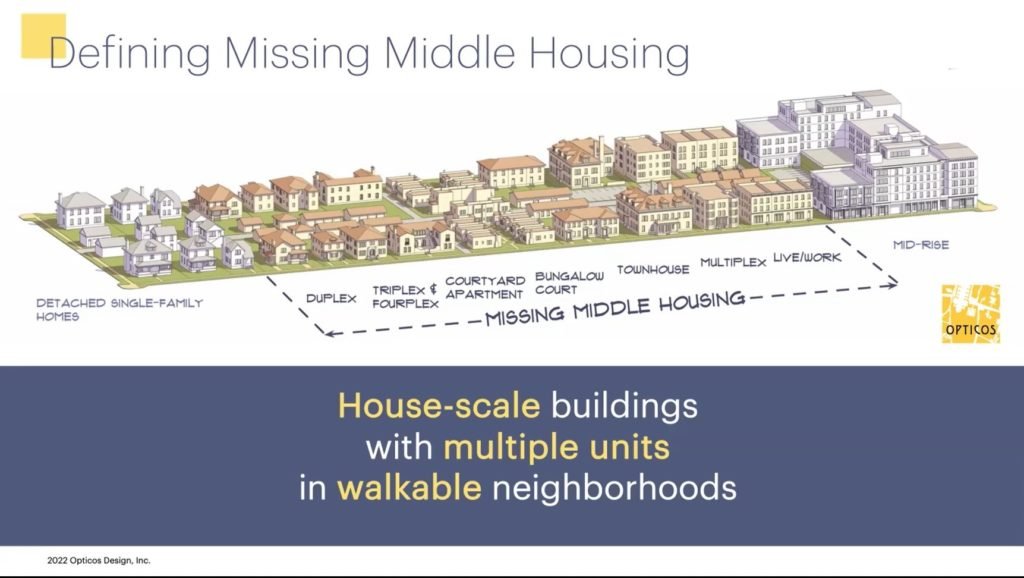
Read Article: Missing Middle Article & Graphic from ULI
The Rail Pizza in Rogers, Arkansas - Photo by Susie Burleson on Unsplash
route.
This episode's route is focused on letting you see a little bit of what Megan calls her soul.
The City of Rogers.
This route starts in downtown Rogers at Ozark Beer Company (you're welcome). And then it heads east along the city's Rail Yard Loop Trail, eventually joining the Razorback Greenway, and then coming back into Rogers along the same path.
It is a 19 mile route, and you ended a brewery (again, you're welcome). And you're also close to many great places to eat. Like The Rail Pizza Company.
Side note. If you remember the story from episode two in the invitation about the runaway train that fell off the bridge in Little Sugar Creek. Well, this is the railroad station in downtown Rogers that eventually heads north across the Brightwater crossing.
So enjoy this route, and I hope you capture a little glimpse of why this city has captured Megan's heart.
music.

about Mia (& her husband).
This singer/songwriter, folk-infused duo is known for their emotional lyric & raw performances. The two met in the mountains of Northern California, yet one originates from Chicago & the other Dallas. So needless to say, Fate Herself brought them together not only to create but also to find love. (Yes, they're married!) Their lyrics embody the journey of seeking, losing, confusing parts of self & then finally making it Home. Our desire is that you listen & hear trueness, with hopes to strike a chord in your heart.
references.
Urban Land Institute, Northwest Arkansas
Missing Middle Article & Graphic from ULI
episode transcription.
episode introduction.
[00:00:00] megan brown.: ......a big turning point was the creation of the automobile and allowing us to be physically more spread out.
If you go to a, especially a lot of the smaller East Coast communities, everybody was walking everywhere. That was a consideration in the built environment.
So your house was close to the church, was close to the local grocery store, was close to the school, and you could access it easily.
There were sidewalks. There were, well designed sidewalks. Everything was intentionally thought of the person first instead of the car and it was community focused.
introduction comments.
[00:01:15] mike.: You're listening to the underview and exploration of the shaping of our place viewed through the medium of bikes, land people, and wholeness. My name is Mike Rusch.
Today's episode is with Megan Brown. She is with the Northwest Arkansas Chapter of the urban land Institute. This conversation is part, trying to gain an understanding of the current ways that cities and developers are thinking about what actually gets built, where, but this discussion isn't just about buildings. This discussion is about how those decisions actually shape our communities, shape the people that live in these spaces and ultimately shape how people connect or don't connect with the places where they live.
So, as we talked today with Megan, I'll ask you to pause for a moment and consider the extent to which, where we live and where we work shapes our lives, our relationships, our families, and ultimately our values. I begin to wonder about who created these environments that are impacting us today and how these environments will shape our community going forward.
Uh, building land, use plans, zoning, et cetera. Those are all one thing, but how do these things shape people and our communities is a whole other thing.
So let's get started.
episode interview.
Nice to meet you. Thank for stepping into these conversations. Thank you for being willing to sit down and talk to me. I appreciate it.
[00:02:37] megan brown.: Absolutely. Thanks for having me.
[00:02:39] mike.: Tell me, your story.
[00:02:42] megan brown.: I am Megan Brown. I currently serve as the, director of signature programming for the Northwest Arkansas chapter of, the Urban Lands Institute.
I've been a permanent resident of Northwest Arkansas for a little over four years, but I have long standing roots, in the state. My mom is, my mom and dad are both native Arkansans and I've spent a week or two of every year of my life down here and so it's always felt very homey. I have, jaunted around most of my life, varying states.
My dad works, for Walmart, but ironically not at home office until recently, with store management that just took us around, to various states. And so, seen a lot, got to experience a lot of people, communities, cities, just how things are done in different parts of the country. and yeah, so, yeah, been here since.
[00:03:32] mike.: Is this home yet, or is it going to be home at some point?
[00:03:35] megan brown.: No, this is, this is home. I have two young girls, five and nine, that are getting really established in their schools. And that's really important to have a home base now.
[00:03:43] mike.: what's going to pry you away from this place? Do you know yet, or?
[00:03:46] megan brown.: I don't.
I, so, I used to, my parents have been down here about 12 years and we used to come and visit a lot and, at the time I was living in downtown Chicago which is just this bustling, robust, people everywhere, packed full of diversity and And just things to do all over and walkable and at the time I would come back to visit and it just felt slow and just not quite my vibe at the time since then.
And I'm talking just a matter of six, seven years, just since then it is blossomed into so many cool things and all the aspects and all the different parts of Northwest Arkansas. And now being plugged into a lot more of the community here, and having a lot more connections and just friends and a job that I really plugged into and love, it's, it's, it's home for me now.
[00:04:37] mike.: What's been your connection with, ULI at this point?
[00:04:41] megan brown.: So I've been working with the Urban Land Institute for a little over two years. I, was hired by our executive director, Wes Creglo, who helped, found the chapter here I, at the time, had been working, as director of operations with another association, a global association, sort of tied into the real estate world.
It's focused on co working at flex Spaces, one of which we're in right now. And, Was having a lot of conversations around real estate. Always had a personal interest in real estate, but never quite, had a specific career in it. And so as I was looking to, find something new, expand my horizons, I saw this job posting, reached out to Wes, had some conversations, and just fell in love instantly with the team and the work that they were going to do.
And I think of all the jobs that I've had, so far, this is the most meaningful and the most that I feel like I get to contribute to some sort of impact.
[00:05:31] mike.: Well, I love hearing that. I'm going to dig into that to understand what that meaning is. But maybe before we go there, tell me, what is a ULI, the Urban Land Institute?
Tell me a little bit about the mission of ULI, and maybe how that, is, yeah, how it, how it plugs in or matters to Northwest Arkansas.
[00:05:50] megan brown.: So, the Urban Land Institute is an, at this point, nearly 90 year old global organization, that is really just focused, and the mission statement is to make a transformative impact, in the built environment, that encompasses all, I mean, I'm extenuating it a little bit on the, mission, but to make a transformative impact in the built environment and to reflect everybody.
That's a part of that conversation. So, there are some really smart individuals that are still doing work in Northwest Arkansas that found a lot of value in bringing a local chapter here. So again, global organization represented in multiple countries, multiple cities in the world. in the, in the U. S., and just with all of the growth that was already starting to happen, and especially in the development, and built environment world, they found a strong need to have that here, and so I think about five years ago now, a, chapter was established and I joined it a little over two years ago.
[00:06:45] mike.: you used the term the built environment. for those that may not be familiar with that, can you explain that a little bit? What do you mean by that? Yeah,
[00:06:51] megan brown.: I'm really glad you asked that it really just means Everything that is built around us. So, Wes will give the great example of you're driving down a road, you see a stop sign, you see a bank, you see a church, you see a school, you see a house. It was somebody's decision at some point to decide that that's what needed to be built there at that spot to reflect, to look like this, to reflect this moment in this area.
And so how as we think about making the transformative impact on the built environment, that's what we're talking about. So what gets built where? Who is it built for? Who is a part of that decision making on what gets built? what are the conversations around that? What is the impact that it's going to have?
[00:07:34] mike.: That sounds really simple to figure out. No, obviously it's not.
[00:07:39] megan brown.: It's a simple theory and I think that's helped me at least process of, oh, just understanding the idea of it and understanding how I can play a part in that. I was pretty much, I guess you could describe myself as an apathetic citizen before, would get upset about some things, pay way more attention to the national scope of political, just decision making, and not even paying attention to what was happening in my community.
And so just understanding. How decisions have been made, what decision needs to go where, who are those people having those conversations, how much the look and feel of something matters, another conversation that we have a lot with ULI and our members and,just colleagues is thinking about with our built environment.
When we want it to look like, what we want our area to look like, thinking of those places that you go and visit and you want to go on vacation or you go and you feel something and like, oh, I want to go back. I mean, there may be a town that you take your family every summer because it's brings so much memories and it has this community connectivity feel like.
Why can't we have that in our own community? And what does that look like? And just helping understand that. so, I, it's been helpful for me to break down some of those terms that don't, to just make them sound a little more, and, and, break them down and explain them is more practical and digestible.
[00:09:02] mike.: How, how do you come to that place where this is the problem you're trying to solve? Like, where does that problem come from? What's the source of why we need an organization like ULI in Northwest Arkansas to help think about those built places?
[00:09:15] megan brown.: So ULI is not an advocacy group.
We are primarily an education and connecting through networking organization. And I think that's where we serve The best our role is best served in this conversation. one of my first projects when I started with you, I was to help create, we called it a community of practice, which is essentially a cohort on steroids is what we describe it as.
But it was connecting all of our area city planners from Siloam to Bella Vista to Fayetteville to all of the big groups to organizations that represent a lot of our smaller communities. Just even to, what I didn't realize at the time, not being a part of the area is those individuals, Northwest Arkansas has its own, unique,
How do I describe this?
Arkansas is unique in the sense that obviously we are smaller communities that are really impacted. By each other. So we here know that we describe it as Northwest Arkansas. Anytime I describe it to anybody else where I live, it's this confusing look.
Well, but where do you live? Well, yes, I live in downtown Rogers, but it's so connected. We sort of operate as this big community. So these individual planners making having being a part of making decisions in their individual communities and not connecting really with each other, not Not having relationships, not fully understanding how things are done in other, cities and communities.
Just providing a platform for them to have connection. And then we brought in, a lot of speakers to just help educate them on, just things that they can be considering, things that they can own in their roles. but so, being that platform that can serve, as a place for them to connect and come together , but it's an opportunity for these people to come together and to continue to problem solve and, and share and, and bring up new problems and concerns and,
[00:11:05] mike.: at the core of that, from a ULI perspective, talk a little bit about what are the things you want to see happen? What are the, I would use the term values, if you will, that are the foundation of you're saying, hey, this is why either collaboration matters or the topics you are working through, or maybe even the needs you see in Northwest Arkansas.
[00:11:23] megan brown.: So, along with the collaboration, one of our big pushes, globally and really, passionate for myself and Wes and the team. for Northwest Arkansas is the education component. And so, I have the privilege of working on, a program, developing a program that we're calling our Academy for the Built Environment,
and it's really, really focused on educating the next. generation of real estate
developers, but specifically with a diversity mindset. if you were to argue that the membership of ULI is representative of those decision makers in the built environment, so those people that are either providing the financing or are actually designing the buildings or are making the decisions on What housing is to be developed and who it represents.
We would argue that that is that you will I membership represents those decision makers. And if you look at the diversity makeup of our membership, it is not even close to representing the diversity makeup of Northwest Arkansas. We continue to see that growing through the diversity reports that the council puts out and.
We feel like it's our role to make a difference in that and so some of the programming that we launched this year that I'm really, really excited about, is focused on that one, that we just wrapped in December was a cohort that we ran from August to December called REDI, which is R E D I, stands for the Real Estate Diversity Initiative, and that is the sole goal of educating women and people of color on the development process.
So those that are interested in At minimum learning how it works. So we've had some that were tangentially tied to the development community that just wanted to understand more and to work with their clients more, but some that are really excited developers that just wanted to learn, and get connected and learn more.
have a better skill set. And so, then bringing them into the membership fold and then continuing to have conversations with those members and especially those members of ours that are experienced, that are doing really, really great work in the community already. How do we continue to connect them and help build on that?
So we have future generations from the diversity mindset that are representing the different diversity makeup that we have.
[00:13:33] mike.: Okay, so I want to, I want to learn more
[00:13:35] megan brown.: about this. I'm really excited about this
one, sorry.
[00:13:37] mike.: it sounds like, what you're describing. And so, these are going to be my words. You're, you're welcome to reframe them. Historically, there may be a disconnect between the people that are making decisions about how communities are formed and the people that are actually living there. Is that a fair assessment?
[00:13:52] megan brown.: I think, I think there are generally, yes. And I just can I'm reflective of that myself.
Yeah.
[00:13:58] mike.: I don't know if I'll ask this question the right way. I think what I'm trying to understand is by these kinds of initiatives, how would our decision making or our planning about our decisions about planning start to change?
Yeah. Or would they change?
[00:14:15] megan brown.: Yeah, I think that's a good question. I don't know if I know how to answer that the best. I think, yeah. I think there is sometimes, historically or just lack of, understanding of all of the groups that make up Northwest Arkansas, and not just racially, not just genderly, just From background and experiences.
I mean, you've probably heard this stat already 100 times from the people you're interviewing, but we're seeing I think it's upwards of net 37 people moving here a day. They are coming from varying backgrounds. They are coming from rural. They are coming from urban. They are coming from more diversity of everything to this area.
And I think there's sometimes a sense, maybe politically, maybe community wise, everything of this, there's a term we jokingly use sometimes called the drawbridge effect. So there's those that have been here forever, but there's also those that may have moved here at some point that once they're here, they just want everything to be like that.
[00:15:17] mike.: That's great. Thanks for sharing that.
I can, understand, wanting to be careful, obviously, with not just the words, but the spirit of what you're trying to accomplish as well, too. And so, tell me what, what do you think is working well within, the work that you're doing with ULI at this point in its journey?
[00:15:33] megan brown.: So another one of my programs that I get to do is an event called the Place summit. We just finished our second one. And it's a two day event. So far hosted in downtown Bentonville and downtown Fayetteville that is really focused on Celebrating the great placemaking that is happening in northwest Arkansas, but also really trying to address some of the challenges that we're still having.
And so it's our opportunity to have this fun event. But with a real mission of delivering outcomes, we created a tagline called Discover Immerse Deliver, which is really intended to discover, help educate.
And bring in the new ideas and the speakers that are sharing those new ideas immersed. So take some of the idea, take those ideas, plug them into some of the projects that are currently happening projects that are potentially underway diving into workshops and then deliver. So this is the piece that we are starting to see some real traction for from right now.
It's just. Actually having some of the people in the room that may not ever be in a room together having conversations and having continued conversations. Eventually, someday it may be the place where I have this vision of like the G8 summit, where there's a big decision that is happening at a boardroom with the 5 people that just haven't quite been able to connect yet.
but that's the real hope for, for that event as well. So I think at bare minimum, we are seeing. People that were never have a reason to be in a room together, having conversations, having those conversations and really starting to, change each other's minds or spur new ideas or actually start to have some action happening.
[00:17:13] mike.: With, with the people that maybe you're describing are in this room together at this G8 summit, for lack of better words, the forming and shaping of the decisions they're making or the dreams that they're making, could you characterize that?
What are they talking about or what would they be talking about or what decisions would be made or what would they be trying, what challenges would they be trying, yeah, to maybe solve?
[00:17:33] megan brown.: . One, I think it'll always be an underlying theme in the place summit because we are such a regional, area, but we did a bit of a more, a bit more of a focus on the regional connectivity.
This year, we had a session specifically on the 71B corridor. We had representatives from The four major cities as since the corridor connects them and what are some of the changes that they're making? What are some of the, future goals? And it was a little bit of kind of high level. This is what we would love.
But even in the prep conversations that were happening in there. leading up to the event, hearing the, between the different city representatives like, Oh, I didn't know you guys were quite to that level, or, Oh, I didn't understand that you had just received this grant, or, Oh, I didn't know, just understand, well, what do you plan to do?
Just even that moment of having that conversation, then getting on stage and be able to share with the 200 people that are attending the event.
,
[00:18:25] mike.: What are those challenges or those recommendations that you're saying, Hey, when we think about land use, obviously the city is, is making a land use plan or making zoning recommendations, but This is where the rubber meets the road about what's going to be built within these zoning configurations.
And when we talk about things like affordable housing or workforce housing, what are the challenges that people are not able to solve yet or trying to solve at this moment?
[00:18:50] megan brown.: I think there's still a lot of conversation and I'm going to say some dirty words, but around, so there's a lot of conversations around transportation happening and understanding that, we are going to have a big problem on our hands if there's not some, some decisions made quickly.
We have a lot of conversations on transportation, for instance. And what does that look like to have a regional transit system, whether a bus system or train? But some of the conversations we even had at the Place Summit are what are those steps that need to happen before that?
So, pockets of density with housing and people population. And so what does that look like? Okay, well, we need different housing typologies. We need to have more people clustered together in areas. Okay, what does that look like? Well, we have zoning issues that are affecting this and we can't build this right here.
Okay, what is, what is that acutely? What is that from a big picture? And we do have a lot of, a lot of our communities are already, Okay. Okay. making some of those changes and thinking that big picture futuristic way. the city of Rogers, for example, where I live is going through major citywide rezoning right now that is supposed to kick in next year with a lot of that kind of future growth aspect and making it easier to build some of the things that we know need to get built.
[00:19:57] mike.: those are decisions that are going to change the fabric of some communities, correct? How do you process that? Or how do you balance that with what needs to happen or what people want to have happen versus maybe where it is today?
[00:20:11] megan brown.: That's a really good question. And I think that's something, and this will be Megan speaking a little bit, not necessarily ULI, but I think they intertwine a little bit.
I don't think anybody's goal or desire is to, oust or, change anybody's dream of their, their vision of what it lives. I think where we get caught up as a community and globally is getting so siloed in what our vision of it is and what our exact need is. It has to be this, at this place, and nobody else gets to tell me how I want to, live, or I, it, it, it's, there's a term, nimbies, like, I, I really like the idea, but not in, not in my backyard, not where I am, and depending on where you actually are, there has to be a conversation, there has to be an understanding that, Just because this is how it's always been and just because it maybe made sense at one point or maybe Never really made sense, but wasn't really an issue Things are changing now and there has to be considerations for the community as a whole.
[00:21:18] mike.: One of the terms that I came across when, looking through, Northwest Arkansas's ULI website was this term, the missing middle. Yes. I would love for you to explain that. What does that mean to you or to ULI? And, what, what are some of the things that we need to think about as it relates to that?
[00:21:34] megan brown.: I think at its core, and I will give Duke McClarty credit for this. Is, I think, I think the, the safest way to describe it is, housing choice, like just different choice of housing types. We are still, it's starting to change a little bit, but we are still primarily building single family home or large apartment complexes.
And as we look at trying to provide more density in an area and still provide that community feel and still provide, um. Uh, built environment that are like those communities that you go and visit and you love, it does not have to be either or it cannot be just either or, we have to be have an understanding of, and start to build in that direction of, duplexes, the ADUs you hear like actual different typologies.
There's also a conversation to be had about as we look, as we have the mindset of diversity and the representation of different groups in our area, but a lot of our ideas around housing housing are built around one specific type of mindset and historical vision of what a house looks like. I mean, we have many people groups that come from backgrounds of multigenerational housing and it's it's great grandmother to great grandson all living under one roof and that is sometimes not even legally allowed to be built here. And I think that that's a conversation and I just an understanding. And so when you think about missing middle.
There's also a design component to you. I think that some of the conversation that, is starting to be had is historically we have a certain view of what these here at Duplex, if you picture a certain thing, if you picture it's just a side by side, brown brick, falling apart, junk in the front yard, because of that's what you grew up around.
You, I could send you pictures right now of a sixplex that looks just like a large, single family home that sits right in the middle of the neighborhood that nobody would ever know. Because, even here in Northwest Arkansas, we have developers and art and designers that, and architects that are, like designing these things that look beautiful and that you would love to have next door and you don't even care if it's six houses there because they've strategically done the parking and they've made it look so beautiful and affordable and it's, it's just again, a change of mindset.
[00:23:56] mike.: When we talk about missing middle though, is this affordable housing or is this something different?
[00:24:01] megan brown.: So I think, again, just a slight, description of terminology because it varies a lot. We obviously use the term workforce housing, which is really just that kind of middle income
target, which I mean, is not affordable right now. So you could argue is affordable, but just as a clarification point, I think there is, a hope and real goal that by providing more of this missing middle in a density type focus more opportunity. We know our housing shortage, if we are able to provide more livable, structures, livable spaces for people in a more condensed area and just provide more than the desire is that does become more affordable.
[00:24:51] mike.: One thing here in Northwest Arkansas that we're seeing is the cities just keep expanding and expanding into county areas.
Those county areas are historically very rural, agricultural based communities. sometimes they're bumping into each other. how do you think about that? Or Does this, is this something that you're even concerned with on the ULI front?
[00:25:09] megan brown.: Yeah, I think big picture for sure. I say one of the other projects that I am working on is, called our small cities initiative, which is really to plug in with some of those, more directly tangential communities.
so we are still in the process of doing some work with Cave Springs. We have officially launched the next community, Pea Ridge, that we're going to be working with. So not the most rural, but These are communities that are directly being affected by the growth that is coming to Northwest Arkansas. And so the work that I'm doing with them is to help provide some technical assistance.
So bringing in industry or area experts on whatever challenge they specifically are having. And then we will help. provide the resources to help make their, their goals happen. So for instance with Cave Springs, we are helping them create a downtown master plan because as they are, getting hit with all, I mean, at one point they were the fastest growing city in Arkansas, I believe, just maybe even last year, with one planning person on staff and a very, very small just city staff in general.
but they have their, their team there is very passionate and very focused on how do we keep that community happening. And so, there are those conversations happening. And I think back to kind of the, the missing middle, the, the density, the, the conversations we're having on, just providing more urbanized development.
I think those are also conversations that Will immediately in the long term help preserve some of that rural community feel and farmland even in the land that's just getting eaten up
[00:26:46] mike.: when we think about maybe some of the environmental concerns and how stormwater development how does, how do you think about that?
Where do the concerns with the initiatives that you're concerned about in that space is of urban planning?
[00:26:56] megan brown.: Yeah,
I think that's actually a conversation that may pick up a little bit, this year. That was one of our more popular sessions at the Place summit last this past, fall. And there are a lot of people that were part of that session planning and conversations that came from that session. the specific session was rain proofing real estate. But, as we look at an environment, environmental impact of Northwest Arkansas, and, what are some of the things affecting us the most? our heart is, I mean, Flooding is a big issue and, water retention and, as we, as, the built environment professionals that are building what's happening, how are we having those conversations and thoughts in preserving the land or working with the land or, creating, understanding, like, as we you as we change this landscape. What is that? How is that affecting the environmental impact? I think that I think we'll start having a lot of a lot more of those conversations. That is a global conversation that ULI is having Northwest Arkansas is really just jumping into the, the, the programming and connectivity part.
I have to cut that
[00:27:59] mike.: no, that's fair. I think it's, it's really a question just kind of where, where are those conversations and where are you at in that space? And. to the extent that it impacts or the planning initiatives that you have impact what's happening in the county or the watershed or things like that just where's what's the current state of it is really the behind the question there.
[00:28:18] megan brown.: Yeah.
Yeah. I think it's, it's, it's always a, it's always a, it's It's a conversation that's
happening here.
[00:28:25] mike.: So as you look down the road, maybe five years or ten years, what are some of the decisions we need to start making, or the decisions that we have made that are going to really impact what this community becomes?
I've been told that the projection within the next twenty years is that we'll have a million people in this region. what does that look like or what do we need to be thinking about in order to Either prepare for that, or are we prepared?
[00:28:47] megan brown.: I would venture to say we're not quite prepared, but I think i'm probably going to repeat myself a little bit, but I think it's those conversations.
Obviously housing is so so top of the conversation for ULI. There's definitely different components to transportation, the environmental impact as you as you mentioned, but I think housing I think is just somewhere where I have just My personal passion and my programming that I'm working on. they're coming.
I mean the people are coming if we want to keep what is so true and was so historically like beautiful about Northwest Arkansas and You ask a hundred different people, you might get a hundred different answers. But I think everybody can argue that, I mean, we're the natural state. There are so many beautiful things that are so close to our , to our urbanized area.
You don't go far. Like, how do we protect those as well? One of those conversations was, as people come, if we're not providing this missing middle, if we're not giving different housing choice, if we're not building the different types of housing that reflect the different people here, if we're not building this community, if we're not focused on the community aspect of it.
it's going to physically sprawl, which is going to, help fuel the disconnectivity in our community. and so I think that's just a fair warning.
[00:30:16] mike.: When we talk about maybe some of the sprawl and the expanding cities into the county. the county actually, they have opinions about this and so trying to make sure that, we navigate through that well, is, is really important.
I've heard you say a number of times, density and density, and I've heard other people say, talk about density. what does that look like?
[00:30:37] megan brown.: Yeah, I do know that there are some cities that are used as examples of what we probably hope not to be.
[00:30:46] mike.: Okay, I'd love to hear about those. Not as a pointing of the finger, but
[00:30:50] megan brown.: And I will put the Megan hat, or take maybe the ULI hat off a little bit with this, but I know Houston is one that is mentioned a lot in just the, and we've actually had some representatives from Houston come and speak to our group, so I hope I don't get slapped too much on the wrist with this one, but, just even personally, I mean, you go and it's just, it's, it's so big and there's so many people there, but it's so spread out.
And so, I guess back to your original question, like when I think of the future of Northwest Arkansas in five years, even is how do we create, I mean, there's still this small town vibe of Northwest Arkansas, even at a million people, I think, yeah. So even now, we have more people than Kansas City represented.
We're about the same amount of people, a little over half a million. But it's so, Kansas City's so dense and so, like, connected. And we are this range. And that, I think that's from Bella Vista to the Fayetteville. And so, how do we keep Fayetteville Fayetteville? How do we keep Bentonville Bentonville?
It's all, like, how do we keep, nobody's Trying to project that any city or any person has to have a different vibe or anything, but how do we connect that individuality, but also realize that, to keep that, we have to keep community. We have to bring more people in. We have to keep them connected.
We have to, and in that built environment, there's actual physical buildings, but there is the community aspect. There's the programming. There's the place making feel. There is the, we focus on housing, but what are those? What are those community moments as well? One of our best, one of our opening keynote for the play summit this year, spoke about, palaces for the people was his book.
And what are these places that we build? And that are in our community that are available to all, that are available by who can attend them, the price point, the programming that's there. So you think of your, your YMCA, your parks, your libraries, what are those moments? What are the activations that we are doing in there?
How are we focusing on the people in our community?
[00:32:54] mike.: I'd love to hear you talk a little bit about as we think about planning within urban environments and density, how does that form and shape communities and the people that live in those spaces, either from a values perspective or a geographic perspective?
What's the role there of how those communities are
formed?
[00:33:12] megan brown.: I think the best imagery you could have on this is, and a lot of, again, smarter people will, will give you a lot of dates and decisions and made and timelines of when this happened, but. A big turning point was the creation of the automobile and allowing us to be physically more spread out and connectivity.
If you look at all of those communities, if you can look at from development on the east coast to the west coast across the country, As it was developing during that time period, if you go to a, especially a lot of the smaller East Coast communities, everybody was walking everywhere. So, and that was considered, like, that was a consideration in the building, built environment.
So your house was close to the church, was close to the local grocery store, was close to the school, and you could access it. Easily. There were, sidewalks. There were, well designed sidewalks. everything was intentionally thought of the person first, instead of the, car and it was community focused.
And so you can see many of the communities, I mean, just literally compare New York to L. A., people that live, and so there are actual buildings that accommodated many more people. multiple housing next to, even in Chicago, when we lived in Chicago, I went a whole year, my family, went a whole year without a car.
And yes, it's a little tricky getting groceries to carry for six blocks, but you figure it out and you could do that. You, you did do that, that, and then you have your local bar down the street or your, your, your eye doctor or your hair salon, all of that within. This large city of 3 million people, I had my own little community in Wicker Park that I knew the people there and it felt more like my, my little town.
[00:34:53] mike.: one of the things that I know a lot of our cities are contemplating is as we look at growth and transportation is the role of bicycle in that space. What are your thoughts? How does that work or not work here in Northwest Arkansas?
[00:35:05] megan brown.: Yeah, I mean, I think it's become part of our identity, right?
I mean, we're proclaiming ourselves as the mountain biking capital of the world. we're seeing a lot of, there are organizations dedicated to helping provide more, cycling. I mean, we are having conversations on how do we develop new roads. I mean, that is a just it's woven into the conversation now of How roads are being developed and and how I mean you have developers even that are starting to focus building their developments along the bike trails of Northwest Arkansas versus the roadways because it's such an integral part of the conversation now and the identity of Northwest Arkansas.
[00:35:44] mike.: I'm curious as we think about planning, yeah, our, our communities and our work areas to that point around density and people being close. what do you say to maybe the resident who doesn't care about density doesn't want to have density doesn't want.
a bicycle to be a part of what urban planning looks like.
[00:36:05] megan brown.: I think, density itself has become a little bit of a dirty word in our community. And I think that's why changing a little bit of the mindset. Of, housing choice, or having the choice for people to choose if they want to bike to work.
I don't know that conversation specifically, but I would imagine there's not the conversation of we're getting rid of cars. we're not going to allow you to not drive to work if that's what you want to do. So if that is your choice to keep your car to drive, yes, you may have to drive a little bit slower.
Yes, there may not be three lanes and now there's two lanes or there's two to one, may feel a little bit different. that's okay. I think just starting to understand the commute, just having that vision of the community as a whole and understanding that that is a lot of people that are moving here, part of the attractiveness is the cycling community and, I mean that's, that's, it's here, it's happening and so I think there's, there should be really great conversations on what the safety aspects look like and, and how there may be things that are affected like, you And, how did, how did the sidewalks play into that as well, it's not just cycling, other modes of transportation.
I think there just needs to be, there needs to be a change in mindset that is encompassing of everybody that's here.
[00:37:29] mike.: what are your hopes for the future? Of Northwest Arkansas.
[00:37:36] megan brown.: Yeah, I am hopeful. I'm hopeful that the, I would like to think that the differing mindsets and backgrounds and Experiences of the people that are coming into this area will really just make this place even better.
from the built environment, specifically, like, I, I would love to see little more little downtown's coming up. we've got the big 4 that we always talk about in their surrounding downtown areas. But how do we just create. extra little nodes, in, in just a neighborhood that hasn't quite been there yet, or is there that just hasn't been given love, how do we see little more pockets of places that people want to move to and live in, or for just people like me that want to just go and visit and keep seeing new things and keep being a part of the different communities of our area.
[00:38:32] mike.: I've asked this question to everyone that I've had the chance to sit and talk with and it's simple, but I'll see what your reaction is. what are your fears for this place?
[00:38:43] megan brown.: Oh, what are my fears for Northwest Arkansas? I, I might have a little bit of a fear that there are a lot of, good ideas that come about and good conversations that happen, but not the action that's needed, the hard decisions that are made.
I'm hopeful. I think some of that is happening, but that would be my fear is that we maybe become a city of, of talking and hopes and dreams. but either don't take the action or take it too late. I think there's, I think we're probably already behind on some things, and that if we don't realize the urgency in the changes and the, and the real action that needs to happen,
[00:39:25] mike.: Do you want to be more specific about maybe some of those actions or changes that need to happen?
[00:39:33] megan brown.: No. That's fair. I have to keep a boundary of my own in the UI world, but yeah.
[00:39:41] mike.: Well, now I have to ask. Yeah, what, I mean, are there things that you feel like are working against us, maybe unintentionally, or when we think about what the future of this place looks like that we need, we need to, we need to have a community conversation about trying to solve or trying to address some of these things.
[00:40:00] megan brown.: Yeah, I think that there's a, I think there's a little bit of a fear that there may be some, Some stronger voices in the area that may not, and I, I am fully optimistic and hopeful and, gracious enough to think that it's just a lack of, it's like it's Openness or just education, not in the sense of dumb or smart, but just education in how things can be different and not feel scary.
I think that I'm nervous that there may be stronger voices in the community still that, that prevent some of the smaller voices from being heard or being taken as seriously or as. Being as impactful right
now.
[00:40:54] mike.: THank you. I think that's more helpful in understanding what what may be behind some of that may have to turn the microphone off.
Another question that we've been asking is, we use this term wholeness, what does wholeness look like to you in the space of creating communities or planning communities or maybe even what does wholeness look like in the space of Northwest Arkansas from your point of view?
[00:41:21] megan brown.: Interesting, that's a term I don't hear a ton here, but I think probably the first idea that comes in is real community, I mean I envision activated parks, I envision festivals, I envision I mean, personally, my friend Kelly Rich, who is launching, the downtown, association for Fayetteville right now, her and her team put together this street fest in Fayetteville that I, if I understand correctly, was there years ago and fell off, but it's Just this thing that I got to experience in Chicago all the time and just, oh, that felt like a representation of me but also thousands of people that came out, so I So wait, going back to wholeness though.
Like I think it's, I think it's really feeling representation from everybody And I'm not here to even pretend to understand what that exactly looks like But I just think there's, there's so prominent, there's a prominent lack of representation in different aspects that I think it would be. When I see wholeness, I think it's stuff that's even probably just new or different to me, even that may, I may not even like enjoy, but that doesn't need to matter if it's better for the community as a whole.
[00:42:48] mike.: So maybe to dig into that just a little bit more, if it's a lack of representation, if that, using your words, if that's fine, what is not being represented? Or what voices do we need to listen to maybe a little bit closer?
[00:43:05] megan brown.: Yeah I think there are some groups out there that are starting to like be those voices.
for the community, I know Black Owned NWA. They are doing a great job. the Marshallese Coalition with Melisa Laelan, I think that's I mean that's a large people group that is here that when I think about specifically the housing typology that is one of those people groups that it's a, it's a multi-generational group and to not be able to build the housing that they want to live in that we, we, the U. S. society forced them to be here, how unfair and how unrepresentative.
[00:43:48] mike.: Thank you. Thank you for going there. No, I think that's, I mean, that's just the reality. No, it's just, it's just the reality of where we're at and the place we're in. And as we think about growth and growth happens so fast. one of the hopes is that people are not left behind in those conversations as well.
all right, we're going to move to wrapping up. I've had you for a while here.
[00:44:06] megan brown.: I love it. This has been great.
[00:44:07] mike.: well then I'll let you maybe take a step on the next one. Like, what am I not asking? What is a part of this conversation that you feel needs to be included, that we've either not talked about or needs to be emphasized a little bit more?
[00:44:23] megan brown.: I don't know. I think,
I don't know. I think so, sometimes where I get caught up is I'm a part of these conversations all the time. I'm talking to really smart people that are, that are really doing some of the work, or really trying to, and I don't think, and I think that's where ULI is really trying to make the impact, is how do we get more of those people in all of those conversations happening all the time?
What is the type of program we need to be doing that's enticing people to come? yeah, I think, I think we touched on a lot of stuff. I think, I'm probably still talking more generalized than some of the people you're going to be interviewing, but, yeah, how do we just continue to, bring in those people and lift them up and to hear them and to, Yeah, that's good.
[00:45:19] mike.: Yeah, it's you know, this is this is a new world for me. I'm not an expert in growth or planning.
[00:45:25] megan brown.: I am not either.
[00:45:26] mike.: And well, then good, because I think the questions we're asking is that, we there are a lot of things we love about Northwest Arkansas. As I talk with different people, you hear the energy and the joy that they have about this place.
and you hear the desire to help preserve those things, and I think the, the balance is people are coming, growth is happening, and we deal with this tension between the growth and the people that are coming, bringing in. ideas and values and perspectives and experiences that, can change and will change this place, maybe in a good way, maybe not in a great way.
[00:46:00] mike.: and so as we think about those things, about people moving into this area, what are the, what are the things that you say, you really need to lean into this, or you, Really need to understand that or you need to be open to these things. Is there anything that maybe comes to mind with that? Us as Northwest Arkansas being open to those moving in.
It could be, yeah, it could be us here in Northwest Arkansas. It could be people coming in who are trying to learn about this place and maybe don't know what Northwest Arkansas looks like today.
[00:46:30] megan brown.: I think it's actually a really great question, because as much as we've harped on how much we here need to be open to the people coming in, I think there's also this sense of, and I think this is where, so as you were asking the question, my mind was going to a little bit of your first question before.
This is a very nuanced conversation. I think even some of those people that are maybe not So, as That are, that are at a level where they can maybe be making decisions. I think even if we generally, as a whole community, don't feel like they're making the best decisions, I choose to genuinely believe that they feel like they're making the best decision that is representing maybe who they're most connected to or who they see community is.
I think that even those that are coming in have to, maybe be patient, but also understand that this is a unique place. It's, it's not. Ever going to, and I don't think we ever want it. I think we can emulate and take a lot of learnings from other communities, but we want Northwest Arkansas to remain Northwest Arkansas.
We want Bentonville to stay Bentonville. We want Fayetteville to stay Fayetteville. All of those communities, and so understanding that try to find, the community that maybe most aligns. I mean, we're already starting to see the uniqueness of each of our communities. And I am referencing our major, communities, so far, but plugging into one that already represents you and how can you help grow that kind of, what are your experiences and backgrounds and.
And learnings that you can bring, but also understanding that it's not ever going to look exactly what you may even hope for as well.
[00:47:58] mike.: Do you see some of these cities really developing their own unique culture that needs to be preserved?
[00:48:06] megan brown.: Absolutely.
[00:48:07] mike.: What comes to the top of your mind?
[00:48:08] megan brown.: Rogers, downtown Rogers is where I have ended up. That's your home. it is my home. It is my,it is my soul. It is what, I describe it as sort of grit, like it's, I think it's going to be one of the next communities that really blows up and I think the leadership right now is, is very intentional of how do we keep that Rogers feel with the growth that's coming and how to be welcoming to the growth but smart growth.
it is a, it is a place that I am like personally just investing in and, and plugging into work we've done with Cave Springs, part of the work we did, when they were thinking through their master planning work was to have conversations with community members. What do you want Cave Springs to look like? What do you want it to not look like?
And one they referenced a lot was downtown Siloam. They just loved that. Which is really just, if you're down there, it's just like one street. It's one block. But there's just that feel, that like, small-town vibe, you know. Um, yeah. So I think, I think there are defined visions and personalities of each of the big cities that I think, Should stay that way.
And I think having that kind of identity helps those that are coming in really find their starting point and build in and contribute.
[00:49:19] mike.: Megan, anything else you want to add to our conversation? I've kept you too long. I feel like, but, I love hearing your passion and how you speak about this place.
[00:49:27] megan brown.: I think there may sometimes be an intimidation or, or feeling like, not even an understanding of what community needs to look like because they just have their own idea, like, your idea of community needs to be heard. Your idea of what you want your city needs to be heard.
And I don't think you need to know all of these specific terminologies or, missing middle is a great term, but when you think of just like, just having a choice for people to pick, when you break it down to that understanding and that accessibility of,smart growth, what is, that's an actual term that people use.
Okay, what does that really mean? What does that look like? It means just having a growth mindset of developing. Smartly, meaning like developing to represent everybody developing, connectivity, developing buildings that are beautiful to look like that are functional, that are representative of that area.
I mean, it's just breaking down that intimidation of what this conversation needs to be.
[00:50:29] mike.: What's the best way for everyday citizens to get involved or to help you inform the work that's being done here in Northwest Arkansas?
[00:50:38] megan brown.: Yeah, I think the best thing that I ever did, it's not the most exciting or glamorous to some people, but just attending a city council meeting, attending, like reading the headlines that are happening in the community around the policies that are happening around the announcements of developments happening.
And just making your voice heard. I mean, there are multiple community members that speak at different council meetings. And again, your, your 1 voice may not make the difference at that time. But, you're going to hear some other opinions. You're going to maybe meet somebody. You're going to maybe find out if some of the groups that are happening in the area that are representing and.
I mean, if you, you can't just sit back and complain about it, and I'm one of those people that used to do that, so I can, talk as a former addict, but, just be a part of the change that's happening, be a part of the smart change, be a part of the conversation, even.
[00:51:32] mike.: well, Megan, I, I want to say thank you for your time.
I'm incredibly grateful just for the work that you're doing for the thought and the passion that you're putting into it. It's obviously super relevant, into the conversations about how this place grows, the way we use or consume or, or even preserve our, our, our community. And so thank you for doing that with, sounds like great excellence and dignity and thinking about everyone's point of view as we come to the table here.
Try to understand what is the future of Northwest Arkansas look like and so It's great conversation. I'm super thankful for your time, and keep doing the work you're doing.
[00:52:07] megan brown.: Thanks for having me.
episode comments.
Well, as you can tell, it was great to talk with Megan and I'm deeply thankful for her sharing her perspective about how our places shape our lives and then how our lives shape our places. I appreciate the passion and focus that she brings to this work and her focus on trying to make sure that everyone in our community is represented in the designing of our communities.
As our region continues to grow, it's this kind of focus that can really create a difference in making sure that communities are forming in ways that creates space for everyone and that no one gets left behind.
In episode two, the invitation I quoted Christiana Figueres, she said that "systematic transformation is deeply personal." So today I have one of those deeply personal questions to ask.
And this is it.
"How do I really feel about living in communities that may look, feel, or express themselves differently than I may have known before? Am I okay living around and in community with people who may be different?"
People who make more or less money than I do, people with different kinds of jobs, different family compositions, different abilities, different skin color, or a different birth country.
If that very question causes a feeling of insecurity, anxiety, or fear, let's lean into that because there may actually be a reason behind this very common and very human response.
I asked a friend of mine, Dr. Nick Ogle. He holds a Ph.D. in Counseling Education and has decades of experience in mental and behavioral health with this very question.
And I asked him, "Why do we react this way?"
And his response was this...
... because that's the way we've biologically been taught to react. Fear and anxiety is a survival mechanism that first helped us watch for dangers around getting food, shelter, animals, and more. But because our needs such as food and water, don't present the danger that they once did, we've shifted our fear response to things that we've viewed different from what is known to us.
And in his comments, he made a really good point that I really didn't understand. But in a society plagued with daily national headlines of gun violence, rumors of war, weaponization of people that look different, we probably shouldn't be surprised that we all react this way.
We really need a way to normalize these conversations so that we can process through them in a healthy way. After all those feelings that I feel may also be felt by those who may be moving into my community as well. They may actually feel that way about me.
You'll hear more from Dr. Ogle as we explore these topics. Plus, he and I ride a lot of miles on bikes together, so he gets to help me process all of this.
These next few episodes are going to be critical to our collective understanding about how our community is being formed. I think you're going to find that while this may be hard, they have the potential of being incredibly beautiful.
And remember this isn't about zoning policies, affordable housing. It's about us. It's about how we create our community. It's about who we let in and who we keep out because sometimes we don't actually need a wall to divide people.
And one final note, I just want to acknowledge and say thank you to Wes Craiglow who's the Executive Director of the Northwest Arkansas Council of the Urban Land Institute. At the time that Megan and I spoke, Wes was deployed with the Arkansas Army National Guard as the Commander of the 239th Brigade Engineer Battalion within the 39th Infantry Brigade Combat Team. Commander Craiglow, I just want to say thank you for serving our country, our state, and our community.
route.
Okay, on to the bike route. This episode's route is focused on letting you see a little bit of what Megan calls her soul. The City of Rogers, this route starts in downtown Rogers at Ozark Beer Company. You're welcome. And then it heads east along the city's rail yard loop trail, eventually joining the Razorback Greenway, and then coming back into Rogers along the same path.
It’s a 19-mile route, and you ended a brewery again, you're welcome. And you're also close to many great places to eat. Like the Rail Pizza Company. Side note. If you remember the story from episode two in the invitation about the runaway train that fell off the bridge, a Little Sugar Creek. Well, this is the railroad station in downtown Rogers that eventually heads north across the Brightwater crossing. So enjoy this route, and I hope you capture a little glimpse of why this city has captured Megan's heart.
next episode.
The next topic of discussion, I'm going to try something different. We'll see if it works.
We're going to release two episodes next week because I'm going to provide two examples from two different cities from two different perspectives.
One episode will be a discussion with Rod Sanders who has been on the Bentonville Planning Commission for over 10 years, Rod is going to help us understand more about the Bentonville Planning Commission, how it works and how they think about land use.
Rod's position is an appointed position by the Mayor of Bentonville and designed to help make recommendations to the City Council around land use. Bentonville has started the process of creating a new land use plan that will set the direction for growth for the foreseeable future. I want to understand the values and principles that are going to be a part of setting this next course.
[00:57:11] rod sanders.: I just want to go back to that one thought there's always room for one more and we never close the door. we can never those, those are two things that we just can never do. And we, when we do that and get that thought, I mean, you can, you can almost turn the lights out when you see communities do that.
[00:57:26] mike.: And the second episode that we will release, I have a chance to sit with Jonathan Curth.
Jonathan is the Director of Development services for The City of Fayetteville. Jonathan is a part of the City Staff and among other things provides planning, land development, building fire safety, and permit coordination for anyone undergoing any type of construction within the city.
[00:57:45] jonathan curth.: The City also, at least in Fayetteville, we play an active role. Financially, we try to put our money where our mouth is supporting organizations and groups in, in their endeavors. Seven Hills in Fayetteville, New Beginnings as well. It sometimes comes in the form of direct funding sometimes it's more indirect.
We, we try to cost-share improvements to their properties and I think it all comes with the realization that not only are these humans and there's a baseline reason to house them, but also not housing them has a cost to it as well.
And I think a lot of those things have factored into Fayetteville's decisions in the last decade or decades to try to fund some of these initiatives where possible.
[00:58:29] mike.: of course, I think both of these episodes are necessary to give a broader perspective of how Northwest Arkansas city planning is working its different roles and its differences across the cities.
I'm also including a bit of bonus content with both of these episodes.
I had a chance to record a conversation between myself and a new friend in Northwest Arkansas, Chris Rechtsteiner. As a new resident to our community. I'm curious what brought he and his family here and what they see in the first year of coming to Northwest Arkansas. I think what he shares will give us some insight into what it is about Northwest Arkansas that continues to draw so many.
[00:59:01] chris rechtsteiner.: And it was just so evident that people were really excited about what was happening here. They were really excited about the community and really loved it and wanted to share it. And that's, you know, you see something like that happen, you just kind of shake your head and say, Well, that's not normal, and after you get your head around the fact that this is not normal, you really start to say, well, how do I contribute to it? How do I become a part of it? And how does something like this change me? And here we are.
[00:59:25] mike.: And then for our Fayetteville episode, I get a personal tour of the city from long-time, borderline prehistoric, resident of Fayetteville, Mr. John Ray, John has called Fayetteville home for a very long time. And he's seen the impact of change and you're going to appreciate what he has to share.
So a lot of great stuff to come in our next episodes. I know it's a lot, but these will help set the groundwork for the episodes to follow.
music.
[00:59:48] mike.: To close today. I want to introduce you to Mia Gjeldum, who I first heard again at City Sessions and then had the privilege to cross paths with her as she helps to support City Sessions and the Bentonville Moves Coalition in storytelling.
I happened to see Mia at The Ledger in Bentonville last week, and I asked her to stop helping everyone else be awesome. And just please go record some more music.
Cause you're going to notice something about Mia. She can sing. Actually, it's not really that she can sing is that this girl can sang.
So enjoy this from Mia. And for the love of all things, holy, please send her a note and tell her to go record some more music.
And just a reminder for those of you on Spotify, you're going to roll right into Mia's music.
And if you're not go to the website, look up that episode and you'll get links to all of her music.