
the developer with Jake Newell.
Episode 31 is a discussion with Jake Newell, CEO & Founder of Newell Development. Our conversation about the state of Northwest Arkansas and how housing developers are shaping our communities, our relationships, and ultimately our quality of life.
season 1, ep. 31
listen.
episode notes.
Episode 31 is a discussion with Jake Newell, CEO & Founder of Newell Development.
Our conversation about the state of Northwest Arkansas and how housing developers are shaping our communities, our relationships, and ultimately our quality of life.
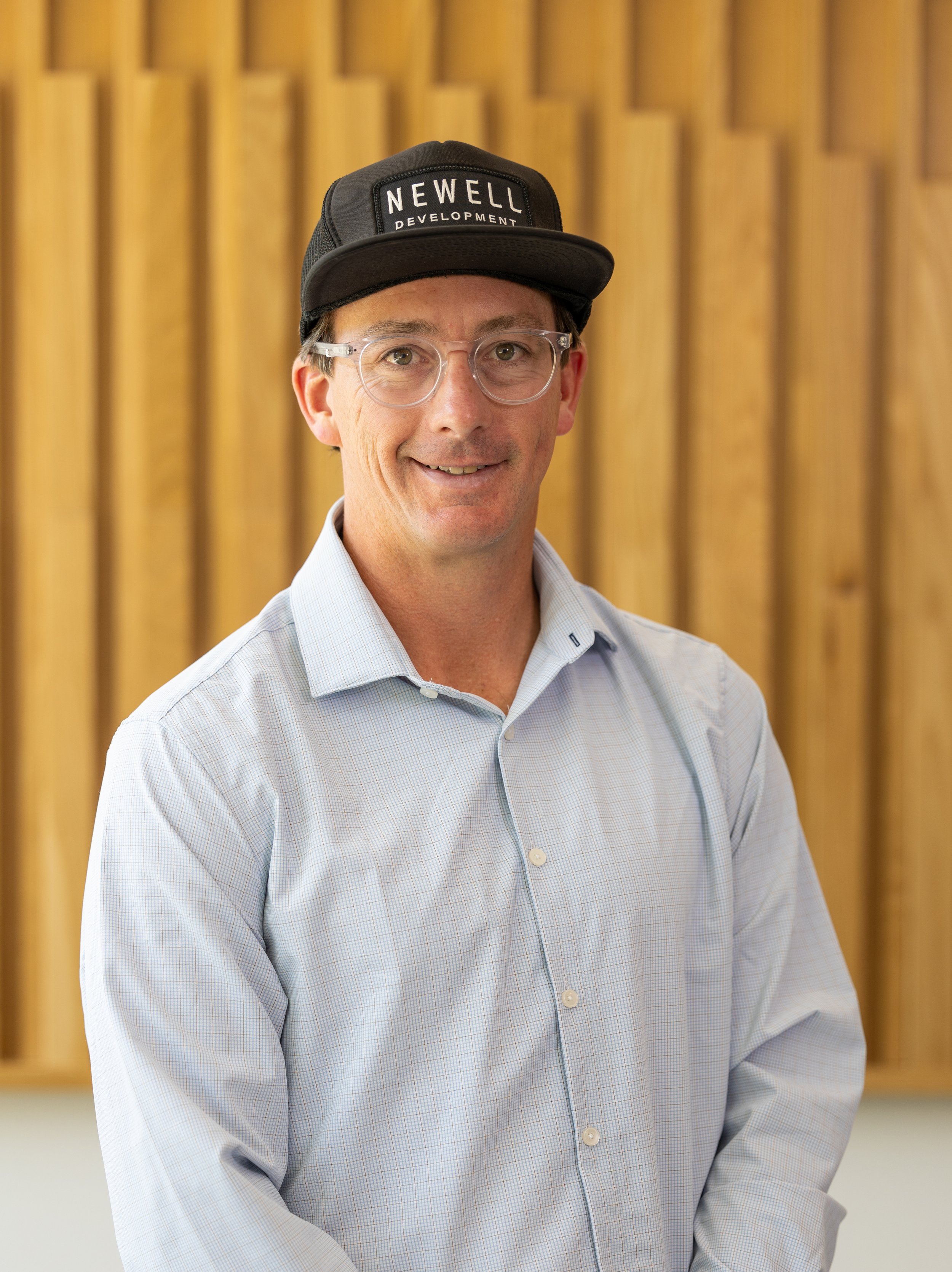
about Jake Newell.
Jake has been involved in the residential growth of Northwest Arkansas for the past 18 years. His background lies in building infill single family, multifamily, and mixed-use developments with a deep passion for developing creative core urban projects.
After graduating from the University of Arkansas with a BS BA in Marketing Management, he transitioned from his career in construction management into development with the formation of Newell Development and Wheelhouse Real Estate. His extensive background in acquiring, developing, and selling unique infill properties has had a proven impact on real estate development throughout the region. Jake says he is most proud of his work when he sees his clients leading active lifestyles and interacting with the outdoor space around them—walking, biking, or gathering with friends outdoors—all that plays into Newell’s mission of “Curating Place”.
Outside of work, you’ll likely find him either riding or running one of Bentonville’s trails, or spending time with his wife and two sons.
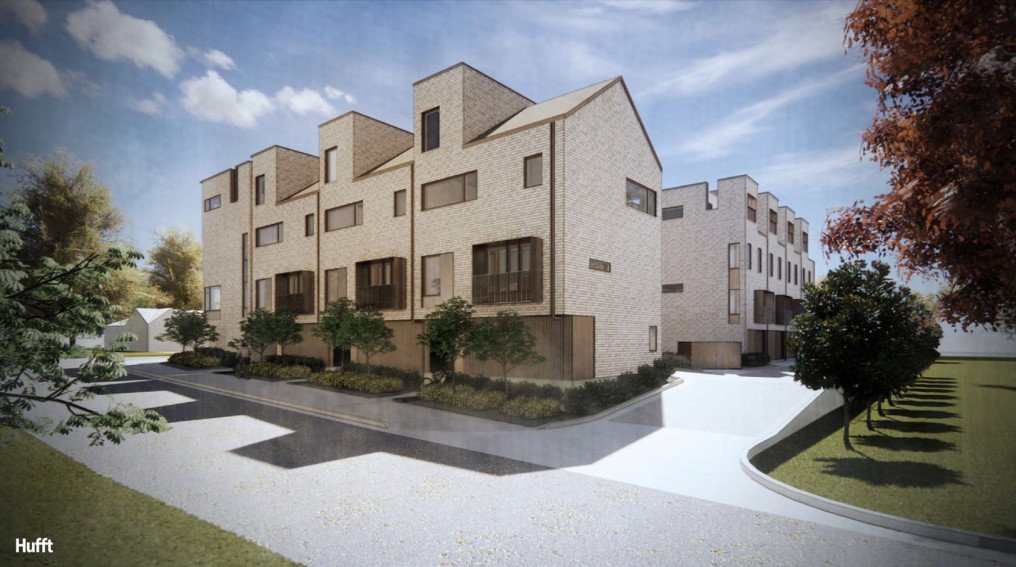
route.
The route for this episode takes a tour of some of the Newell Development initiatives in Bentonville routed via the greenways & roads in Bentonville highlighted active transportation routes through the city.
Take your time and enjoy the route, it stops and ends at the Hub or Pedaler's Pub (you're welcome) & enjoy the quality of life amenities that are taking form in Bentonville. Pay close attention to the different housing options and configurations.
music.

episode notes & references.
Jeremy Gouche’s NWA Democrat-Gazette Letter to the Editor
episode transcription.
episode preview.
[00:00:00] jake newell.: if we don't handle this locally amongst the big cities in Northwest Arkansas my fear is that the growth goes just extreme, it just goes way west and we have major transportation issues and we have people living way far away from quality of life amenities that now not everyone can enjoy them. I think that ultimately we don't provide the supply what will happen is big outside groups will come in and they'll build whatever they want, and they might not build it in our city, they might build it just west of our city, but they'll build whatever they want, and they'll build it at mass scale, and maybe it's not built in a way that really builds our culture and community longterm.
episode introduction.
[00:01:14] mike.: You're listening to the underview, an exploration in the shaping of our place. My name is Mike Rusch, and as we continue our discussions about the state of Northwest Arkansas, the issue of the region's housing challenges has shown a strong cause and effect into so many other areas of our community.
As more and more people continue to choose Northwest Arkansas as a destination for jobs, opportunity, recreation, education, and community, our housing challenges are only becoming more of an issue, and I'm afraid that it's working against our ultimate goals of how we grow well within our community.
The solution may be complex and it may not be clear at times, but without question, the prevailing opinion towards city planning must be towards more creatively building downtown core areas that bring and hold more people closer to the city core. In other words, we must find ways to increase the density of people and housing without working against the culture of our communities.
We've talked to planning commissioners, city council members, housing nonprofit advocates, organizations working to train and empower developers, schools, superintendents, and more about the work they are doing to help solve housing issues that our region will continue to thrive.
However, we have yet to sit down and talk to a developer who is making decisions about what to build, where to build it, and who to build it for.
So today I have the privilege to share a table with Jake Newell, the CEO and founder of Newell Development.
Jake has been focused on building a diverse development portfolio of single family and multifamily housing, mixed use buildings, and offices all focused on being built in locations that are walkable or bikeable. To date, he's directed over $175 million into Northwest Arkansas. So there's real expertise that he carries with him as he speaks.
I would also add that I've had the privilege of calling Jake a close friend for many years. However, his approach to development has truly been a new discovery for me. The more I have learned about the shaping of our region, the more I realize that Jake has been on the forefront of implementing many of the needed options for addressing our housing needs.
So sit back and listen, lots to cover, but I think you'll find some great wisdom and opportunities in what Jake has to share.
episode interview.
[00:03:27] mike.: Jake, thanks for sharing the table with me today. I'm really thankful to be able to sit here with you and have an opportunity to talk through the work that you're doing and the impact that it's making our community. Welcome.
[00:03:36] jake newell.: Mike, I'm super grateful and excited to be part of the conversation with you. I think the conversations you're having are super important and I love it.
[00:03:47] mike.: Thank you, Jake. Let's start with your story. How'd you end up here?
[00:03:50] jake newell.: Northwest Arkansas?
[00:03:52] mike.: Yeah, where did you end up in this world?
[00:03:53] jake newell.: I'll be brief. I grew up outside of Nashville, Tennessee. My family relocated to central Arkansas. Went to high school there. Ended up at the University of Arkansas. And minus a couple short stints in Colorado, have lived in northwest Arkansas since 2000 and I've been in downtown Bentonville since 2008, so love living here.
I can't imagine really living anywhere else right now in Northwest Arkansas than where we live and it's a great community. I know we'll get into it more, but yeah that's how I ended up here.
[00:04:30] mike.: I think one of the things that I love and have been watching you do the work that you're doing for, I feel like a long time, although I'm becoming more familiar with it, I think with a lot of these conversations is this centered us on creating place and what it looks like to Look at this community in a way that maybe someone else has not looked at it before.
And so I'm curious when you think about Bentonville or you think about Northwest Arkansas, what does that trigger in you? What does this place mean to you?
[00:04:58] jake newell.: I could tell my story of, my first job in the construction world was building single family homes, greenfield developments, west of town. And a lot of learning Hey, this is great. But I think there's a better way to do it. And just really came down for me. Like I'm, I was very just became super passionate about places that are already within our city cores, downtowns that already have infrastructure that already have quality of life elements.
How can we get more housing in those places. And how can we do it in a way that is going to stand, longer test of time and give people a better quality of life. And and then at the end of the day, it came down to Hey, how do we find those places? How do we curate something that we're proud of that the neighborhood's going to be proud of that our tenants are proud of, that our homeowners are proud of.
And and at the end of the day, we realized, Hey, everybody wants to live like walking distance to a grocery store. Quality life amenities, restaurants, bars schools, jobs. And not everybody. Some people want to have that long driveway or out in the woods or some people want to be outside of town.
But I think we saw a growing demand in northwest Arkansas and the work I've been involved in Fayetteville and Bentonville for folks wanting to live a very urban lifestyle. And that's the one I live. I love it. I'm on a bike or a one wheel daily. I love active transportation, so I love not driving a car to work.
And even when it's 100 degrees in Arkansas. So it's a good time.
[00:06:26] mike.: Tell me about what you remember of your place, like growing up. How did, like when you were younger, maybe some of your earliest memories of what it looks like to Yeah, it's a feel at home or to feel a belonging to a place.
[00:06:39] jake newell.: I think yeah, growing up my best memories growing up in Nashville tennis outside of Nashville were a creek in our backyard and it was like it was the spot and I think we played in it every day of the year, and I think that spot in that back porch and that probably the first place I learned like about a sense of community.
Yeah. That definitely carried into into, into to where I am now. I think what the real, the real reason I love what Newell development and our company and our team has done over the last couple of years is when I'm like sitting on the back patio at Peddler's Pub and I see folks that we've built units for out riding bikes with their, see them leave their house with their kid on a bike.
And or just leave to commute. It's it's cool to see or leave for a run, but you're like, we created something where people can live an active lifestyle healthy, they have access to things. And it's to me, it's it's, that's where at the end of the day, I'm like, okay that's why we do it,
[00:07:36] mike.: yeah, but you have a personal connection to this.
I think for me, I'm really curious as you think about forming and shaping a place. You're living in this place that you're a part of shaping. And so when you think about that, like what is, yeah, what are the values that you're trying? What are you trying to hold on to?
[00:07:55] jake newell.: Sometimes it's not that fun. No, it's always fun. But yeah, there are moments. I think for me, it's, how do you, I'll give you some exam, some specific examples of like when we were looking at a site, how do you build the Howard just off the square was one of the larger projects we built.
It is the largest project we built. First project we built that had an elevator that was four stories. And it was like, how do we build this building that, has some Ozark vernacular, but it's modern. It's we the form of the building is based off An old Ozark mill and but then it has some modern elements, but it still has a traditional roof.
And like, how do we kind of place that into, it's on a slope coming off the square and how we place that into the side of a hill where the building kind of steps down and then, your next, as you go move down central, it turns into residential homes. So it's like, how do you build something that You know, though it has density, it really fits into the space and isn't, it's not awkward.
Like, how do you create these moments where you move from higher density to lower density? And there's what I've learned and I'm, I am not the brains on that. I've brains behind that part of the operation. I've been really lucky to like, engage with friends that are architects and civil engineers and landscape architects that have really helped me Just gain a lot of knowledge of how we do that.
And most time I leave it up to them. But I think you know, that is, there's just thoughtful ways to look at development. I think when you look at it, when you look at From the angle of what's best for the community? And, that's a hard question sometimes. But, I think in our story how do you create density while still maintaining a sense of place in a community without just a massive concrete structures and that don't really fit the form and the nature of where we are.
[00:09:39] mike.: Let me back up. Just you're getting ahead of me just a little bit. And what I mean by that is I want to understand like when you move through our communities, right? You're looking at things differently than probably most people. You see what could be, right?
You see what is and you're looking at, hey, as this place continues to grow, there are opportunities to continue to improve. This community and the way we move through cities, the way we inhabit cities, the way we build community. As you think through moving through these cities in northwest Arkansas, how do you view that?
Like from a communal aspect? If the idea is to build place right? When what do you see that, that maybe I don't see as I'm, what are you paying attention to that I may not see as I move through these cities?
[00:10:21] jake newell.: I think about utilities. I go right to the fun stuff. And I think how can we have a lot of outdated codes all over Northwest Arkansas and we have a, we don't have enough land that's in that's zoned for multifamily or higher density.
I think I look at, we've created a structure where We basically have people building apartments and people building houses on a quarter acre. And ultimately a lot of the work we did in downtown Bentonville, due to code changes over the years, is not possible to redo. I think I think people want communities where there's more, where front porches and, parking's in the back.
And front porches engage the street and engage the neighbors. And I think that's people want to be somewhere where they can have community. And I think you see the places people want to live in all of our communities, they're, they have a lot of similarities.
They're typically they're, they have a great location close to Quality of Life amenities. But also I think if you look at the neighborhoods where most people want to be, there's clearly a communal element that's strong. And it might maybe not be the front porch, maybe it's the park.
But there's. Some element that's drawing that community surrounding neighbors into community, and so I think as I move forward, I think one of the things I'm passionate about is like in the past, we've done a whole lot of let's put these apartments over here and let's put these, this size of house here and let's put this bigger house here.
And what I'm most, I'd say most proud of what from like 2012, we were one of the earlier people developing downtown to 2020. We built 120 units on southwest b It was a mixture of everything from a studio apartment to a million, million, half dollar home and townhouses all in, in a four block.
Every, we had, a seven, a $700 month studio apartment next to a million dollar home. And it was, that's beautiful to me. It's like we're, we have everybody on the same street. Everybody's walking to the same pub. Everybody's walking down the street to the neighborhood market.
And I think like that to me is the beauty of when I look around with the starting slot development opportunities. That's what I hope to see more of. And I think we're seeing that we're really lucky to be seeing that downtown. It's amazing. It's happening in Rogers. It's happened in Fayetteville.
But I think as we grow we grow and I look more outside the downtowns, that's where I want to see it. It's hey, we have this beautiful thing called the Greenway Trail, and I think it's like the best transportation mechanism we have and we can talk more about that later. I have a lot of thoughts about that, but that's what gets me excited is how do we find these places where we can continue to have a mixture of housing uses or housing types and then also uses of real estate , we have had a crazy amount of demand for like small little 300 square foot office spaces and 300 square foot retail spaces and little maker type spaces for people with small businesses.
And like artists and stuff. So I think there's just a huge demand for something that's unique and different that hasn't been done here. It's, in bigger markets, but it's going to be exciting to see how this place evolves.
[00:13:25] mike.: Yeah, so when you so let's talk about this neighborhood, for example, that you just described. So you've got a 300 square foot, maybe in a studio apartment next to close to a million dollar home where people are, yeah, they're living together.
We've lived in this paradigm for so long of what housing looks like. It's this American dream idea of a single family home, and we've been living in it. Seeing that demand obviously fuel a lot of sprawl. And then we also see large, huge apartment complexes, right? And these are separated and it's caused our communities to, yeah, to grow into ways and into areas that we, you're, what you're telling me is we don't have to do that anymore.
And I'm curious from your perspective, like the demand seems like it's there for those kinds of
[00:14:15] jake newell.: It is. It's there. I think my hope is that, northwest Arkansas as a whole, like all the cities, developers, builders, nonprofits, like we can figure out how to I think we're, in the heart of looking at changes that need to be made. And hopefully we can make changes that allow for our community different property types, and different zoning types and more creativity. I think there's a whole segment of the culture that's moving here due to the nature of this amazing corporation we have here called Walmart. I think the beauty of the types of people that are moving here too, they're not,
They're not looking for that house on a half acre with a three car garage. they're looking to for proximity to amenities and We have a world class art museum, we have An amazing trail system, we have This brand new corporate officeUltimately people want to be close to those things. And we are seeing a large amount of our tenants and homeowners just don't own cars, which blows me away. We have, a pretty significant number. And it's something I would think happens in 5 to 10 years, but not today. And it continues to blow me away.
That, people, there's a whole demographic of people in northwest Arkansas, particularly Bentonville, I think, because of the corporate influence that are coming here from international places. And then you have people moving here for the bike, and we see it in our apartment complexes. We have people that moved here for that reason, they commute every day. And I think it's really, it's been fun to watch that evolve.
[00:15:54] mike.: As you look at this region in these communities you're not looking at what's happening right now. You're looking two years out, three years out trying to plan where the demand is and where we're going.
I'm really curious what either happening or not happening. That's going to influence what this community looks like in a few years.
[00:16:12] jake newell.: Yeah, right now, I think my biggest fear, oh I've got bigger fears, Mike, but my big what? Your fear. Fear I have for Northwest Arkansas is that when I look around and we're part of this too right now, is like interest rates are really high.
It's been hard to start a lot of projects and I have a lot of developer friends that are sitting around. It's just a, it's a hard time to get financing. It's a hard time to raise equity. And I think, even though like northwest Arkansas we're on fire, people are moving here like crazy, and I think the housing demand is here,
and then with all that's going on nationally, it's a very hard time to start projects. My fear is in two years we look up and the current projects that are being built and almost done get stabilized and you look and look at how many projects have not started.
My fear is two years from now do we look up and we have another massive, you know, ramp up in rents and ramp up in real estate prices because this high interest rate environment caused a couple of years of very low housing. We started lots of houses, but I'm talking more on the multifamily side and commercial side.
are we going to look up in two years and demand has gone through the roof, still supplies low. And we have this rent increase like we did during COVID where everything went way up and that I see that could be debilitating to us from the standpoint of making it harder for people to move here and it just very hard on our workforce that's here, and our team we're super focused right now on how do we continue to bring product to the market that meets people at different price points on the sale side and also different rental price points.
And so trying to figure out how through the market, through just a market rate process, we can continue to bring units to the market that are affordable. So
[00:17:55] mike.: when you look out, I it sounds like there's This concern that we're not gonna be able to stay ahead. I feel like a lot of the conversations we've been having is like, how do we catch up with the demand?
[00:18:06] jake newell.: Oh, we're way behind. We're already behind. We're just gonna get farther behind.
[00:18:09] mike.: when you look at the horizon, do you see a scenario, , if something doesn't change and we can get into what those things need to be, maybe here in a second, but if we're behind now and the two year outlook is that we're still not keeping pace to even meet that demand Is that a fair assessment of what you're seeing?
[00:18:26] jake newell.: That's how I feel and you know there's a lot of this that goes on. There's so many factors in Northwest, Arkansas, and we're having amazing growth but I think the yeah, my gut instinct and talking to development. That's what I do for a living is I'm a real estate person. So we just talk to people, so there's a lot of talking and talking to lots of real estate professionals.
And I really see yeah, I see a lot of people with projects on hold and yeah, so that's my concern. I know our cities are working really hard to make some changes to the entitlement process. I think all the cities are looking at their long range plans to see where can they, make it.
Make it a more sure thing for investors make the entitlement process, make the large scale development process smoother and quicker, but that stuff takes time and there's not everybody's on board with with those changes. And I think it, it just takes, I think I'm watching it.
I think all the cities are evolving, but it's going to take time, and I think the biggest thing I'm starting to see I used to always this will be my biggest complaining point as a developer. If you want to get me talking negatively about development, utilities, and I think I think we're seeing positive change in that where, typically in all the cities, Northwest Arkansas, we've, most of the cities have passed over the last decade zoning codes that allow for more density allows you to ultimately that like in a Infill area, this city wants you to fill up the whole lot with the building And so the problem with that though is you have a lot of utility codes that don't actually match the current zoning codes and so you have a lot you buy a lot that you plan on using a hundred percent of the lot for a building in a downtown area, but you know the Electric department or one of the departments needs 20 feet off the front of it for utilities And so I think I'm starting to see positive things where we're like, you know Catching up with getting our utilities out in the streets and. And in denser areas. And there's just, there's just a lot that has to change. You're changing. However many years, 50, 60 years of you're unwinding things that have been done a certain way for a long time. And I get it. It's not all in the cities.
It's some of it is to stay. This is something that's going to take time, even if cities want it to change. There's just so many things that are taking time to unwind. After, 10 or 15 years of doing this, I'm starting to really see that some of those changes happen and things get, things make more sense.
[00:20:51] mike.: I think what you're describing is this process called infill development, and I've heard you describe yourself as an infill developer. Maybe for those that are not familiar with what that looks like, can you explain what that is or how you view that?
[00:21:03] jake newell.: Yeah, an infill developer is someone unlike someone who's going, west of town.
I'm talking Bentonville here, west of town, building a big subdivision or, building a big commercial strip center or some kind of big development that's out in land that's never been developed. We are passionate and focused on locations that are within for us, the downtown core of our work's been in Fayetteville and in Bentonville And we are just super passionate about finding locations where there's already infrastructure, there's already water, there's already sewer, there's already electric.
And, we're close to ultimately quality of life, we're We want to be somewhere where someone can leave their most likely walk, but at least bike access grocery store, access work, as access school access parks, access trails, museums, and fortunately we're in downtown Bentonville and that checks a lot of the checks all those boxes and so that is to me infill development is You know versus going out and creating infrastructure you we're tapping into existing infrastructure, cost less, should, take less time.
It's less expensive for cities to maintain because you're building on infrastructure they're already maintaining. And and so I think, ultimately I think this is where I hope Northwest Arkansas as a whole, all the cities can jump on board and let's get connected down the 49 corridor with the Greenway Trail and figure out how to connect.
In all those infill lots where there Is infrastructure before we go Create loops around the outside of our community with continuous sprawl and yeah, I really enjoyed your conversation with Wes, it's really amazing to hear someone from the farming community really get on board with infill development and I got to reach out to him sometime and have lunch with him.
[00:22:52] mike.: Wes will give you a ride in his truck around his around his property.
That sounds great. You a great experience. Wes is a good man for sure. You, as you think about this infill development though, it really requires a pretty good partnership with cities, municipalities, elected leaders it every level of our community, if I understand correctly.
And so what, what does good partnership look like between developers who are wanting to do this? And, our cities, as they think about growth and planning as well, too.
[00:23:22] jake newell.: I think at the end of the day, a good partnership is one where developer really does care about the neighborhood is not there just to extract and get out and go on.
And go on to another community, and I think we have, we've been really lucky in downtown Bentonville. We've got a great group of developers. We all live here. We're all focused on this place. I think it's been interesting to watch it evolve. I think Bentonville, unlike even some of the other towns, the demand to be here has evolved so fast.
In 2012, we're building houses and we see this massive demand for. People want to be here. And so it's been interesting to watch. I think Bentonville, the planning department has done an amazing job. We've had a lot of great conversations over the last couple of years with Tyler and the process of going from, Hey, we were building just single family homes here now we're building like four or five story apartment buildings here, developers are doing in a way where I think it really does fit into the community. And I think it fits into the downtown and I think it's a constant juggling match. I think sometimes infill development's actually harder because you're building really close to neighbors and sometimes it's just like anywhere people have been in these places a long time. And it just can, infill development can be very challenging. It, from a big picture, you're like, Oh, that should be easy. You're just plugging into the existing grid.
But many times as infill developers, you run into lots of challenges usually there's outdated infrastructure, outdated stormwater. And we, we've rebuilt a lot of that in downtown and I think that's one of the places like I look forward to more conversations with our cities. I think our cities could get real strategic on replacing infrastructure and infill locations to attract more infill development to attract development to a concentrated area before we keep sprawling.
And yeah, it's one of my hopes for the region as we grow.
[00:25:19] mike.: As you're talking about what kind of the future looks like for the next few years and what the outlook looks like and trying to catch up. It takes an incredible amount of collaboration with the cities to be able to do this to almost fast track it in some ways.
Do you feel like we're having the right conversations about how to do that? Or do you feel as a community, and I, we say the city, but the cities are elected leaders who are, there to represent everyone's views. But do you feel like we're able to, to come together in a way that's going to meet that demand.
Are we moving in the right directions? Are we working? Are we looking at the right things to make sure that we're going to maybe try to figure this problem out?
[00:25:57] jake newell.: So I think I'll speak specifically to Bentonville. Yeah, I can't really speak to other communities at this point. I'm all my times focused on Bentonville.
I think, yeah, we are moving in the right direction, but do we have it all figured out? Absolutely not. I think. I think the pushback we had recently on the the affordable housing project with the school district. I think that to me is an example of we got a long way to go. So I think, are we moving in the right direction and we're having way more positive conversations than we've had in years past? Yes.
But do we have it figured out? No.
And I think my hope, and I've said this to you before, My hope for Northwest Arkansas is we can figure it out now.
we have this community where 90% of the people drive into town to work versus live here, and the development just goes to way, way out. My hope is that we figure out a way, like we have enough land. It's Northwest Arkansas. We have enough land in the core to grow a whole lot in the core before we go East and West. And my hope is that we can concentrate that growth in the 49 core in and around our downtowns before we keep sprawling. .
[00:27:07] mike.: When you think about the growth that has been happening and you're talking about, Hey, there are local developers here in Northwest Arkansas, in Bentonville that care about our community and know our community. What, like, how do you hold on to that? Is there fear that changes?
You mentioned you've got people coming in from outside of our region who are looking at this maybe with different eyes as more of investments and more growth and not as concerned or tuned into the communities that we have.
[00:27:35] jake newell.: Yeah, Mike, I think an answer to that would be, we do have, we've got a great real estate and development community here.
A lot of people like that are from here that spent their whole lives here doing really good work. And I would say my answer, answer to that is, I think if we can all get on board the cities and get the right plans in place, then even if, outside capital, outside money comes in outside development, that They follow our plans.
I think if we can concentrate efforts to say, Hey, this is the product we want, this is where we, these are, this is how we want this done, I think we have a better shot at not losing our place, our culture and Northwest Arkansas growing in a way that's, active transportation friendly, cycling friendly.
I think if we don't. I think it's important for all, the region get on board with a plan, then it will go, it'll go extreme West extreme East. And, I think the reason I'm passionate about it, not it's staying in the core is I do believe look, affordable housing is it's challenge.
And I really believe, not just certain, Socioeconomic types get to live in locations that are, have a good quality of life. I think like the thing that drives me is, and the thing that drives a lot of developers is how do we create multiple types of product for people across the board where it's not just, different groups are segmented here and there, but how do we, build product that everyone can live in in a great location.
The story of the, how do we not become, an Aspen or these other big cities that have basically pushed all the workforce 30, 40 minutes down the road, and I think that's what I think is exciting to me about what we have the power, the palette we have of Northwest Arkansas is I really do think we have the opportunity to create housing for all demographics located close to the cores, and so that's what I hope
Our efforts with, local politics and city governments. I hope it can, hopefully over the next decade. We really see that come to reality.
[00:29:38] mike.: As I hear you talking, I hear this kind of duality between we've got to understand this as a city. Yeah. But there are market forces that are there that are saying, this is what we can do, or we want to do, or we will do. And, like, how do you think about what the market can do, or maybe you shouldn't, should, or should not do, versus where we are as a community and our own understanding of even what we want, if that makes sense to you.
[00:30:08] jake newell.: Yeah, it's, that's tough, because, in, and every developer is different, and every developer is developing a different product. And there's, I'm not the guy, I'm not going 20 miles west of here and putting in a neighborhood and farmland. Some of those guys do really great product and have a ton of respect for him, and I think it's really, look, the market's going to drive it at the end of the day.
There's definitely supply and demand is going to drive it. If. We clearly have a low supply of a lot of real estate and even though with high interest rates things have slowed up a little bit, the demand still there, people are moving here. I think that's the and ultimately every city's got a little different view on how the growth should happen and their strategic plan and long range plans for their community.
I think that I think that's the challenge. I think at the end of the day, it's leadership. It's cities have to have strong leaders that say, it does not matter how much money is invested by by developers for quality projects, unless city has strong leaders that will step up and say, at the end of the day, it's, we, cities have to create a plan and stick to the plan and and execute.
And, I think at the end of the day, if, the cities in Northwest Arkansas can, create appropriate housing plans, appropriate long range growth plans, appropriate zoning codes, and they can stick to them and not let let policy and zoning codes drive growth versus the amount of neighbors showing up because they, don't want Things to change but at the end of the day, hey, we're changing And it's how do we change smart and how do we work together?
And how do we create a sustainable neighborhood sustainable region where people want to live, and I think everyone's got to give a little and that's tough, Yeah, it's that definitely I mean that you can sit and talk about that question for probably two or three days but I think the more we, execute on the plans that have been created The more I think and also an ease of Hey, look, city creates a plan for this region of town.
This is how we want it developed. I think the more they can, create ease for developers and time speed. That's ultimately, I think that's what we, that's what the development community needs is just ease of the entitlement process and speed. And. Those things are difficult. I think at this stage of growth, we're in as a community, especially Bentonville
[00:32:42] mike.: doing this kind of infill development requires a whole lot of parties to be in agreement on where we're going. And so I'm curious your perspective as one who is making decisions about what gets built where in this built environment.
What does that process look like to engage with the neighbors that live in these communities to really dream together for their community? What that should look like? Do you feel like you have an obligation to do that? Or is there even a process to do that?
That really works its way towards alignment in how the city and how these this region is going to grow?
[00:33:17] jake newell.: We've changed as a company on this. We've evolved over the years. We started building in Bentonville. 2011 12 it was super flush I mean we were just we were rezoning everything we did because the city had you know a strategic map of how they wanted things to develop but It was still very you know, it was not fully laid out And so we were going lot by lot building single family homes, townhomes, and Unique like little cottages and we were just going lot by lot doing rezonings.
Doing all that and like we would rezone almost every property we bought. Now Bentonville is really has done a great job Of especially in the area in areas in and around downtown and I call that. Tiger to 102 Walton to J in that area.
It's been very thought out now. And so now we like we don't buy a property unless it's already got the zoning. We need to develop. Before I think when we were rezoning, we were knocking on lots of doors and talking to neighbors. Most of the development we were doing back then was low enough density that.
People were excited to see old homes get torn down that needed to get torn down. And we were not going vertical, but we've seen over the years, the more vertical you get, the the tougher it is. And you're never going to make everybody happy. You try to make some happy. And and I think at the end of the day where we're going in the future with some of our projects is more of a hybrid.
Like we've done, several large apartment complexes that have a mixed use component where we're trying to build a apartment complex that feels more like a neighborhood with some commercial on the ground floor that gives people amenities And it's mixed into an actual neighborhood Going forward we're really trying to figure out how we Build multiple types of housing in one space.
So small apartment complexes with Small commercial that could be office or retail along with You We have a lot of single family homes for sale at all different price points. And so we have some unique things we're working on in the future. Like that, I think we've, we see the missing middle is look, there's, we really see it.
The missing, the middle is missing, like you have houses on quarter acre lots and then apartment complexes, and there's definitely demand for something in the middle that we just, you're, We're going to recreate the wheel because our zoning codes, like you said, we've got a ways to go once we there's definitely a place for the missing middle in the downtown core and the zoning that's there.
But the second you get outside of the downtown core and you move very far away from the core, it's it's harder to place it. So we're excited to to work on those projects and really try to, again Different bridge, different price points, different, different stages of life. I think.
It's been beautiful to see in our. Our downtown apartment buildings. And we have retirees to young twenties to young families and to me that's another thing in as a developer like that. Those are the kinds of things that get me excited to go to work. Seeing your properties become active with all different types of people.
[00:36:31] mike.: Maybe the question that is top of mind for me is, with these market forces, you have to make money doing what you're doing, right? Do you have an incentive? What's the incentive to really work on the affordable housing, quote unquote, problem? At the end of the day, you want to meet the demand.
[00:36:49] jake newell.: Yeah. And I think too, like what's affordable, it's a big, there's always a, we're not doing necessarily like HUD affordable or we're not doing tax credits, which are, I think I'm more of a niche and have a more boutique thought on it and ultimately what I'm trying to do is go, Hey, look, like how do we in a market rate form with money that we we get loan from banks and then private equity or, LP investment, how do we invest those dollars in a way where we were able to get a return and, bring markets that are, or, we're not 50 percent of AMI, but we're, we're hitting the 60, 70, 80 percent of AMI on some of the things that we're bringing to the market and how do we do that in a way without, how You know without not we're not using non profit dollars where it's all market rate and so it's definitely harder to do on the apartment side I feel like we're More likely to hit some of those in the single family house side with some projects We're working on where we can do some really small affordable cottages next to a million dollar home and And I you know and really mix in a lot of different types of housing where you have a whole spread,
I'm just to clarify when you talk about affordable housing to me, I love the all the affordable housing. That's, we've had some recent projects get approved. It's so exciting. Endeavor Foundation is doing such a great job. Jeff and his team. But I think the thing that I'm like really interested in and trying to what I'm talking about here is ultimately like I really want to be a part of projects that yeah.
We can have people of all socioeconomic types in. And there's all different types of people and we're not segmenting affordable oil. That's an affordable project. Those people live there. And so that's ultimately ultimately that, I think that's what driving us to, to look at different product types.
And then also the there's a lot of challenges to financing. big apartment projects right now. And so I think because of that, we're starting to look at more of a missing middle product. Product that's a combination of townhomes, duplexes. Single family homes all clustered around each other in a community friendly fashion.
And try to hit, some price points that, really are affordable.
[00:39:03] mike.: Jake, what makes that like more possible?
Because it sounds to me if I'm listening correctly, it sounds like there is market driven solutions to create the diversity of housing that we need to accommodate everybody that may want to live here. And so if that is possible, number one, that is my question. Is it possible? And if it is possible, like what would prevent us or what could be preventing us from doing that? Is that zoning configuration? Is that just maybe our own understanding of how this can work? Is it like, how do you think through that?
[00:39:36] jake newell.: I think honestly, more, quicker entitlement processes with cities. Clearly, it definitely works.
I think city saying, Hey, if you will build this mixture of product, we will fast track you, which Bentonville is working on that. But I think at the end of the day, you're also battling look, a lot of people have done it one way for a long time. And you're not going to get everyone to, most people have a system and a product and it's the fair market. You're not going to change everybody. I think Our hope is that, as we see, there's other developers working on this. There's lots of developers Northwest Arkansas. They're thinking this way. There's a whole movement of people. And I think that Hopefully as we get more projects bill we get more traction We can prove ultimately you're proving to the market that hey like People want to be in that subdivision.
They're okay with on that. They're okay with living on that smaller lot. They're okay with they want to be in a neighborhood I think the more we can create neighborhoods That aren't about the car aren't about a big two or three car garage that are more about neighbors interacting that have different product types.
And I think we can show that it's been done. I think about the places that are really unique to visit that people go on vacation to. Most of them have those things, they might be real expensive places at time, but there's some really amazing. Yeah. Developments, some really amazing neighborhoods all around the country that have, that are the neighborhoods you want to go walk around in. And you want to go spend your vacation in and they have those things. They have, a 5 million house next to it, a 350, 000 home that's restricted to a, local workforce.
There's communities around the country that are doing this really well. And it's, how do we implement what they're doing? How do we, ultimately we're. I think we're changing the way things have done been done, and I think the more we have a demographic moves here that is not concerned about a large lot in a larger house and a multi car garage, I think that the more the market changes and the market will change and I think from the statistics we see, most of the people moving that we talked to in Bentonville, not just statistics, but just the communication we have with potential tenants and home buyers, they're not moving here for a big house outside of town.
They want to be close to the core. They want to be close to their job. And most of them are moving here for, to take part in the outdoor lifestyle that we're so fortunate to have here. And yeah, I think at the end of the day, like the market will probably change it, but it just takes time,
[00:42:11] mike.: What are we missing as a community if we don't seize this opportunity?
[00:42:17] jake newell.: I think we miss the connectivity. We look up and, we're like any other city we don't want to be where there's a loop, a big loop around town and the housing goes out. Out and, we have a bunch of vacant land and around our core where people could live, but there's no development, and I think I think, ultimately, like you talk to every city that's happened and they all say, we should have just put in a lot more infrastructure for developers and kept it here, and so I think hopefully we were able to, load this, load the 49 core and the core of our I think it's important to keep our downtown's up with really great infrastructure over the next decade and keep that development close to quality of life and clearly the reasons that people are moving here.
[00:43:03] mike.: Is there anything specific to that? Maybe we're not doing that. We should be doing to make sure that happens. Or obviously, we don't want to wake up 10 years from now and realize, gosh, we should have been focused on that back in 2024. I'm going to let you, you can go wherever you want with it.
But if you could wave a wand and say, if we did this, we could really take advantage of the growth in this community.
[00:43:31] jake newell.: I, I think cities just have to be bold and say. So we're willing to say, hey, we want this. We want this development. And. Here and we want it in this part of town and we want it. Here and, we're willing to put, we're willing to. Help pay for the infrastructure. We're willing to help developers. Get to the market quickly. And then I really think ultimately that's what it comes down to. It's. If developers go. I mean at the end of the day developers were for a lot like I don't think it's a big part of why every other Person in the world.
It's we're going. Where it's easy. I'm developers, real estate professionals. We go where it's easiest. And so I think a lot of why there's mass demand for housing and you know what? Sometimes it might be much easier for a developer to just go build a hundred lots. 20 Months to 15 to 20 miles that way.
And it's just easier. And so I think we have to like, Think as a city and How do we I mean we get what we want out of the private development community by making a Certain tract easy for them, And I think we have to look at what does the market want? And how do we work with the developers?
It's not dictating. Hey go we go do this But I think there's definitely some alignment between what does the market want? I think we have to find that alignment like what does the market really want and I think What are developers willing to do? And then how is the city? Can we just make that easy for them
[00:44:52] mike.: and just for clarity?
And I don't this is I don't have any like alternative agenda behind this question. Like when we say the city, we're talking about our elected officials for this. Is that correct?
That's correct.
Who represent obviously a constituency in our city who represent Cares about this place.
Yeah, they use language and I'm biased we've had the privilege of knowing each other for a long time and like the language that you're using as a developer the language that People in this community have been using all through the conversations. We have it's a very similar language It doesn't feel like there's a disconnect and I think for me When we look at like where is that city will where does that willpower come from?
It is about us as residents expressing to or giving priority to our elected officials to make decisions like you're describing that are going to put us in a place where we all collectively, it sounds like we want to be.
[00:45:47] jake newell.: Yeah, it's still really challenging. I,
[00:45:50] mike.: Why? Why is it? Is it necessarily challenging or are we doing this to ourselves?
[00:45:55] jake newell.: I think we're some ways we do it to ourselves. I still think there's a vocal minority that gets what they want more times than the majority. And I think I see it time and time again in our community in real estate. I think that we don't always as a city follow the plans. And we don't always follow the mission.
If you really look at, the plans. I was really lucky to be involved in right after I moved to Bentonville I was super, became super involved in the Southwest downtown Southeast and Southwest downtown master plan. And ultimately out of that's why I chose to focus on Southwest downtown Bentonville for a decade.
And that plan really outlined this is what we want in the Southeast side of downtown and the Southwest side of downtown. Yet I think I still saw for the next decade, developers fighting fighting to get projects approved. It wasn't easy, and I think there's this constant, pull and play trying to get projects completed.
I think, it's, it comes down to the right thing right now is we need housing for people. We need all different types of housing. We're shy on housing and in, in many ways. And for multiple, for people all across the board at all price points.
And so I think there's gotta be a little more of a a strong will. And I think we have still a divided, in Bentonville in particular. I'm sure I could say it on here. It's like we have a pretty divide. I think the, there's just some bipolarness with our leaders and we are not all moving in the same direction.
And I think, hopefully hopefully we'll have leaders emerge. And there's some great leaders with our city and, I think can't say enough about so many of them and I appreciate their service, but I think we. We're at a moment where we need a couple of people to emerge and lead us in, step up and move forward with what we all know is right.
And I think it was really painful to watch the affordable housing discussions. I think a lot of that is education, and I think we are in a moment where we have a big opportunity to really shape a place. And hopefully we'll have, hopefully it'll happen, it's definitely in a place where we've decided as we've decided we're not going to work on projects in Bentonville that aren't my team would probably say, don't say this, but projects that aren't fully entitled, we're not going to go try to.
It's just too much of a wild card right now. There's, you don't know whether a project's going to get approved or not approved. And and I don't say this, from the, doesn't have anything to do with the city departments. It's all politics, the departments are so helpful but you still could get to the city council.
And I think our city, like we need the alignment between the planning commission and council, and maybe that's tough to say and I shouldn't have said that, but yeah, we just need to, for me being involved in that Southwest downtown plan over a decade ago and seeing all the plans.
Look, go through the files. We've spent millions of dollars on consultants to come in and tell us, How we should integrate our bike and pedestrian plans and how we should develop and I think that the plans are there let's go execute them, and Like I think that's where we're at as a city is let's go like what's really executed, you know What does it really mean to execute?
[00:49:11] mike.: Jake when we think about the ways that the community is growing and if we are behind And we're not posed to like when we look two years out, we're still not posed to maybe catch up.
Yeah
And we need to have alignment leadership within the city planning You know, or the city council aspects and in order to catch back up, what happens if we don't do that? What kind of market forces enter the scene or could enter the scene if we don't do this and handle this, locally,
[00:49:44] jake newell.: Mike, I think if we don't handle this locally amongst the big cities in Northwest Arkansas my fear is that the growth goes just extreme, not even in Bentonville proper, I think that ultimately we don't provide the supply what will happen is big outside groups will come in and they'll build whatever they want, and they might not build it in our city, they might build it just west of our city, but they'll build whatever they want, and they'll build it at mass scale, and, that gets absorbed out somewhere, and maybe it's not built in a way that really builds our culture and community longterm.
We think we can all look at big cities that we don't want to be like, and so I think that it's important for us right now. I think when, especially from what are we, 600, 000 from 600, 000 to a million, I think, now's the time, I think we can really create a framework.
So that when we do hit a million and a million seems to be the magic number
[00:50:40] mike.: like from a Metropolitan Statistical Area.
Yeah. Yeah.
What happens when we hit a million?
[00:50:44] jake newell.: When we hit a million, then we're on everybody's radar. And, people will be here, investment in all kinds of businesses and real estate will really pick up at a million.
And for whatever reason, those guys just like that number. And yeah. I think when we hit that, I think from now to a million, we have a huge opportunity to create a framework so that then we control the outside capital, the outside, the calm extractors, if you will, the folks that are just here to, make money that, caring about our community, maybe isn't the, at the top of their mind, it's more come in and make a buck and find the next hot spot, and so I think if we. Like I said, call it framework, call it get our canvas outlined. I think this place could grow in a way that's really magical. It already is a magical place. It's a great place, but I, really hope we continue to grow in a way where, you know, the our, the core of Bentonville, the amenities that we all love are accessible to everyone.
[00:51:46] mike.: Jake, we've talked a lot in here in Northwest Arkansas about really this, I would say the word crisis of affordable housing. Is it just affordable housing where we're having an issue? It feels like what you're describing is actually bigger than that .
[00:52:00] jake newell.: No, I think it's all product types, all price points.
[00:52:04] mike.: Yeah.
Jake, one of the things that I really appreciate with the mission statement that you put on your website, And you've spoken about a little bit, but I want to hear about this a little bit more. You talk about how you believe in place, you believe in community and communities thrive when diverse people come together to live and share ideas.
[00:52:21] jake newell.: unpack that for me. What does that mean? You're creating spaces for this to happen? What do we benefit? Mike, I, for me it's not just like we create this place for these people of, everybody's same income, same stage of life, same age kids, but it's good.
Yeah. Same color skin. Yeah. But it's a place where look, there's maybe different, price options across the scale. There's also, different product types where you might have a A couple in their seventies. And then you have a full family and you have folks that move, been more so lucky to be, have such an international community.
And you have, a family that just moved here from India and a family that just moved here from Europe. And all of a sudden you look up and everybody's in the courtyard of this property grilling, and I think to me that's the beauty of Yeah, it's the beauty of creating real estate product that, it's thoughtful, it's curated in a way where you have different offerings and you could have that kind of group of people come together, and I think for me, I've said it in this interview before, but I think, how do we create a framework for this place that continues to do that?
And, I'm seeing it, it's beautiful. There's developers in The Southeast part of downtown there's developers in the Northwest part of town, downtown Bentonville. We have people that are doing that. And I think as we grow out and we add all these people, how do we continue to do that? Versus just creating, buckets of creating, segmenting homes and product types.
So that's what I get most excited about. That's what I hope.
[00:53:57] mike.: Jake, as you describe the types of housing that are really available or could be available here people without, people without a car here, which seems to me like I've grown up here my whole life.
It feels so foreign, but especially the past week, a couple of years, like I, I don't find myself like if I can avoid driving my car, I'm going to do it every day of the week. But I live in a place that facilitates that. So as you're thinking through this idea of infill development and where people wouldn't want to be.
This conversation about active transportation becomes really important to your investment decisions around where properties go and what they look like and who can live there. I would love to have you explain how you feel about that. I say necessity. That's my bias, maybe, but like, how do you feel about this ingredient of these active transportation conversations that we've been having as a city?
[00:54:50] jake newell.: For me, first of all. I love the bike and I think there's a component to mental health. There's a component to happiness, to a commute on a bike versus sitting in a car. I'm super passionate about the Greenway Trail. We have multiple projects we're working on that either have close proximity or right on the Greenway Trail.
I think that, as I look at future projects, it's all about that. And it's all about places on the Greenway trail. And I think as a region, we got to think about like, where are the places on the Greenway trail? You clearly have North, South access, to go places, but where are the places with decent East West pedestrian, or decent East West bike lanes and where can we really locate a large amount of people that can live that.
And I think that cycling centric lifestyle on the Greenway and I think the e bikes proven that even in Arkansas where it's 100 degrees, it's, you can commute, and so I, at the end of the day I think that and really, the people we talk to on a daily basis that are moving here, that's why they're here, they want that lifestyle, they want to leave their apartment or their home, go down the Greenway trail on their mountain bike, Connect to a trail, ride singletrack, come back to town, go to the hub, Peddler's Pub.
That that's the draw here. And so I think not only that, but then I think there's the component of just transportation. It's, it replaces, Potentially, the health benefits, the quality of life benefits and, the amount of people that I'm meeting that have an e bike and a mountain bike and then don't have a car, if they, if it rains and they gotta go somewhere for work, they're gonna Uber, and I think that hopefully, that we as developers and cities can continue to activate the Greenway Trail.
And I think the more we activated it the healthier community we create, ultimately.
[00:56:47] mike.: Yeah, I feel like I'm a little late to the bike as active transportation conversation, right? I've enjoyed it recreationally. It's been life changing. But the more I lean into what you're describing I, I can now I'm in this place where I don't know if I could live somewhere else where that wasn't a part of what we're doing.
as I hear you talk like you're connecting the dots that it feels like sometimes our city has taken this approach, maybe not intentionally, not in a bad way, but like we're building and then we're going to think about active transportation. And if I understand you correctly, you're saying, no, we, the active transportation decisions that we're making in the city are going to drive. You're not going to be able to make a lot of development and investment decisions by what you're doing.
[00:57:28] jake newell.: Yeah, absolutely. I think where we build east west bike lanes could be, across Northwest Arkansas as a whole. And, and right now we have, it's unbelievable. I rode some connector trails that I didn't even know existed on the greenway in Rogers the other week.
It's unbelievable the access we have. You To the region on that trail, on the Greenway trail. And yeah, I think that's got to be top of mind for cities. And yeah, some people are going to have to drive kids in different schools and not everyone's able to do that. But I think as we continue to grow, I think this, the amount of people moving here for that, it's just going to get bigger and bigger.
And I think it's such an amazing amenity we have and, just hope we can. Keep placing people close to it Yeah, I live I can't have the same thing Mike. I live You know not far from here. I ride my bike every day sometimes one wheel and I can't imagine not It can't imagine not Being on a bike every day.
So
[00:58:31] mike.: well, Jake, I Would love you know, I've asked everybody this question I know you've spoken to your fears a little bit But maybe to ask you a little bit deeper like what? Within the scope of, yeah, the work you're doing, but within the community that clearly care about what are your fears for this place?
[00:58:48] jake newell.: Mike, I think that. Now my biggest fear, I've spoken about it a little, but I think my biggest fear is that we don't make decisions. We don't stand up for what's right. We don't, we don't move the needle. We don't lead and then time goes by and maybe we do, we get the core right, but we don't get the connection of the Greenway Trail to the next town right.
And then I think, we Leave it up to people that aren't from here that are from, another part of the country or, to come in and Decide what they're gonna do, and I think like again my that's my biggest fear for the community is I think we've got The a lot of the downtown's we've got it, right and they're gonna fill in but I think as we look bigger than the downtown's and how does the 49 and the Greenway You Connect these communities.
Like, how do we really do this in a way that is beautiful and isn't done by someone that just is going to come, pump out some cheap product and get a return on it two years later and move on to another city, and to me, that's my biggest fear. Not my biggest fear, but fear as a developer fear is someone who's, who really cares about the landscape of Our communities from a real estate development perspective from a city planning perspective.
That's my biggest fear.
[01:00:11] mike.: The foundation of all of these conversations is really this idea of community wholeness, that we together are building a place and asking the question, what do we want it to become? And you're in in the driver's seat in a lot of those areas, making decisions about what community looks like.
What does community wholeness look like to you?
[01:00:32] jake newell.: That's another good one. I think that community wholeness is Again, like we've had this conversation about diversity, about inclusion really in within real estate. I think community hold us in the field I work in means, creating, curating, I'll say use the word curating place, but that's our mission curating places where we have diversity and we have different people from different backgrounds different stages of life.
That are able to live in a place with quality life amenities and enjoy community. I think that wholeness comes from not segmenting these people here and these people here and these people here as we've done in real estate for the last 50 years. But it comes from like, how do we do this in a way that's healthy for everyone and everyone gets the benefit of Of a quality of life.
I think if we look up in 10 years and we've got, not we're always going to have neighborhoods built certain ways and this and that. But if we've got, like 20 30 percent of our housing stock built in that way we'll be doing really good, and we'll have a very inclusive group of real estate projects in the region that really bring diversity together.
[01:01:49] mike.: Jake, I'm incredibly thankful just for sharing a table with me for your time, for your insight.
We've had the privilege of being friends for a very long time. And so I'm for you and I'm biased for you. But I've, I also, I think I've learned a lot over these past conversations about what it looks like to move towards this idea of infill development and how it forms and shapes communities.
And thank you for what you're doing. Thank you for speaking in this conversation. And yeah, keep doing what you're doing.
[01:02:15] jake newell.: Thanks, Mike. I want to say I really appreciate how you, you put people in a room to support each other and I love what you're doing with the podcast and thanks for having me.
[01:02:25] mike.: It's been a privilege. Thanks, Jake.
episode outro.
[01:02:29] mike.: Well, thank you to Jake for his time and the insights and how our community is being shaped from the viewpoint of one who is striving to meet the housing demands. Jake's work emphasizes incorporating diverse housing choices and price points to build an even more inclusive community.
Addressing these challenges are complex, but Jake and his team, and Their story demonstrates that there are viable ways forward. However, progress requires clear and consistent policy alignment with regional municipalities.
And while market driven solutions are possible, current policies seem to be preventing developers from fully capitalizing on these opportunities. That leaves a gap, and that gap necessitates intervention from other entities, like the Excellerate Foundation and the partnership they have with Bentonville Schools.
And although these initiatives are making progress, they are limited by the funding sources or the charitable requirements for meeting the full market demand.
Back in February after the Bentonville City Council narrowly voted against rezoning for the Bentonville teacher housing initiative, Jeremy Goucher, Newell Development's Director of Construction Services, he wrote a letter to the editor of the Northwest Arkansas Democratic Gazette to express his disappointment in the City Council's vote. I'll include a link to that letter in the episode notes.
But to me, this shows how deeply invested Newell Development is in addressing the region's housing needs. They supported housing solutions even when they didn't directly benefit from them. Highlighting, in my opinion, their commitment to the community. I think our cities would benefit from forming partnerships and creating policies that encourage developers, like Newell Development, to continue investing in comprehensive community solutions.
next episode preview.
[01:04:05] mike.: And for our next episode, we're going to explore the other side of this conversation. We're going to discuss the subject of equity. Equity, referring to fairness and justice, which is different than equality, which means providing the same thing to everyone.
The idea of equity recognizes that we do not all start from the same place, and that requires us to acknowledge and adjust for those imbalances. So to dive into this topic, I have the privilege of sharing a table with Emma Willis. She's a founder of Impact Period. Emma has dedicated her life to fighting for equity in our systems.
[01:04:35] emma willis.: You have to have community before you can have belonging because community solidifies it. If the 10 people standing around me are at odds with me, I don't belong here, but if three out of the 10, hell, even two, give me this sense of pride and community I belong, because you are signaling to me that I got your back.
I see you, I'm here with you, I hear everything that you're saying, and you may not be able to say it, but I'm definitely going to uplift your concerns and your issues. That is me finding belonging. I am here, Mike has my back, now we can go out and do anything. I belong in the fabric of NWA. But the equity piece of that has to come in with me belonging here and knowing I have a voice. That's what's equitable.
[01:05:26] mike.: I look forward to sharing this conversation with you.
Emma's got a whole lot of insight and she's actively working on some really key initiatives here in Northwest Arkansas.
route.
[01:05:34] mike.: And I put a route together for this episode to take you on a tour of some of the new development initiatives in Bentonville specifically. This route uses the city's active transportation routes via greenways and roads to go see some of these properties. Take your time and enjoy the journey the route starts and ends at the Hub or Peddler's Pub, you're welcome, allowing you to experience the quality of life amenities that are taking shape in Bentonville.
Pay close attention to the various housing options and configurations that you see along the way. This may also be a good time for me to both brag and disclose a little bit That my incredible wife, Corrie, who runs their own successful design company has contributed to the design and appeal of some of the Newell development projects.
Again, I must admit that I'm a recent convert to understanding how this type of development can be done well to create and enhance the community and culture of a city.
music.
[01:06:21] mike.: And so we'll end this episode with some great music, and I could choose no other artist than Ira Wolf. I would like to officially call her an adopted Arkansas singer songwriter. I don't know if I have the authority to do that, but I'm going to do it because she has played such a vital role in building community here in Northwest Arkansas.
Whether it's through her consistent presence at city sessions, the Home Sweet Home Festival, or in Jake and Jennifer Newell's living room on a quiet Sunday morning with friends, Ira has become a beloved part of our local culture. So Ira, thank you for being an incredible part of our community and for being an exceptional artist and storyteller.
If you're on Spotify, you're going to roll right into her music. And if not check the episode webpage for links to her work.
And as always, I just want to say thank you for following along and be a part of this journey. You are an incredible part of the shaping of our place.