
the bible church with Mark Schatzman.
Fellowship Bible Church started in a Bentonville living room in 1983 with seven couples and a year in the book of Acts. Pastor Mark Schatzman on welcome versus belonging, following your people into ministry, and the hubris hiding inside a bike trail he didn't build.


episode notes.
Fellowship Bible Church is new to a very old religious landscape. Most of the congregations in this season go back to the 1830s, to circuit riders and brush arbors and the first white settlement of this county. Fellowship starts in 1983, in a living room in Bentonville, with seven couples who spent a year reading the book of Acts and asking whether a church could actually live that way, not just in a person's life, but in a whole region. They wanted their spiritual fingerprints everywhere and their name nowhere. Forty-two years later, Fellowship gathers one of the largest congregations anywhere in Northwest Arkansas on a given weekend, and it is still preaching from the well where it first began.
about our guest.
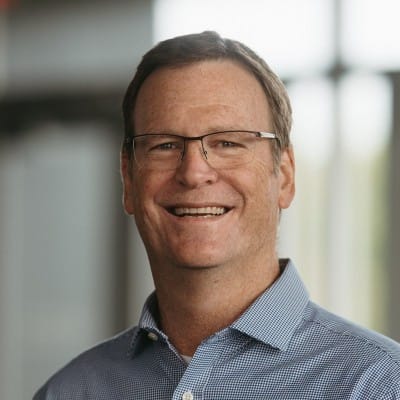
Mark Schatzman grew up Roman Catholic in a military family that moved eleven times in fourteen years, walked away from church at thirteen, and came to faith at eighteen at the University of New Mexico. He arrived in Northwest Arkansas in 2005, almost exactly halfway through Fellowship's history, and was mentored by Robert Cupp, the founding pastor from the living room days. In this conversation he describes a church he insists is an organism rather than an organization, one whose program is its people, a woman with no personal stake in disability who started what became a decades-long ministry, a small group that filled half a garage with canned goods and became Samaritan Community Center, where Schatzman now serves on the Board of Directors.
episode references.
- Fellowship Bible Church of Northwest Arkansas: https://www.fellowshipnwa.org/
- Fellowship Bible Church Bentonville: https://www.fellowshipnwa.org/bentonville
- Samaritan Community Center: https://www.samcc.org/
- Havenwood: https://havenwoodnwa.org/
- Fellowship Bible Church, Little Rock: https://www.fellowshipar.com/
- Cornelius Plantinga Jr., Not the Way It's Supposed to Be: A Breviary of Sin: https://www.eerdmans.com/9780802842183/not-the-way-its-supposed-to-be/
episode outline.
- Episode preview (00:00:01)
- Episode intro (00:01:28)
- Interview begins (00:04:07)
- Growing up Catholic, a military childhood, and faith at eighteen (00:04:37)
- The road to pastoring, and finding a church that would take someone who knew nothing (00:06:54)
- Is this home? Lonely roads, road bikes, and a third culture kid's welcome (00:10:30)
- The story of Fellowship: seven couples, a living room, and a year in the book of Acts (00:12:01)
- Why plant a church here — hunger for a different expression, and no judgment on the old (00:17:24)
- Could they have imagined this? "I don't think I'd have the courage to stay with it." (00:19:14)
- Still connected to the origin — organism, not organization (00:20:34)
- People and footprint: welcome, belonging, small groups, and Lisa in the nursery (00:24:14)
- Fellowship's role and a theology of place: "We don't create much ministry. We follow our people into ministry." (00:32:53)
- Samaritan Community Center, and the second half of the sentence about the poor (00:37:12)
- Growth against need — the two Americas, and living like a pipeline rather than a bucket (00:39:35)
- Expectations of the church, shalom, and Plantinga on things not being the way they're supposed to be (00:42:32)
- Pastoring in the noise: politics as the new American religion, and the sixty-first hour (00:48:24)
- Culture wars versus cultural apologetics: "It is never not a time to treat the teachings of Jesus like they're not valuable." (00:50:33)
- The rally point — wanting the kingdom without the king (00:52:55)
- Advice: turn down the noise, and the dumpster fire in the corner of the parking lot (00:55:08)
- Fears: hubris, and a bike trail Mark Schatzman does not own (00:59:20)
- Wholeness: called a coward, and why it's no peace, no justice (01:01:33)
- Talk back with Monica Kumar (01:04:03)
- Episode outro (01:17:49)
episode transcript.
episode preview.
[00:00:01] mark schatzman.: We're, We're chasing something out there that is just, well, it's creating anger and anxiety. Our culture right now runs on those two emotions. Everything in marketing tells you that the way to go viral is to make sure that you create either anxiety or anger. And and I just think we're so susceptible to it, that it's just time to turn it down and tune into the quiet, still voice of God that's through His Word and through the person of Jesus. By the way, that's why I need the church. I don't do church because they need me. I'm the most selfish guy in that building. I need the people of God to remind me where life is found.
episode intro.
[00:01:28] mike rusch. (2): Well, you're listening to The Underview, an exploration in the shaping of our place. My name is Mike Rusch, and today we're sitting down with Mark Schatzman, the congregational leader and teaching pastor at Fellowship Bible Church in Bentonville.
This season, we've been talking about the faith of Northwest Arkansas, the actual congregations on this actual ground. And right now, we're asking questions about what's emerging and who holds power, and how does that power work itself out into our communities?
Most of the churches we've sat with up to this point are older. Some go back to the 1830s, to before the Civil War, to the first white settlement in this region, and Fellowship Bible Church isn't one of those. It starts in 1983 in a living room in Bentonville with seven couples, which makes it new to here. But look at that year. 1983 is right before this place started to become what it is today. The trails weren't built, most of the roads weren't built, nobody was moving here from everywhere yet. So Fellowship didn't arrive into a finished Northwest Arkansas. It grew up alongside the region. Same decades, the same explosion, forty-two years of it.
And it's a Bible church, which isn't a denomination. No bishop, no convention, no cooperative program. The local congregation that governs itself and gathers around the biblical text. The newest kind of church in our religious landscape. But rooted in a way most large churches aren't. Mark wasn't in that living room. He came here in 2005, almost exactly halfway through the church's history. The man who started it in the living room is the man who mentored him. That thread is still intact.
This is a conversation about what happens when a church grows that fast in a place that's also growing that fast. You end up holding a platform that nobody set out to build. Fellowship Bible Church is one of the largest churches anywhere in the region on any given weekend. And Mark says something about that in here that stopped me, that none of them earned the right to hold that platform.
So maybe a couple things to listen for. Growth brings people, and this whole region is people who just got here. Being welcomed somewhere is not the same as belonging there. I wanted to know what a church this large thinks about the distance between those two things. And then what do you do with the platform once you're holding it? Mark has taken a position on one, and it's cost him something. He tells you what he's been called for it.
If something in here resonates with you or bothers you or maybe we're going in the wrong direction, there's a send us a voice message button on the underview.com homepage. Tell us what you're hearing and what is meaningful.
All right, we've got a whole lot to work through today. Let's get into it
episode interview.
[00:04:07] mike rusch. (2): Well, I have a privilege today of sharing a table with Mark Schatzman, who is the lead and teaching pastor at Fellowship Bible Church in Bentonville. And so Mark, welcome to this conversation. It's really a joy to have you here. Thank you.
[00:04:17] mark schatzman.: Mike, thanks for the invite.
[00:04:18] mike rusch.: Oh, well, I'm excited to talk to you. And I do have to say in full disclosure, I know we've been friends for many years, and so it's been a joy to know you and to watch you in your role at Fellowship, and I'm just excited to be able to sit down and have this conversation with you. So thank you, Mark, for doing that. I
[00:04:32] mark schatzman.: am as well. And knowing us, we may take a few bunny trails, so I'm interested to see where this goes.
[00:04:37] mike rusch.: Well, I will follow you wherever you lead. So, Mark, I'd love maybe to start with maybe get an understanding of just a little bit of your background and how you got to be where you are today. And selfishly, I'd really love to understand as a part of that, just your own personal journey of faith, and when did faith become real to you?
[00:04:55] mark schatzman.: Yeah, well, first of all, full disclosure, I not only never thought I would be a pastor, I actually said that in my 30s. I remember my wife and I, Lisa and I, talking one evening, and I said I will never pastor, and if I ever had to pastor, I would certainly never do it in the Bible Belt." And we might not be the buckle of the Bible Belt in Bentonville but we're in the belt loop, and we're there. And so I love what I do. The journey is was surprising to me. I did grow up in a church background, grew up in a Roman Catholic Church background. My family I would describe as far less than devoted and a little more than nominal.
So in some ways, we were cultural Catholics, and in some ways, we were a little more than that, a little more practicing than that. But real candidly, by the time I was 13 years old, I remember asking my parents, "Do I just, can I just not anymore? Can I just not go to church with you anymore? For sure not go through the confirmation process that was a part of our faith tradition because it just doesn't make sense to me."
And so my teenage years was, faith background was really n- I wouldn't say nonexistent because there was a God consciousness there, but there was definitely not a practicing in a community of faith. And that was really up through the freshman year of college. So grew up in Albuquerque, New Mexico.
Actually grew up in a military family, so we moved everywhere until we landed in high school in New Mexico, and then went on to the University of New Mexico. And about that time the only way I can describe it is my life was wonderfully interrupted by Jesus. And the interruption came because on the inside, there was just a lack of peace, for sure a lack of purpose, a sense of direction and meaning in life.
And when you have too much meaninglessness despair is the result. Even though an 18-year-old can't always articulate that- I was feeling the symptoms of that lack of peace and despair, and that's just when some good friends came and introduced me to their walk with Jesus and asked me if I would just like to walk along with them for a bit
calling to a pastor.
[00:06:54] mike rusch.: Mark, thank you for sharing that. I'm curious, what led you maybe f- I don't know if it's formally is the right word, but kinda down the path towards ministry as a I don't wanna put words in your mouth, but a- as an occupation or as a calling. What was that road towards that?
[00:07:09] mark schatzman.: Yeah, you have to understand, for a kid who grew up on a military base, so I was 14, 15 years old before I actually lived off of a military base. So I never knew a kid who went to a youth group.
I saw local churches when we were driving to a grocery store out of state somewhere, but didn't know what happened in behind those buildings. A base chapel was my only experience. I can't tell you I had any negative ideas, but I had no ideas. And so maybe that's actually okay. I came with kind of a blank slate.
So then I come to faith in Christ at age 18, and I'm beginning to grow. I'm beginning to enjoy even some Christian community on campus, and I started looking for a home church. Didn't even know what to look for. I just knew I wanted something that would take someone like me, who knew nothing, and walk me towards understanding the Bible and who Jesus was.
I was dating my wife at that time, then my girlfriend and we were teenagers, both growing at the same time. Did not think I would head towards any kind of what I would call vocational Christian ministry, although I struggle with that term. Vocational is a word, calling. We're all called to some kind of expression of our faith.
But I think you know what I mean, professional, vocational Christian ministry. And so I went into the legal side of the insurance business, so settled and negotiated legal suits before they became lawsuits. Did that for a few years while we started our family, and yet I had this deep longing to serve. The best I could say it is a deep longing to serve God's people and to see God's people do more good in the community. And the upside, Mike, to the way I grew up, is my parents knew how to serve.
My parents are no longer with us, and four years ago lost my father, and two years ago lost my mother, and at both of their funerals, my brothers and I did their eulogies and said, " In our house if you were breathing and eating, you were serving."
It's just what we did. And so I grew up in the kind of home where my mom, truly we served in a leper community in Panama when we lived there. We served in a special needs disability community. Impoverished communities were just part of our life in every state we moved to around the United States.
And so the wiring To keep at least looking outside yourself, I'll just attribute to my parents, and much gratitude to that there. And I just started seeing myself move the same way. And so a career change came, I guess that would've been 1989 when I moved out of the insurance world and the business world and into a, a nonprofit that was headquartered out of Little Rock, Arkansas.
So that's what took us from the Southwest and the Rocky Mountain region to Arkansas. And were there 16 years. Enjoyed our time there. And through that time started a friendship and a mentorship relationship with a couple of men up in Northwest Arkansas. And I'd come up quarterly and they'd do some coaching, and I'd do some peer mentoring and learning from them.
And that led to them calling one day and saying, "You wouldn't ever consider moving up here, would you?" And so we moved up in 2005. Y- we really had a chance to join the ongoing work of Fellowship Bible Church. We weren't there from the beginning. We kinda jumped in on the halfway mark, almost exactly the halfway mark of its history right now, and have loved it.
I've loved this area as well. I think I've loved the greater community as much as I've loved the church community I get to be part of
sense of place.
[00:10:30] mike rusch.: Well, Mark, if you came here in 2005, then you've really seen this place grow and I'm just, is it fair to say and ask, is this home for you?
[00:10:39] mark schatzman.: Yeah without question. But yeah, it has changed. It... I'll tell you how you know it's changed. It was a comment you made to me about a year or so ago. If you'll remember back then, Mike, we used to ride road bikes on lonely streets that are now the Pinnacle Hills area in Rogers but were cattle land back then. And I made a comment to you a year ago that I was still trying to road bike, and you asked me if I had a death wish.
[00:11:01] mike rusch.: That does sound like something I would say.
[00:11:03] mark schatzman.: Because it has, the change has been there's no lonely roads anymore to just get on a road bike- ... unless you go farther away out of town. So c- obviously we've seen the business and the population and the road changes, and all of that's good and I actually enjoy that, and I'm glad that more livelihood's created for people and more amenities are there to enjoy.
But I love, and this might be the way I grew up, I love the fact that we have people from all over the country and even the world coming here. And again, thinking about how I grew up in some ways I grew up as a third culture kid in the United States. You're moving 11 times in 14 years. You are constantly welcoming in or being welcomed in by new people.
And there's a little bit of that vibe here that I really e- enjoy, and I think it keeps the community fresh. I think it keeps the church fresh. I'm grateful for new neighbors. I, I think they're as good for us and hopefully we're good for them. And so yeah, I've loved the change.
story of the church.
[00:12:01] mike rusch.: Mark, I would love to understand maybe as you've stepped in this place and it's become home for you and your family maybe the story of Fellowship from your perspective. I know it began in 1983, and so y- you said you stepped about, into it about halfway. And, we've had a chance to talk with pastors, s- with some churches who have, been here since white settlers came in the ni- 1830s. So when you look at that, Fellowship's relatively new, into the scene, but it arrived at a place when Northwest Arkansas really began to kinda grow and explode. And so I would love to understand from your perspective the story of Fellowship and And what, and kinda what the reason was for what that story or what that church brought to Northwest Arkansas faith community.
[00:12:39] mark schatzman.: That's a great question. Uh, Let me answer it twofold. Let me first of all preface that by saying I'm definitely not the church historian.
[00:12:47] mike rusch.: That's fair.
[00:12:47] mark schatzman.: But at the same time, I've had a chance to know some people who were there from the very beginning, and those people have been very influential in my life, and I never tire of hearing their origin story. In fact, I actually like hearing people's origin stories. That just usually is fascinating to me. But Fellowship started in 1984 publicly, 1983 privately, with seven couples, seven families who gathered in a living room in Bentonville, Arkansas. And my understanding was in that first year privately, they just went through the Book of Acts, looking at the early church and asking themselves, could a church begin to live out these principles that are timeless, even though obviously the Book of Acts is bound in a time and for a certain geography and people, but is there a place to live out the timeless truths through there that could be transforming, not just to individual lives, but even to a region?
And so that seven people decided to start with some values, and now some of those values were things like, well, think about the name, Fellowship, Bible, Church. So there'd be a strong sense of gathering together even in small group, in this sense of fellowship with one another. It would be centered on the Bible and actually walking through the Bible.
Sometimes I like to say together as a church family, we walk through the Biblical text asking God to let it walk through us- ... and change us because at any given gathering, Mike, I'm the guy who needs the most change in the room. And so that fundamental sense of the people of God gathered around God's word and believing he could do something through that was the driving pulse. It had expressions and some things that were probably unique in 1984.
My understanding is they even, people wondered if they were a cult. You're meeting in a living room. You don't have a church building. You don't have Sunday school classes. Because the dream was a church that would gather weekly for celebration and teaching on God's word, and then scatter through the week and live in small groups and be embedded in their community.
And that's been the DNA since then. So that origin story means something to me. They had little phrases I picked up along the way. Two of them that stuck out to me even when I met them in the '90s. I guess we, I guess I came across Fellowship Bible Church in 2000. They would say things like, "We're always gonna make room for one more. Someone made room for me, we're gonna set the table for one more." And that created this multiplication that just started spilling out where one group became two, two became four, and so on.
Second thing is they, and this is I think a lot of Fellowship's background and even the credit to early leaders, was a saying was that we wanted our spiritual fingerprints to be everywhere, but our name nowhere. And so this wouldn't be about a large banner or sign outside of a building, but instead our people being the front door of the local church, where people are school teachers or homemakers or home builders or plumbers or business people, where that became the change agent, was our people.
And that was super compelling to me. So that's kind of the history as it's grown. From there, it's obviously grown to multiple congregations, located in the different cities that we have here in Northwest Arkansas. But the size factor has never been what's impressed us. It's the health. It's never a good thing when I go to the gym and I'm the largest guy in the room, right?
Health is more important. And so I think that's been the thing that we stay obsessed with. And I'll say as a recipient of that, I came across Fellowship Bible Church when I was pastoring in Little Rock, Arkansas. The church that I'd gone that I was serving at and leading we had been part of when we moved to town and did a different kind of work and just served as volunteers.
It's a church plant that grew had a history of some staff tension and some internal strife. And yet for many ways it was a good, healthy church. And yet key personalities and key strife would continue to fracture relationships. And when relationships get fractured, people get hurt. And so by the way, when people tell me they've experienced church hurt, I get it.
I get it. I've been there. I've been there in such a way that I experienced it even while having my W-2 tied to the local church and that being my employer. But I've walked through one of those seasons, and I just knew I needed some help. I needed some help from someone who was older, wiser. And so I encountered a man named Robert Cupp, who was the founding pastor of Fellowship Bible Church back in the living room days, and he began to just coach me relationally, gently, wisely coach me.
In some ways I say he gave me a compass, and I was lost at that time. So I was the recipient of that kind of relational style of leadership and spiritual influence
why plant fellowship?
[00:17:24] mike rusch.: what was the impetus for, for Fellowship to to come and to plant and to become its own church? What need do you feel like it was maybe serving or filling within this community at that time?
[00:17:35] mark schatzman.: Yeah, it's hard for me to go back to the '80s, and I... all I can do is pick up snippets of stories from people I still know and respect. Those who were in that original core group had a hunger for a different kind of expression. And that's no judgment on the local churches that were here and doing good things already. And so sometimes when a group of believers or a group of Christians want a new expression, it doesn't mean that the old is bad. It means they've moved on and need something new and fresh. And they were hungering for something that was focused a little bit more on the people of God more than the program of the church.
A phrase I've used even with our own team here in Bentonville that really our program is our people. It really is. And that's a radically different approach, particularly back in the mid-'80s when a very institutional church said, "Hey, we come and we encounter God's people when you meet here, and when you maybe attend these meetings or activities or these services." And they probably take place on a Sunday morning, a Sunday evening, and a Wednesday night, and those were the, the expectations and the expressions. And yet seven couples had a hunger for something different and they had experienced that through some peers who now were living in other cities who were getting a taste of that.
So Fellowship Bible Church in Little Rock had some people from Northwest Arkansas experience that and say, " There's something life-giving here." Some had moved to Dallas and experienced that at Fellowship Bible Church Dallas, and some of those 1970s and '80s movements there, and they just hungered to bring that home. And the best way they could do it was st- open up their own home and start Pretty risky. I'm, I admire that
was this the vision?
[00:19:14] mike rusch.: Well, and probably at the time if you would have asked those people, I'm gonna assume. I know one of those couples . I would assume that could they have envisioned where Fellowship would be today? I would assume probably not
[00:19:27] mark schatzman.: No. In fact, I'll tell you the, a true story. The couple you're thinking of had a chance to talk with him on Sunday, and he came up to say thank you after a message because there were some things that we had talked about, just the history of the church. Not Fellowship Bible Church, the history of the church that moved from Jerusalem and found its way to Northwest Arkansas. Can you imagine anything more odd than that, and miraculous? And I made the comment, "And here we are. Here we sit." And so I turned to this individual and said, " Could you have envisioned this 42 years ago when it was meeting in your living room?" And he said, "No. And if I knew that's what it would be, I don't think I'd have the courage to stay with it. I would've quit." It would've felt too daunting.
And isn't that, by the way, of all families, right? All relationships. We see them grow and mature, and the beauty of it, but also the burden of that and stewarding that. And if we'd known that on the very first day we met, we'd probably say, "No, I don't have the courage to go that path."
I say that with great admiration to those who started it and stuck with it. And then folks like me got invited into it midway
connected to the origin.
[00:20:34] mike rusch.: I ask because it's not often we get to sit with a pastor who's still connected with the people that began the, the movement- ... or the church.
And so it's really interesting to me that the forming and what was happening culturally at the moment that a family or a group of families would say I think we need a new expression," to use your language, and that it is time to understand what does church look like for our generation and our time.
And so, I could probably spend all day here, because to me it's fascinating to understand. A- and I don't know, I mean, the courage that it would take to step out into those spaces to, to, to, yeah, to try to find a, m- not a new path per se, but maybe a new form and expression to me is just r- it's really interesting.
And so, because I think it would be easy probably for most people listening to, to view Fellowship within maybe the context that they would see today if they went in-
[00:21:24] mark schatzman.: Sure ...
[00:21:24] mike rusch.: and experienced it, and not understand maybe the history and the story of what it took to, to form and to create and to continue to I say build, but not in like a, in a bad way. But so it's curious to me, like so maybe for people that are stepping into a, a Fellowship Bible Church today who, a, a church that is not connected formally to a denomination w- what would you hope they would experience? Or how would you describe the, the Fellowship community, not necessarily a Sunday morning, although you can talk to that if you would like, but what would you hope that or to set some expectations about what does it look like to put a foot in and to lean in towards a place like Fellowship today?
[00:22:01] mark schatzman.: Yeah. So if I was moving in the area, let's say a, a large employer brought Lisa and I into the area and our kids into the area and now our grandkids, I would hope I'd step through the doors and experience the empowering presence of Jesus. 'Cause Mike, I really believe that Fellowship Bible Church is not God's gift to Bentonville. Fellowship Bible Church is not God's gift to Northwest Arkansas. Jesus is God's gift to each of our cities and each of our lives. And I don't say that tritely. So I would hope people would experience the, the presence, the love, the grace the clarity, the purpose, the peace of Jesus i- in their life.
And that would happen through the things we say, obviously formally, through things like a sermon. Through the things we sing. By the way, the power of singing together is the cha- to get a chance that we're doing kind of a common liturgy together. We're getting to sing truths over each other. Not having any idea the story that's gone on during the week in someone's life.
But even also just as much that they would get a chance to encounter Jesus through the people that they engage. So that's number one. And yet I don't... I'm not foolish. I understand that we've become a large church, and so what you see on the outside is the organization. Buildings are built, buildings have to be maintained furnishings are provided, structures are put into place, staff are hired. But the church fundamentally is not an organization. It is an organism. There is something living, breathing about the body of Christ who He just chooses to wonderfully humble Himself and work through us. That God would choose to stoop to work through His people. I've often said to myself, He could cut out the middleman, and it would be so quick and efficient and effective. You could reduce the supply chain for His work to His world. But He chooses to move through us because He knows that we need the grace of seeing Him use our lives for a bigger purpose, and we wanna see the wonder of that. And so He does choose to work through His people. And yes, we have to do some things to get organized to make the organism live, but I sure hope the organism is what people f- feel more than the organization
balance between people and the footprint of Fellowship.
[00:24:14] mike rusch.: Mark, as I listen, I think it maybe the dynamic that I think I wanna pull on a little bit from what you said is that you would hope it would be the people and not the organization.
And I'm curious from your perspective Fellowship being one of the larger churches in the area, how do you personally try to navigate through that and hold that perspective? Because by any right, maybe the number of people that would be in a church building on a Sunday morning that Fellowship collectively would be able to talk to is probably one of the larger gatherings in Northwest Arkansas. You, And so I'm curious as you watch a lot of people respond, and I say that not in a way of numbers are impressive or that's some measure, but, like, how do you hold that balance between focusing on the people and also understanding that there really is this large footprint that maybe Fellowship holds on any given Sunday?
[00:25:07] mark schatzman.: Yeah, I hope we, and I say we 'cause I don't serve solely. I ha- I have an incredibly group of women and men that I get to, to serve with each and every week. But I hope we walk humbly with that, because let's be honest, Mike, none of us have earned the right to this kind of platform. Nobody woke up in the morning and said, "Gee, they must be the wisest people in the world, and I wanna sit at their feet." So I hope we're humble in the way we receive people.
Secondly, I hope we steward people's lives well and steward their stories. People come in with stories of pain, and they share those stories of pain with us. That is a privilege. It is a window into their soul, and we get the front row of that, and so we can hold that gently and carefully and wisely. So I think the stewardship is there.
Third, I hope we're an empowering place to our people, and this is where I think I answer your question hopefully a little more directly. I think the best way we stay attached to the organism is remembering, particularly as staff who are hired at the church, that it is not about us. It is about our people who get the privilege of engaging in ministry. So we tend to be a group of people who get more excited about seeing someone do something, maybe for the first time, than we dig- get excited of doing it ourselves. So I get more excited at someone who maybe, I don't know, when I met them five years ago, and they came to my living room and met on a Tuesday night in my living room every other week, would rarely open their mouth and then started growing, maybe where they would even pray a little bit out loud and express their faith publicly, even among a safe, small group of people. And then all of a sudden I'll look up five years later and see them take a step of faith where they're opening up their own home and leading a group I get more excited about that than any sermon I'll ever teach. I get excited about the, the younger staff member who joins us and is getting a chance to maybe do his first message, or step through his first premarital counseling sessions, or help a family walk through grief in a funeral.
To me, those are the most joyful moments, and it keeps us organic. And then the sec- the second practical thing, not just focusing on our leaders, but keeping a, a space of my week where I'm just with our people. So in a perfect world, if every week went perfectly, a third of my time would be with our people. A third of my time is in some kind of preparation to lead something, or say something, or do something. And a third of my time is in administration and leading our staff, and hopefully trying to set a healthy culture around what we do. And I have to fight to make sure that first third, being with our people, doesn't get whittled away because it's just the joy of getting to pastor people It's the best job in the world, and not the easiest job.
[00:27:50] mike rusch.: Yeah I can only imagine that it's not the easiest job in the world, and I think and I'm biased. Mark I think just the listening to you and knowing and believing that it's authentic, just your posture of humility and recognizing, as you said, that no one should be trusted with such a large platform, and yet it is stewarded in a way that from what I see as an objective bystandard of one just that it's stewarded in a way of deep humility. And so I'm gra- I'm deeply grateful for that in many ways. And I'm curious, Mark, as you would say like, as you view Fellowship's role within our community, I think you clearly want to have this wide front door where people are welcome to, to come in and engage in everything that Fellowship is about and its community.
And I think my question would be around like, there's one arm which is welcoming and then the other arm which is creating the sense of belonging within- ... the church. And I'm curious how you view those two things, and how do you think about that difference between this aspect of being a very welcoming and open church and at the same time creating a very deep-rooted sense of belonging within the people that are a part of that community?
[00:28:57] mark schatzman.: Yeah. That's a profound question actually and one that probably needs more, more thought than me just being off-the-cuff, but it is the great challenge. I want people to know they're not only welcome here, but they're welcome around our table. So you're not just welcome to the house- But you get to sit around the table, and even the most personal table in most people's homes is the kitchen table, and that's actually where you can...
get to be. So I think that kind of belonging happens, first of all, b- by being known and seen. So without being seen, without being known, I don't even know how that starts. Our method of doing it, and this is where some organization helps- ... is by using small groups. And by the way, many of us have been in small groups that have been super life-giving.
Lisa and I can think of some in our early marriage that were incredibly life-giving. And we've been in some that have been really dry and awkward. And to be real candid, Mike, we've led some of those that have been really dry and awkward. And and so I am not under the delusion that everybody finds their best friends the moment they walk in and get in a small group.
But my thing is, if a small group is like the playing field, you'll never get in the game unless... till you at least get on the field and s- get a chance to know and be known, see and be seen, love and be loved, and then hopefully serve and be served. So I do think that smaller group is the first expression, but the second one, and this is just my persuasion, and you're gonna even get some of my background in this, is there's something powerful about serving with someone.
And I don't mean us just assigning people a church job. That's n- nobody wants to come to church and be assigned, the church job, whether that's taking care of two-year-olds or running a coffee bar or running a tech ministry. But when you can find your thing And your thing happens to match someone else's thing, and you get a chance to serve with them the chance of belonging just goes up.
And personally, we experienced that in '05. So we moved up here in '05 with... Lisa and I married with four teenagers. None of those four teenagers were excited about this move. They were convinced we were ruining their lives. We had a lot of work that first summer to s- to even help settle them in here before school started.
We probably got we moved here in the June 1st. School started about 10 weeks later. We were probably in the first three months of being here, and my wife Lisa made the comment, you're making friends here because you go to work every day with new people. I'm trying to find my way. I've started this job over here with a real estate company, but it's a very isolated job where I'm hired to do something that's less people-oriented."
It's not the way she was wired. And she said, "I'm just lonely. And this is a big moving, fast-moving city, and I'm lonely." And she said, "I'm gonna go down the hall and volunteer to serve in the nursery, 'cause I've never been in a local church that has enough nursery workers." And she said, " And the reality is, I'll usually find some women back there."
And she went back on that first night, jumped in to help serve, and happened to serve with a woman who now, 21 years later they're sisters. Lisa would say she's never had a sister biologically. This is a sister. Now, does that happen every time? No. That's just God's kindness to drop her on that night in a classroom on a Saturday night with someone else that she just had a kindred spirit to.
But at least it put her in the room, and it allowed relationship to flourish, and now those two women have lived and leaned on each other through all sorts of highs and lows of life
[00:32:24] mike rusch.: I love hearing that story 'cause I, I think it's, there's some intentionality that it happens, obviously to serving and you just never know- what's gonna happen when you step into those spaces and-
[00:32:34] mark schatzman.: Yeah, and it- ... and do that ... doesn't have to mean always in our doors, right? Serving, we know happens all over the community. So it could be two, three, four people saying, "I'd just like to roll up my sleeves together and serve over here," Samaritan Community Center or one, Havenwood, or one of the other areas that mean something to us. And they just find themselves working together, but probably laughing together too.
fellowship's role in the community & a theology of place.
[00:32:53] mike rusch.: Well, I'm a fan of such types of activities in the community with people, and it's been transforming to me. So I love hearing that story too, especially from Lisa, 'cause I, I can probably see her face just smiling as we think about that. I am curious, if we were to take that maybe a- another step, like, how do you view Fellowship's role or position or belonging within this community that we're in as well too?
[00:33:16] mark schatzman.: Yeah, I've had a little time to think about it since the, a conversation when you and I might've had even more than a year ago.
And I can't remember where and how it came up, but you used a phrase about exploring a theology of place. Yeah. I don't know how often you've talked about that on other episodes, but I know that means a ton to you, and so I've been chewing on it.
And so I've been asking myself the question: What does a theology of place look like in our local context at Fellowship Bible Church, particularly Fellowship Bible Church Bentonville, since that's what I'm given stewardship over?
And I think I've come to an answer that's clearer for me. I think we best influence place By focusing heavily on our people who are already embedded. Meaning we could try to create some programs and some initiatives, and there are occasions that comes up, but they are rare. And usually the ones that we've tried to lead out with a program or an initiative or something that we say, "Hey, Mike, we've got a great idea and we'd just love to recruit you and Corrie to help us with this and jump in," those have had limited amount of sustainability and limited amount of drive and passion to even get through the obstacles and the hurdles.
Because if we're gonna engage any kinda human need, there will be obstacles and hurdles, and we just haven't had the staying power. But at the same time, I've watched people who've come up with those ideas, and then we've tried to fuel those ideas and fan the flame, and something's happened that's bigger than we could have ever dreamed.
And so again, little phrases have meant something to me that, I was here about 10 years when I dawned on me, we don't create much ministry. We just follow our people into ministry. And then we try to support, encourage, and love on them and maybe give them resources and guidance, sometimes connect them to someone else who could be that resource.
But I think of a, a woman in our area, and she and her husband own a veterinarian clinic for decades and decades caring for pets in the area, running a small business, employing people, and involved in our church. And she came up with the idea, who's gonna serve the parents of people in our community who have special needs children?
So my thought was, "Well, you must have a story with special needs. Can I hear your story?" And the answer was, "No, I don't. I've just got this place in my heart that goes out to tired parents who come into church with a child with special needs, and they look like it's almost more burdensome to try to care for them out of the home than in the home where it's more comfortable, and we gotta do something And so we followed her into ministry, and our entire special needs and disability ministry was born out of that, and has been for decades. And now I watch where some other volunteers have taken that, where they're doing respite nights for adults. And I happen to have a brother-in-law who's one of those, he's the oldest member in that group who... with adults with disability, where they're doing things like monthly respite nights. They have one coming up next week where they just bring them together for games that can be understood and enjoyed, and laughter and food around a living room. I've seen them, us, do respite nights for parents who just need a break, and we will care for their children, and even their siblings of special needs children, and so that they can have an evening out. Sometimes they do nothing more glamorous than go get their grocery shopping done without the strain.
All of those happened because someone had an idea, and we tried to get behind them. I've seen tons of those kinds of stories. On the most organizational level, an organization that's close to my heart is Samaritan Community Center locally, and that came out of a small group who just started collecting clothes and canned goods in their garage.
Nobody knows that was what happened 23 years ago. They see buildings, and food markets, and cafes, and dental clinics, and counseling centers, and thrift stores, and farms, but it never started that way. It started with canned goods on a shelf, and some clothes, and half of a garage
samaritan community center.
[00:37:12] mike rusch.: You're leading me where I wanted to go- Okay but, and I, in a, in the best of ways, because I wanted to ask you, you currently serve on the board of directors for the Samaritan Community Center.
[00:37:21] mark schatzman.: Yeah.
[00:37:22] mike rusch.: And you've mentioned this, and I'm curious, why why is that a place that you choose to serve I'm gonna say, outside of your formal role with Fellowship? Is ... If that's a fair description of that. I'm curious why you choose to serve in that space.
[00:37:34] mark schatzman.: Yeah. I I guess 'cause I admire them, respect them, and would like to lend a little bit of a hand to helping them. By when I say them, the men and women who make up the staff, who lead the effort, and who lead the volunteers. Lisa and I wanted to be more than patrons- ... and we're glad to be patrons. I don't think I ever started by saying I, I wanna be on the board of directors. But I just ... Someone has to ... I look at the things Jesus says we need to care about most and Lisa and I have just personally chosen to even try to organize our finances personally around this. We believe he cares about his h- his people called the local church. He's assembled this thing that's so special to him, he uses metaphors like family and bride. That's pretty intimate. We're supposed to call each other brothers and sisters. That's pretty intimate.
Secondly, he tells us to keep our eyes on the globe, and unreached people groups matter to me. I can't imagine what it would be like to try to figure out who God is w- without having God reveal himself to us through his people and through his word. So we're supposed to care about unreached people groups around the globe, and so that matters to me, and have served in some areas there in other organizations.
But then third, he just tells us, and you can't overlook it, to make sure we keep an eye on the poor and the marginalized. And, Mike, when Jesus says, right before his crucifixion, "The poor you will have with you always, so you can always do good to them whenever you want," I think sometimes Christians can look at that and go, "Well, what Jesus is saying is that we're always gonna have poverty, so just deal with it. Just accept it as a known reality." Well, that's only half of what he said. He said we will always have poverty. The sec- second half of the sentence matters, "So you can always do good to them whenever you want." And so Lisa and I have just decided that Samaritan Community Center is one of the ways we might be able to do some good, and this is the place we wanna do it. And I'm super thankful that there are a myriad of other organizations and individuals also keeping their eye on the marginalized and the poor
reality of growth vs. need in the region.
[00:39:35] mike rusch.: I'm a fan of Samaritan Community Center. I think the work that they do in the community is phenomenal and probably most of the time unseen- ... in so many spaces. And so I'm deeply grateful for the work that they are doing, deeply grateful for your involvement in Samaritan Community Center. I don't know that Northwest Arkansas would be able to be aspirationally who would want to be without people that are willing to serve in those spaces.
I am curious like when you think about Northwest Arkansas and these needs, this is... Samaritan Community Center's on the forefront- of meeting those needs. Fellowship is, I would dare say, in the forefront of when new people are moving here. This is a, a place for them to step into and to feel welcome and to build belonging. And I'm curious how you view maybe Northwest Arkansas and its growth. And I know we're told a story here because it is true, a story of prosperity and what- what is happening here.
But you see it every day, that there are people at the margins that are trying to make this place home and trying to make this place a place where they can belong and to be included. And I- I'm just curious how you think about Northwest Arkansas and the growth that we see here maybe versus what through Samaritan Community Center and- Yeah ... maybe where some of those edges are.
[00:40:44] mark schatzman.: Yeah. I remember my dad, before he passed, who was always an avid reader and just a super smart guy talked politically about a few politicians who talked about the two Americas.
Those who were rising in prosperity and those who just felt like the gap was getting bigger and bigger, and they were falling further and further behind. We're not immune to that, Mike. We're just not. And how do we approach that? I would love to believe, and I privately pray this and hopefully teach towards it and talk about it individually, that if we're a place that has been blessed with so much prosperity, that we would be known as the most generous people in the community.
The first book of the Bible, Genesis, God tells us why He blesses people even materially. And by the way, not all blessing is material. It's relational, it's spiritual it's physical it's emotional. But when He blesses m- us materially, He says, "I blessed you to be a blessing to others." In other words, we're not supposed to live like a bucket where we hoard. We're supposed to live like a pipeline, where the blessings pour through us to others. And so that's my first comment of just when I see Northwest Arkansas and the growing prosperity. Can we be the people who are known as being radically and sacrificially generous? And I have had some chances to see some people do things that they would never wanna be called out for, that have been radically generous.
I can tell you of cars being transferred through our church for a dollar to a s- a single-parent household. I can tell you people who've rallied in taking care of mortgage payments for six months just to allow someone to catch up and have even a little safety net where they're not just behind all the time. Just a sense of radical generosity is... would be my dream
expectations of the church.
[00:42:32] mike rusch.: I would assume, and y- you can correct me, that, with with the work that is being done at Fellowship and all the people that come and are a part of the community that probably people have some sort of expectations about what they want Fellowship to be and or to do or to serve or to be about in the community.
How do you see maybe this process of how the church i- is forming people within the space and- ... and maybe the other way too. How do you see the, maybe the general community ... 'cause I think you would have maybe a, a broader view than most.
What do you see about maybe the needs of the community or the expectations that they bring back to a place for Fellowship, and maybe how do you balance those things?
[00:43:14] mark schatzman.: Yeah, first of all, let's go macro and look at the whole community, of which Fellowship is a subset of our city. I think all of us as individuals have the same deep longing and appetite. I think we get up in the morning, and we have an idea of the good life, and we chase it. And it'll be defined differently for people, but there's a sense that that there's something that brings wholeness. If you and I were Jewish, we would use the word shalom, this sense of peace that comes from a wholeness rather than fracture and fragmentation inside of us.
And we live in a culture that is anything but whole. It is fragmented. It's fractured. I cannot listen to the news without hearing the word polarized at least six times. I'm a fan of tuning into one station in town that does a deeper dive into the news, and I s- and again, on any story I hear, I'll talk, hear about political polarization or social polarization. All we're seeing there is polarization is a symptom of a lack of shalom, a lack of wholeness, and that comes from this deep sense of peace and unity. All of us have a way of trying to put that back together.
There's a theologian, if I can go there a little bit, whose last name is Plantinga, Cornelius Plantinga. He says that, that sin is the fracturing thing to our wholeness, and he says the best definition of sin in any common person's- ... words is just that things are not like they should be, and we know it. And we're pursuing something to put it together.
So some people will pursue perfect family relationships. Some will pursue pleasure, some will pursue finances and wealth or stability. Some are on the rabid pursuit of health. If you and I were tech billionaires, that seems to be the movement right now, is we're not only gonna get to Mars, but somehow we're gonna live forever, and we're gonna do something to conquer this fracture that we know is there.
So that's the macro thing. Well, the reason I bring that up is I think that helps me as a church member living in a larger community identify with the people I live among. I have the same aches. I want wholeness. We have fractures in our family system. We have fractures in our health. I've just gone through a massive summer of fracture in my health. There are things in our lives that bring pain, and things are not as they should be. Well, that is no different than my next-door neighbor who does not go to my church. Well, right there we already have some common ground, and that common ground helps us not just be human, but humans who could be on a spiritual journey together. And then our place as a local church is to say we do believe i- in a God who brings shalom back to fractured people: unity- ... wholeness, peace, and it comes as he came to us in the person of Jesus Christ and chose to be fractured for us and take that for us. And then our job is to point people to him without wagging a finger, without shouting and arguing, but simply by demonstrating the marks of his life.
And the Bible happens to call the marks of his life the fruit of the Spirit, which is love, joy, peace, patience, goodness, patience, faithfulness, gentleness, becoming one of my favorite the older I get. Super admiring gentleness. Kindness. In fact, at my father's funeral, when he asked me to do his funeral, my dad did not become a Christian till deep into his 60s, and he said, "Just make sure that kindness and the Great Commandment are highlighted in the service." And then self-control, the sense that I would limit the desires that my person would have for the good of another person. So I would have control on myself for the good of someone else. Those are the marks of Jesus, and when we live that way I think we have profound influence on our community, and I'm not even sure we'll know it.
Have you ever run into one of those people who tells you how somehow you had an impact on their life and you didn't even know it? And you actually find yourself saying, "Really?" 'Cause I thought we were just chatting, and I thought I was just asking how you were doing. And it's that I don't even think that we'll know the impact we have.
[00:47:13] mike rusch.: I definitely connect with your definition of wholeness and this idea of brokenness as maybe the other side of that. I probably need to take that back and just sit with that because I think from where I sit, maybe I'm not the only one, but the volume outside seems really loud.
[00:47:27] mark schatzman.: Ugh.
[00:47:28] mike rusch.: And I would love this idea of kindness and yet sometimes, I'm trying to understand w- who is forming and shaping who sometimes is how our culture works, how belonging works, how faith is shaping us in many ways. And, like, when you look at the volume outside, to your point, watching the news and hearing polarization this has a deep impact on not only I think us as an individual, but I think it has a deep impact to us on, as a community. And I can only imagine it has a deep impact on a church as well too.
And I'm I guess I, I would love to understand from your perspective, like, when you think about the volume outside being so loud, and call it what it is, if it's politics, if it's the divisiveness, if it's whatever we've put our hope into to fulfill maybe some of that brokenness, like, how do you as a, as a pastor, how do you speak to people when the volume is so loud?
how to pastor in the noise.
[00:48:24] mark schatzman.: That's good. By the way, that comes up sometimes every two years and always every four years. It just does. And it, it- A
[00:48:30] mike rusch.: predictable cycle, huh?
[00:48:31] mark schatzman.: Yeah. It just revolves around our political cycle. Let's be honest, Mike, politics is the new religion of Americans. It is. And it is not just an expression of who we are. For some people, it's become their core identity of who they are. I believe that's deeply misplaced. I believe the human being and the soul is much more vibrant and larger than politics. Politics was always meant to be an expression- ... and never the identity. But once it becomes the identity politics, the volume does go up.
And so twofold I think a lot about this, particularly s- during election cycles when I have competing voices coming to me to tell me how it is we should take a stand on X, Y, or Z. And what I've had to first decide is what I'm not gonna say. So before I decide what I am gonna say, sometimes the wisest course I need to do is say, " What am I not gonna say?" Because the truth is, most of our people, particularly during an election cycle, might be doing 60 hours a week, and that is not a misnomer, 60 hours a week of feeding on political thought, dialogue, messaging, just buzzing through social media or over the airwaves, and they come to be with us for 60 minutes a week, do I really think the best service to the average Christ follower is that he needs a 61st hour of political perspective? Or do they need to be recentered on a God who's over all of that, and at the same time still sits in the middle of all of that?
And so I've chosen to just be radically Jesus-focused. In fact, what I've tried to challenge our people is to say, "I wanna believe the best about you, that you are intrigued, interested, and even love Jesus enough, that if we park the politics at the door and focus for 60 or 65 minutes on Him, that would not be a disappointed to- a disappointment to you." And yet, candidly, I've had people tell me that I am a disappointment to them in that approach. Now, in that, that doesn't mean we don't say or speak into or equip our people with how to walk in a political world.
culture wars vs. cultural apologetics.
[00:50:33] mark schatzman.: And so one of the things I've tried to do is talk about the difference between culture wars versus cultural apologetics, and I think there's an enormous difference.
If someone is not familiar with the word apologetics it literally it's comes from a Greek word that means answer. So a sense of giving an answer to a culture that's asking questions. So I do think when our culture asks us diffi- difficult questions, we should be able to give an answer. And according to the New Testament, the Apostle Peter tells us that we should always be ready to give an answer, apologetic for the reason of the hope that what's, that's within us, and to do so with all gentleness and respect. So it tells me that what I say matters and how I say matters. So I might be right in what I say and do it with no gentleness and respect, and I'm sorry, you're not being biblical. You're just not as a Christian.
And I've had believers tell me, "This is a time, Mark, you need to know the times. You need to- ... you need to read the times and know what time it is and wake up, and this is not a time for that kinda gentleness and respect. It's a time to take back our country." And I always say, "It is never not a time to treat the teachings of Jesus like they're not valuable. Never."
And so when he, when we read in the New Testament, give an answer with all gentleness and respect, that's what we do.
Secondly, it says we're supposed to give an answer for the hope that's within us, and the hope that's within me is not in a political party or an ideology. And I feel sorry for people, I really genuinely feel sorry for them when that's their, where their hope is, because I think the fracture inside of them and their soul is just gonna get worse. And so anxiety and anger are usually the fruits that you see out of their life, and not love, joy, peace, patience. And so what we say, back to the hope that's within us, Jesus, that's how we do cultural apologetics, and we do it with gentleness and respect, and I steer clear of culture wars.
I, I just do
[00:52:27] mike rusch.: Mark, given that, and from maybe from your position what is the church's role? What is Fellowship's role in, in being this place of peace building, of shalom, of of recentering maybe when from your perspective, things are pursuing maybe those cultural loudness- if you will. How does Fellowship, how do you think about your role in that space of our community, of being one who's... it sounds like you're trying to pull people back together?
rally point.
[00:52:55] mark schatzman.: Yeah. So you have to have a rally point, right? And, we talk about how to bring people back together. You have to say together towards what- Or ... to whom? And for me it's, excuse me for being redundant, it's Jesus. And you think about what people want is a sense of peace and shalom, and Jesus, even his title is the Prince of Peace.
The Prince of Peace's first job is to go out and bring peace. And so I do think we live in a time where people are wanting the kingdom that Jesus can bring, that kingdom of peace he can bring, but not really wanting the king. Not wanting Jesus to be that person who is central to their life, where he not only becomes the savior of their life and can put their pieces back together, but becomes the leader of their life who can guide them on a new path.
And I say that not just to the them, I say that to Mark first and foremost. I really do believe that today I woke up as the man in this city who needs the savior and the leader of Jesus m- more than anyone. And when I focus there and draw near to him, let his words and his ways be the things that shape me
I do come back to this central place. And when others do the same, Mike, when you and I meet each other in the middle, we find ourselves there. There's unity there, and we didn't unify ourselves. We got unified by someone who's bigger than us because we rallied around him. So I do believe the gospel of Jesus is that good news.
And I'm sorry I'm sorry that Christianity, the church, the people of God have gotten that wrong from time to time, and maybe so far too often that it causes people to push back, where they don't see the gospel as the good news that it is. But it is good news, and if it ever doesn't come across as good news, that's probably a problem with the messenger, me, not the message of the gospel, but it is the peace of God that brings us together. And when I rally around peace and someone else rallies around the God of peace, we just find ourself more unified.
And I think that can happen even politically. I really do. I think people who have different perspectives politically can find themselves still coming around the common ground of Jesus and looking for some kind of redemptive middle ground.
advice to our community.
[00:55:08] mike rusch.: Mark, from your perspective if you could offer a piece of advice maybe to those that are listening, in this current cultural moment that we're in, I'm curious what it would be.
[00:55:18] mark schatzman.: Boy, Mike, that's actually too profound a question for a simple man like me.
[00:55:24] mike rusch.: Well, I doubt that seriously.
[00:55:26] mark schatzman.: But let's go ahead and keep it tied in the context of what we were talking about this cultural moment of noise. I guess the first thing I would say is step away from the noise. Turn down the noise.
And that is not the same as burying your head in the sand. See, I think people think if I turn down the noise that somehow I'm disengaging. No. It- life is meant to be lived in rhythms, where we engage, and then we wisely disengage. And so I think turn down the noise, and then tune in really to what God has to say about life and how He shows Himself in the person of Jesus. For some people, they like to read, and so if reading and walking through some psalms or portions of the New Testament or portions of the Bible is great, go for it. Others are auditory li- listeners and learners. Just times taking in and drinking in some of God's truth, where all of a sudden the noise isn't the truth, but instead the, the silence that is so profoundly loud that comes from God's Word is the truth. Where all of a sudden we just have a gravitas um, a well, a wellspring of life within us that we can draw from. 'Cause I do think we're chasing.
We're chasing something out there that is just, well, it's creating anger and anxiety. Our culture right now runs on those two emotions. Everything in marketing tells you that the way to go viral is to make sure that you create either anxiety or anger. And and I just think we're so susceptible to it, that it's just time to turn it down and tune into the quiet, still voice of God that's through His Word and through the person of Jesus. By the way, that's why I need the church. I don't do church because they need me. I'm the most selfish guy in that building. I need the people of God to remind me where life is found.
[00:57:12] mike rusch.: When you look at our community what do you see? What are the things that are... as you think about your role, as you think about the church, as you think about this community, you think about all the people that maybe come, that you interact with in any given week, that maybe all of Fellowship interacts with, what are the things that you're seeing about people in this... their moments of need or their joys or their hopes?
[00:57:35] mark schatzman.: Yeah. First thing is I actually am very hopeful. I really am, and I don't say that because you're supposed to be the Pollyanna optimist, and that's the way to get people to smile. No, I'm really hopeful, and it's because I do see God's people trying to live God's way and do God's work through their everyday work and lives.
Y- you, Mike, are probably more exposed to people in the community than I am, but I still get a chance to run across school board members, school board administrators, lead school board administrators, teachers bus drivers. I'm just trying to run through a list of people in our congregation. Public servants, first responders, homemakers, people who choose to serve in their neighborhood POA, or people who are on the city council or on the planning commission, people who work in nonprofit space, and they just get up every day and try to reflect the person of Jesus in and through their work. And I think it's heroic. And I guess if I could say one thing, I wish they would believe that their calling and their path was as powerful as it is. I sometimes think I get more excited about what our people do for a living than they do because I think it's profound that they lead a team in a large corporation, or that they're on a supply chain that's feeding products that we need, but they get to influence people while they do it.
There's just too many public servants and too many people in the private sector that are doing good work, and we act like the dumpster fire is all that there is. The truth is there is a dumpster fire in the corner of the parking lot of this world, but the whole parking lot is not on fire. And and so I have a lot of hope when I see the kind of work that our people are doing. It makes me just proud to, to be part of the same church with them
fears.
[00:59:20] mike rusch.: Mark, as a part of all the conversations we've had, there's been two questions that we've tried to ask everybody that I've had a chance to sit with. And the first one is really th- this idea of what are your fears for this place from your perspective? A- and I ask that not in a w- way of maybe prying anything out, but more of a, maybe a normalization that maybe to your point about the dumpster fire in the corner of the parking lot if that does produce fear. I'm curious, what are your fears for this place as you look around the community?
[00:59:50] mark schatzman.: Great question, and here's the first word that comes to mind, so I'm gonna chase it. Hubris.
[00:59:55] mike rusch.: Hubris. Now, I've never had anybody say that, but please keep going.
[00:59:59] mark schatzman.: And I know that sounds like a $2.50 word, but there's a sense of almost interior pride that we can be just full of ourselves. And y- we've met people with hubris. They just seem to be full of thems- themselves. They seem to think that they're the most interesting person in the room, and conversations get steered back to them. That's what it looks like on an individual level. What does it look like on a societal level? We can become so full of ourselves with our amenities and our prosperity and our growth that is... we should be so grateful for. But instead of using that to, to be blessed, to be a blessing, we use that to just live the fattened life, where we're- ... fattened by our own self-gratitude.
A- and I caught myself saying it, Mike. I am not immune to this. I was telling somebody who's staying with us and looking at, this is this week, looking at Northwest Arkansas to relocate from California and take their medical practice here, and I caught myself saying, "We have amazing bike trails here."
Well, you know what? Mark Schatzman does not have one bike trail. But there's this... Now, there is a benevolent family and organization that has provided me with incredible bike trails to, to enjoy, but it's so subtle to move from this place of gratitude to this place of ownership- and that's hubris that leaks in. And so when we walk humbly and other-centered- I think it's powerful. I think we become gra- grateful people and other-centered people, and it's so freeing. Then we can enjoy bike trails without feeling like we have to own them and possess them.
wholeness.
[01:01:33] mike rusch.: I think the other side of that coin, and you may have answered this earlier, is we always ask this question of what does wholeness mean to you? And so you're welcome to revisit what you said, but maybe within the context of our conversation and in the context of as we think about the church's role and how it works itself out into the world call it influence, call it belonging, call it a prophetic voice, if you will.
I'm curious from your perspective, what does wholeness look like to you?
[01:01:58] mark schatzman.: Yeah. I think for me and my perspective, and I'll tell you this as even through my own personal calling as a pastor, there's a reason I do this kind of work. I feel called to raise up the Prince of Peace because I live among a people who need peace, and so to keep it focused on Jesus and to chase there.
Mike, in some of the political turmoil, particularly of the last election cycle, I had a, a handful of people, and I really do believe, I want to give them the benefit of the doubt, they were wanting to be well-meaning. But a few of them even came after me and said, "Because you're not taking a political side, you're showing a lack of courage." And I don't know how many times I've been called a coward for staying out of that fray. Well, they have no idea that it is easy to stand in a conservative evangelical Bible church and say certain things and just get amens. But courageously, I want to call us towards the Prince of Peace, first and foremost.
Yeah. And just believe that if we can stay doggedly there, people will begin to experience peace. They... Y- you'll see during chief moments where the fractures or the opposite of wholeness are at the height, where a group of people feel a need to come and protest because some injustice has been done.
And it's not uncommon for us to hear phrases like, "No justice, no peace." And by the way, I believe there's truth in that. But I actually believe that the premier saying is, "No peace, no justice." If there's not a sense of internal peace, then there won't come to a place where we can be people at peace who work towards something better. And so that's my call. And I really just wanna finish by staying focused on that.
[01:03:36] mike rusch.: Well, Mark, I'm deeply grateful and honored and humbled that you'd be a part of these conversations, and that you'd spend this time with us and speak into what you see, uh, as Fellowship's role and your role, and just how this becomes embodied in the person that you are and in the church that Fellowship is. And I'm just deeply grateful. And Mark, thank you for being a part of this conversation. It's been a gift.
[01:03:57] mark schatzman.: It has been. Thank you for the time and for taking the initiative on the podcast.
[01:04:01] mike rusch.: Thanks so much, Mark.
talk back.
[01:04:03] Mike: Well, Monica, it's good to have you back. I know you were out last week. , Your voice was missed, I know you've been listening along, and so we just finished this conversation with Mark Schatzman with Fellowship Bible Church in Bentonville. And maybe I'm just gonna let you go first. I would love to hear what your kinda top takeaways are and, yeah, where do you feel like this conversation led us to?
[01:04:27] Monica Kumar (2): Yeah. Well, I think the first thing I have to say, Mike, is there was just such a kindness and generosity in your conversation with Mark, and I think that that really that really shone through. And and I'm, you know, I'm, I'm sad to have missed it and also hope to have an opportunity to engage with him in the future.
And then I think one of the things that I'm sort of sitting with from the conversation that really right now, particularly it wasn't towards the beginning, beginning of the conversation, but right now particularly I'm really struggling with just generally and so I'm really glad that he brought it up, was this sort of idea of the gap and the chasm of a possible two Americas and, you know, what does it look like to be prosperous and have have growth and opportunity and then people are rising in that, and then who's being left behind and how that gap is getting larger. And you know what, like, as a region, we're certainly not immune to that, and we're certainly feeling it, and I really appreciated him bringing that up and, bringing that into the room because I am thinking about that a lot.
[01:05:33] Mike: Bentonville probably of most of the cities in Northwest Arkansas is probably not perceived as, viewing kind of the community that way. And there's probably, a lot of reasons why this church and why Mark in, in general may be able to look at the prosperity message that we were kind of given in, in Bentonville. , You know, he serves on the board of directors at Samaritan Community Center, so, like, personally, he's engaged and he sees this, but, you know, it's an active part of what he's been doing. So yeah, I'm curious as you listen to him, like, how do you view those kind of two realities of both kind of his personal involvement which at, at a, at scale, because Samaritan Community Center is a a program that came out of Fellowship Bible Church many, many years ago, and then kind of this standing in Bentonville? I'm kind of curious how you view those two things.
[01:06:21] Monica Kumar (2): Yeah. I mean, I think that that's something that everyone in the region, and particularly in Bentonville, is constantly grappling with. Right now we're re- we're a region that looks really prosperous. We have a lot of resources. We have a lot of connections. We obviously have an incredibly strong corporate presence, more than just Walmart.
And, and I, for one, have been the beneficiary and recipient of that as, you know, as in many ways have you. And at the same time, you know, we are very connected to the sort of story behind that curtain and all, you know, the that there's need and that there's poverty and that there's, there's some despair behind that.
And I think that Mark bringing that up and then being, yeah, being on the Samaritan Community Center, I think I really appreciated that. I appreciated his his posture that their community and their congregation is really led by what they see rising up within their congregation, and they're not sitting forefront and sending out sort of platforms until they see their congregation being e- being engaged and wanting to see where they land.
And I think that, I think Samaritan Community Center was certainly one of those things that he, he saw his congregation was was moved by to move into and, and they, then they did. So I think, I think he said something like "We don't create mon- ministry. We, we really follow our people into ministry" and that, that feels, that feels, felt very resonant and true for me and can be seen in, in that role that he plays and, and the different roles that the congregation and that church play.
[01:08:00] Mike: When you think about all the conversations that we've had this is a relatively new church, right? In the landscape of churches in Northwest Arkansas, and it's, grown rapidly over the past 40 years really at the emergence of kind of as corporations grew. And so, when you think about them in comparison to other churches who have probably m- m- maybe more clear external programs I'm curious how you view that.
You understand this place and have been on the front lines of a lot of what it looks like to build community here and bringing people together and, and this church maybe by default seems to do that well, very welcoming, very opening. maybe in the absence of like a lot of formal external programs, I'm curious what you see.
[01:08:44] Monica Kumar (2): Yeah, I mean, that's a, that's a good question. And I think that, I think the church in some ways, this church represents where we, where we are as a community and as a region, but also as a country. I feel like we're entering into a, into sort of a new phase of thinking about how do we govern, h- who, who are we? Where are our morals? You know, where do we, where do we use our voice and where do we not? And perhaps in some way this church is, is, is a picture and a reflection of that because it's not as traditional and not as, you know, as, as rooted as maybe in, in history. I think they are rooted, but they're not as rooted in history as some of the others.
You know, I did hear a, a, you know, Mark a little bit refer to sort of politics as possibly like the new religion or like, you know, this idea that Americans are starting to make politics core identity. I found that really interesting because I think that maybe some other folks that we've talked to, other ministers and leaders maybe wouldn't have, recognized that or have named that as Mark did. And so I do, I do think that actually it's a church of our times in some ways.
[01:09:55] Mike: That's a really interesting way to phrase that. And I mean, I'm biased. I've been close to this church for, you know, a very long time, and know many people who have been a part of founding that and growing that and watching it become w-what it is today, many friends that attend there as well, too. And so, it, it that church of the times, Yeah, I, I, I may have to wrestle with that a little bit to try to understand, like, what does that really mean when we try to think about unpacking that because a-as this region has grown and so many people have, come here looking for belonging, it's clear that as this church has grown, that people are seem to be finding that there.
And I guess the question is, is how is that belonging being rooted into the community? And, but you know, that, that's maybe for those that are attending to, to answer versus Mark. I really do appreciate Mark's posture and his understanding as he kind of moves into those spaces to try to create the space where people can be, can be welcome, for sure.
[01:10:53] Monica Kumar (2): Yeah. And I think, I think he said, when w- he thinks about belonging as you know, being known and being seen, and I think his church and the way, and his leadership certainly in the what I know of him that feels, that feels very like his spirit. That, that, that spirit seems to be the guiding, guiding way of the church.
I, I do think that I, I feel that in, in your conversation with him, like kindness was just, it was very grounded in kindness. And I think that you and I have talked, you know, I know that you have a long friendship and connection to him, and I think that that re- reinforces everything that I've heard you say.
[01:11:33] Mike: Yeah, it's definitely one of the prevailing things if you were to ask me to describe Mark. The, the kindness that comes from him is, is, is true and it's authentic and I have been the recipient of that for, and my family has been the recipient of that for many, many years, for sure
[01:11:48] Monica Kumar (2): We talked about it being like, you know, less sort of historically established as other churches, but that's not to say that this church does not hold power and does not hold a very clear concrete place in the community because I think it does. You know, the, the size of the congregation and the size of the fellowship shows that
[01:12:09] Mike: You know, every time I listen to Mark, I think this is exactly why I should never be a, a pastor or have that kind of position. Because, you know, within Mark, who embodies that humility it... But at the same time, like, y- I think, y- you know, we talked about this a little bit, but, like, you hear in him this, this hesitation or this respect and, and not, not fear in a, in a per se, but maybe a recognition of what the power of that kind of platform really brings. I think for me in many ways, like, the question would be: well, like, how do you lead people and guide people to be solutions in their community? But that comes kind of with expectations as well. And he talks about this, about being this, sometimes this resistance or this pushback that he receives, that he's not going far enough in whatever direction that may be. and when it comes up within especially within the political or just kind of our civic lives, that people carry those expectations of what they want that church to become. And I just, I, I can't imagine what it would be like to have to navigate through all of those things in the way that, that Mark does and, and the entire team there as well, too.
And so, I think, this tremendous position, this tremendous influence, and he kind of said this, he said, "You know, we want our fingerprints everywhere, and we want our name to be nowhere." And so this, this empowering of people to go create those programs and ministries in the community, and then understanding how Fellowship can get behind them, like, for me I'm like, "Great, that's amazing. But what about the things that I want people to do," right? Which is not the right position to come from, I realize. But I think it does make me question, like, how does that really work itself out in the community? The Samaritan Community Center is a great example, 'cause it's been going for a very long time and meeting inc- incredible needs across the region.
And I know there's probably a lot of those kinds of stories that are woven into the fabric. He shared the story about creating the disability ministry, that they serve a lot of families that are experiencing disability, and I think it's really, really, really beautiful that that came out of what that church and that congregation needed. And, you know, then my question becomes, like, okay, well, how do you take that farther and how do you serve more people? And like,
[01:14:19] Monica Kumar (2): Yeah. Yeah.
[01:14:19] Mike: at the same time, I think there's this patience and this humility that yeah, to, to me, I would call that wisdom be- probably because it's not the thing that I would do. So that that's probably how it works out for me. But anyway, yeah.
[01:14:32] Monica Kumar (2): You think? Yeah
[01:14:34] Mike: I listen to Mark and I'm like, "Yes, but go
[01:14:37] Monica Kumar (2): Yes
[01:14:38] Mike: g- do more," and like, and then I know the moment that if I was in those shoes, that I did that, I would stumble and trip and fumble it and make a mess of it. And so I'm like, "Yes, that's that, that is the wisdom that we need in this world," I think, in many ways, so.
[01:14:52] Monica Kumar (2): I don't, I don't agree that you would stumble and fumble
[01:14:55] Mike: I,
[01:14:55] Monica Kumar (2): knowing you.
[01:14:56] Mike: 100%,
[01:14:57] Monica Kumar (2): But I, I definitely think that what you're saying I a- align with and it resonates with me so much because I think I do. I would think about, "Okay, what can we do? How can we grow it? How do we influence? What, what power do we have?" And I don't know that he's guided by those questions. He said something along the line ... it's contrary to what I would think, and I'm so glad he said it, but he said, you know, "We don't think about, like, our church fundamentally as an organization, but we think about it as an organism." And I would probably have just said, "Well, a church is an organization."
And, and so I think that that really does speak to his, his humility and his way of thinking about his leadership and the way he, he influences or doesn't influence in the way he allows, like, people to, to grow and move and live and breathe in the ways that he, you know, they want to and they need to learn to grow into
[01:15:55] mike rusch. (2): Yeah, I mean, if you think about the definitions and terms that we put out at the beginning of the season and we talked about the church. We talked about it as an institution, right? Like at, it is a cultural fact that this is a church that does have a great deal of organization behind it, and so to keep that kind of perspective is, is really hard, especially in a place where you have some of the largest companies in the, in the world, a lot of business professionals, a lot of people that go to that church. And, and this is not the only church where that happens, but, you know, to continue to kind of push back against that corporate organizational, even though it requires that, and to try to kind of and aspire to that idea of a, of, of an organism of what that should be in meeting community needs , I, I think is a, is an incredible aspiration to have. I don't know how that works itself out in practicality, but I'm sure Mark has learned a whole lot of lessons about that, you know, over the years.
[01:16:45] Monica Kumar (2): For sure. And I think that, you know going back to where we started and when we were kind of thinking about defining the different pieces of our, our conversations, that, that sits for me in the space of faith, , it sits in that space of allowing someone to feel and grow and share what they believe and who they are in their, in their church, in their place of worship or, you know, in their, in their temple, in their mosque. And so, so, so that really, like, connects for me. Like, yeah, it's a place where faith grows and blossoms and seeds
[01:17:22] Mike: all right, Monica, well, thank you very much. As always, I'm so thankful for you being a part of these conversations and a part of just the strategy and the ideas that make it all possible, and I know your fan club will be happy to hear your voice this week. So, uh, yeah, Monica, thank you so much. I really appreciate you
[01:17:41] Monica Kumar (2): You're so welcome, and I appreciate you so much, Mike
[01:17:45] Mike: All right. Thanks, Monica
episode outro.
[01:17:49] mike rusch.: Well, I wanna say thank you to Mark for your time and for your candor, for your humility, and for sitting in questions that don't always have the cleanest answers.
A few things that I think he left behind here. Those who began this church spent their first year in a living room reading the Book of Acts, asking whether a church could actually live like that, live like that for itself, live like that in its community. And it's not just in a person's life, but in the whole region. Forty-two years later, Fellowship is still preaching through Acts, it's the same well that it originally drew from.
He said that his program is his people, that Fellowship isn't here to create much ministry. They follow their people into it. A small group filled half a garage with canned goods, and twenty-three years later, that's Samaritan Community Center.
And he's told us that he's been called a coward for refusing to take a political side on that platform. He said it would be easy to stand in the conservative evangelical Bible church and say certain things and get amens. Easy, but he named the applause as something that he couldn't have. He named that and then talked about how this faith community hasn't taken that up. And so we ask within a faith community, maybe this is what courage looks like
I'm so thankful for Mark's voice and his humility and his courage in this place, especially during this time when I asked him what he fears for this place, he said hubris, and then he explained what that meant with a simple example of the bike trails. I think I've said those same sentences probably this month, our trails, our growth. I didn't build any of it either.
There's a short, quiet distance between this idea of gratitude and this feeling of ownership, and I know I cross it sometimes without noticing. On the other side of that, it's easy to start believing that we've earned a place that was handed to us, And the people arriving after you start to look like they're taking something of yours.
His answer is that a church changes a place by forming the people already embedded in it. Not programs, but school board members and bus drivers, homemakers, people who go out on a Monday and do their work differently.
I keep asking myself whether that's enough. He might be right,
and one of my final takeaways that I'm sitting with, he said the phrase we usually hear is, "No justice, no peace," and there's truth in that, but he turned it around. No peace and no justice. I've spent a lot of time this season hearing that first version. I want you to hear the second one from someone who's actually living that.
That's what this season is for, not sorting these churches into the ones getting it right and the ones that aren't. Understanding what each tradition believes it's here to do and being honest about what that makes possible and what it costs.
wanna say thank you to Mark again. It was a joy to be able to have this conversation.
And for all of you that are following and listening, I wanna say thank you for being the most important part of what our community is becoming.
This is the underview, an exploration in the shaping of our place and our faith