
the city of bentonville with Rod Sanders & Chris Rechtsteiner.
Rod Sanders, a member of the Bentonville Planning Commission & Chris Rechtsteiner a new resident of Northwest Arkansas.
ep. 9
listen.
#block-yui_3_17_2_1_1721228920564_20815 .social-icons-style-border .sqs-svg-icon--wrapper { box-shadow: 0 0 0 2px inset; border: none; }
episode notes.
Episode 09 is a discussion with Rod Sanders, a member of the Bentonville Planning Commission & Chris Rechtsteiner a new resident of Northwest Arkansas.
Our topic of discussion is about how the Bentonville Planning Commission works in shaping of our community. Then we go on a bike with Chris Rechtsteiner, a new resident of Northwest Arkansas to hear how the impact of this planning brought his family to Northwest Arkansas.
about Rod Sanders.
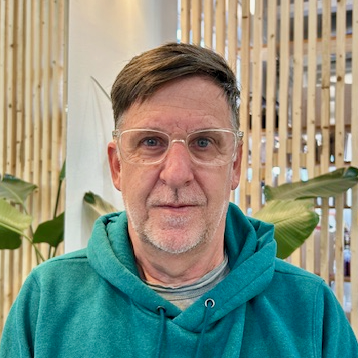
Rod Sanders moved to Bentonville in 1973 as a 9 year when his parents wanted to move he and his brother from southern California to farm life
He graduated BHS in 1982 and graduated with BA in theology from JBU in 1986
Spent two years in Fort Worth in graduate school and came back to Bentonville in 1988 to start working in the family business
Blessed to get to be apart of his family business for 35 plus years.
Serving the Bentonville community in Chamber of Commerce Board, various positions in the City of Bentonville from City Council, Board of Adjustments, and Planning Commission. Been a member of Fellowship Bible Church for 35 years.
Works with his son who runs the family business and has a daughter in Chicago and youngest son at JBU
about Chris Rechtsteiner.
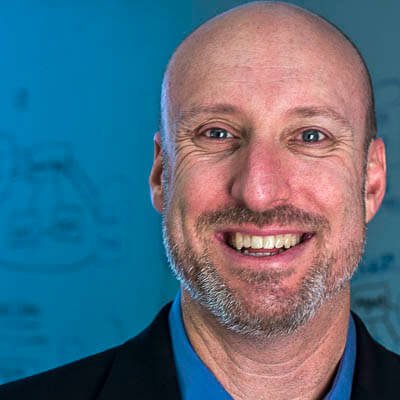
Meet Chris Rechtsteiner (Professional / Personal / Strava) - a marketing expert with decades of experience in launching and scaling technology companies. But that's not, really, important. Above all, he proudly wears the hats of husband, father, son, brother, and friend. In fact, this picture may be the only one of him without a hat on.
Chris's world revolves not just around pixels and campaigns, but also pedals and trails. An avid cyclist, he finds joy in exploring the world on two wheels. His passion for cycling mirrors his approach to life: persistent, adventurous, and always ready to tackle a new challenge.
In 2023, Chris and his wife Christi embarked on a new adventure, relocating to Bella Vista, AR. They were greeted not just with endless natural beauty, but with the warmth of an amazing community. All of this, and the trails and kayaking in their backyard, have left them both awe-struck.
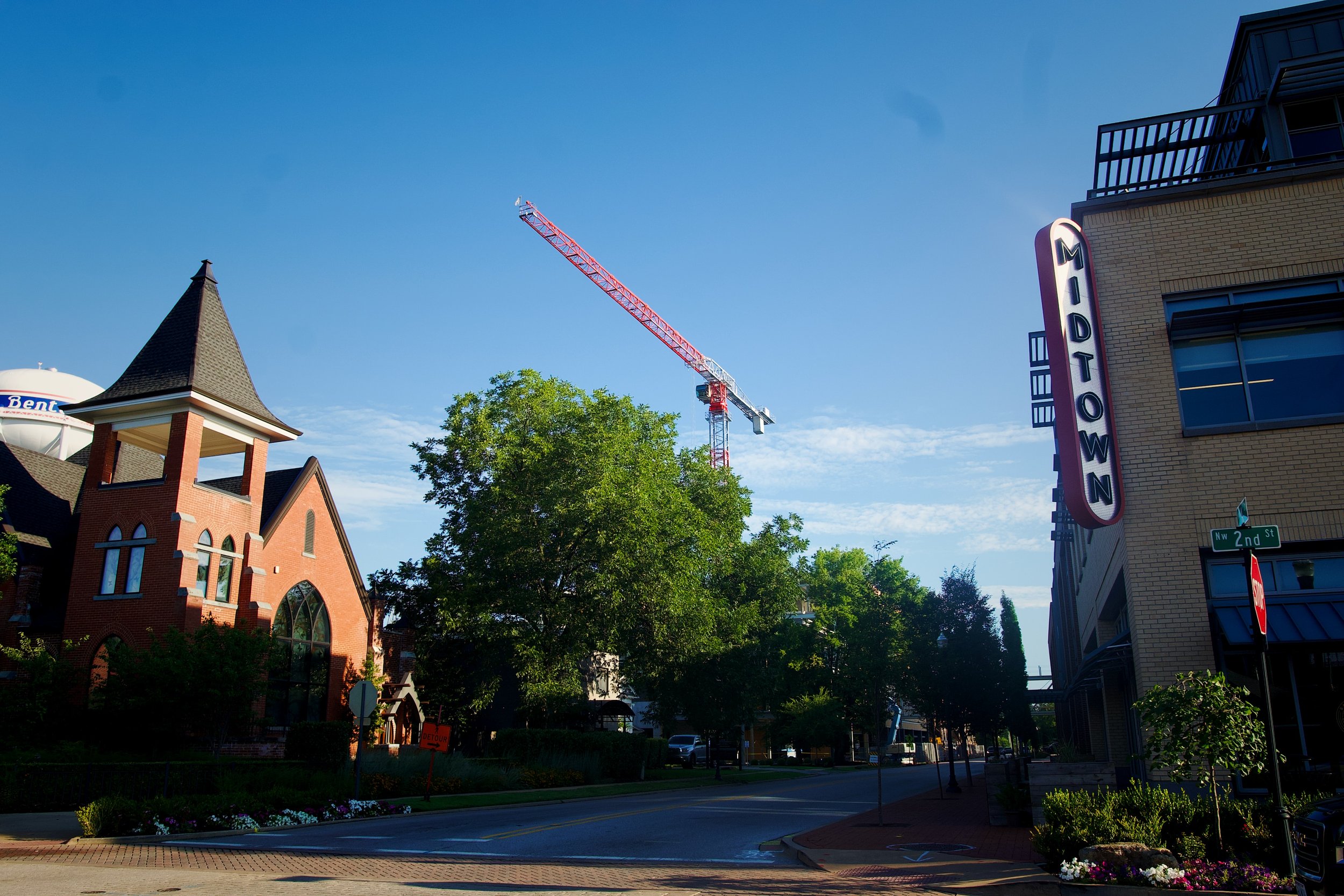
Midtown Bentonville, Arkansas - Photo by Brad on Unsplash [/caption]
route.
For this route, we're going to start again at Airship Coffee on Northwest A Street in Bentonville. You're going to head west down Punkin Hallow Road, enjoy that descent, and that's going to wrap you back around to Short Road, which, in my opinion, was one of the greatest little hidden gravel roads in Bentonville; however, progress has reached it and its days are numbered.
You're going wrap right around the western side of the Bentonville City limits and then come back to the east as it makes its way down this great descent on the backside of Coler Mountain Bike Preserve before going through the heart of the Coler Mountain Bike Preserve where you'll pass airship and get a chance to see all the incredible trails.
You'll follow that to Southwest 8th street where you'll head South back through Osage Park and then back north through Bentonville, where you'll pass 8th Street Market. You can stop and have a beer at Bike Rack Brewing (you're welcome).
You'll go past the Meteor, past the Ledger...take a minute & ride to the top, past the Bentonville City Square, and then you'll wrap yourself back around past Crystal Bridges, down Tiger Boulevard, up Northeast A Street, and then you'll finish back at Airship Coffee.
This route is about 26 miles. Take it slow. It is a great overview of all the great things that Bentonville has to offer.
music.
Loan Social. This is a duo based out of Arkansas, Jacob Evans and Cooper Clark who have a unique sound, and we hope you'll really enjoy the work that they're doing.
We love featuring local musicians and their single "Slow it Down" is something good.
episode notes & references.
Rogers Planning Commission Website
Springdale Planning Commission Website
Fayetteville Planning Commission Website
Siloam Springs Planning Commission Website
episode transcript.
episode introduction.
[00:00:00] rod sanders.: I just want to go back to that one thought there's always room for one more and we never close the door. we can never those, those are two things that we just can never do. And we, when we do that and get that thought, I mean, you can, you can almost turn the lights out when you see communities do that.
introduction comments.
[00:00:56] mike.: You're listening to the underview, an exploration of the shaping of our place. My name is Mike Rusch. Today. We are taking another step closer to how our place is being shaped by looking at how decisions are made within the cities.
Today, we're releasing two episodes to give two different perspectives from two different cities and two different types of roles. I would encourage you to listen to both of these, because they will really show you how these different perspectives are helping to form the uniqueness of Northwest Arkansas.
In this episode, I focus on my hometown of Bentonville, Arkansas. To do this. I am first meeting with Rod Sanders who has been on the Bentonville Planning Commission for the past 10 years. I could argue that there hasn't been much happen in Bentonville in the last 10 years that hasn't first passed through the planning commission and had rods eyes on it.
The planning commission's key role is incredibly important. Because this is where in coordination with the city. The land use plan is created, overseen, and where requests for changes are made.
Ultimately the planning commission makes a recommendation to the city council for approval. However this and the city planning department is the "war room" of where the work is done.
And the other episode released this week, I visit the city of Fayetteville.
I have the privilege to sit with Jonathan Curth, who serves as the director of development services for the city of Fayetteville. Jonathan oversees the city's development services as a part of the city staff. He's worked with the city for the past seven years.
And just to reminder, this discussion. It's not about zoning as some technical government detail. But this is a discussion about how we create communities that include or exclude people.
Long before you see our neighborhoods and communities change. This is where it all begins.
And there's some bonus content that I've included in this episode, I invited a new friend, a new resonance Northwest Arkansas on a bike ride. Together, Chris Rechtsteiner and I dig into what brought Chris and his family here to Northwest Arkansas and what his experience has been this first year.
You'll see the connection as we move through this episode and together, I think we can gain some key understanding of how our community is shaped and how someone who's new to the area sees things.
Time is precious today, so let's jump in with both feet.
episode.
[00:03:05] mike.: Rod. Good morning.
[00:03:06] rod sanders.: Morning.
[00:03:07] mike.: Thanks for being here with me. I appreciate it. , yeah, we'll, we'll kind of dive right in. I, I'd love to start just with your background, kind of how long you've been here in Bentonville. How'd you get here?
[00:03:17] rod sanders.: So I moved here in 1973. My parents were originally Okies. And they moved to California in the fifties and the early seventies, I think they just wanted to get their two boys out on, land, get a, get a horse, get move out of the bustling of Southern California. So Northwest Arkansas was the number two best place to live in the United States in 1973, so they had to get that out of a world book.
So this was it, and of course they had their Oklahoma. roots and connections. So we, we ventured out here in the summer of 72, found a place, and then moved here in 73.
[00:03:55] mike.: So this has been home?
[00:03:56] rod sanders.: Yeah. Went, went to, Went two years away to graduate school in, in Fort Worth, but just, wanted to come back to Bentonville. Actually, I really wanted to come back just because, Fellowship Bible had started and just, just knew that was, what I wanted to be a part of. And then I just loved the, the, what, what I'd learned that, your, what you do, your job is also your, your ministry. It's your, you don't, this is the idea where you can work in your vocation and, make a difference and impact people and build relationships.
So I just wanted to be a, a part of that. So. family business was calling and had something I really wanted to be a part of.
[00:04:34] mike.: And, I assume you're not going anywhere.
No. This is, this is home, huh?
[00:04:40] rod sanders.: This is home. I have my, I have my burial plot bought. So you do really?
[00:04:44] mike.: Yeah. Yeah. So could you, that's a little bit of a morbid topic, but tell me what is it?
[00:04:48] rod sanders.: Yeah, so my, when my grandparents moved here and they passed, my parents just bought plots for all of us, out there at the Bentonville Cemetery.
So I've got it, they, I've bought how many ever spots for my brother and I, and my mom and dad and my grandparents.
[00:05:03] mike.: To me, I, I've never had a conversation where someone had kind of. Maybe knows that this is, this is home. This is permanence. This is where, I guess, eternally, the Rod that we know is going to be.
What does that mean to you? I mean, I guess we'll go deep real quick, but that seems to be like a really, Oh, I don't even, gosh, I don't even know how to find the words now at this point, but like As you think about your place and your permanence here, how do you think about that?
, one thing I appreciate, I don't know who I give credit for, but the thought is there's always room for one more. So, my place and permanence means as much. Equal to the person that moves here tomorrow and they move in and they start with Walmart or a vendor and they're in the community.
[00:05:49] rod sanders.: So they're as much of a place in permanence as I am being here since 73. So, when I see someone come in, I don't, I'll go to a meeting and, you hear, I've been here this long and this long, that length doesn't give me any standing or anything. I just, this is where I've chose to live.
And so I know I want to continue living here. but I also respect and appreciate the new people just as much as, how long I've been here. So I don't know if that's an angle of thought.
[00:06:22] mike.: No, I think it's key. I mean, frankly, sometimes for people that have been here for a long time, that's not necessarily their perspective.
[00:06:29] rod sanders.: We're not going to close the doors. We don't get here and We deal with that a lot in zoning. People will get what they want and, hey, we don't want to do anything else. you gotta, we gotta always, we're always changing and moving and, and growing. So we gotta, that next person is important to us.
[00:06:47] mike.: whAt does Bentonville mean to you?
[00:06:49] rod sanders.: Oh, wow. I guess home, just it's a place of belonging, just community, long time friendships, relationships, great place to raise a family. it's just a, it's a culture of, I guess of a, using a modern day word of inclusion that you can, come as you are.
And, you're going to be accepted. you're going to be able to, work and be able to, be successful. it's a, it's a hardworking community. So, that's, that's kind of, that's the way I've seen, my community that I've lived in.
[00:07:23] mike.: As you look at where Bentonville was in 1973 and kind of where it's come since then, do you have a way of Summing that up or even getting your head around it?
[00:07:35] rod sanders.: Boy, no. I mean, I'm a, I'm more of a, a lineal or kind of a planner manager type. I don't live 80,000 feet. And so, I mean, those individuals that we, we had some talented people that were, that could live up above in the clouds and dream and get us where we are today. So that's not my strength. Of course, they then had to have individuals that worked hard every day and managed to, make their, make those dreams happen.
So.
[00:08:05] mike.: Right. But you've, you've seen a lot of growth. You've seen a lot of change. You've seen a lot of people come to this community because of. yeah, because of what it is, what it is and what it has been and what it is becoming. what does that mean to you about your place, this place of Bentonville?
[00:08:22] rod sanders.: I've learned something from, we're very fortunate in our community. We have lots of smart people. One person I lean on a lot, like Paul Ester, he's just a very smart individual, understands planning, community, place. And he always, is always saying, people follow energy sources. some people, their personalities, they want to be around the energy. Some people maybe want to be farther away. And Bentonville is just one of those unusual areas that has lots of different energy sources.
We have the, of course, the whole Walmart machine. You have the whole culture of just the nature, the trails, you have the museum, you have just so many things going on, plus all the industries up and down the corridor. So we have so many energy sources that are drawing people in. And that's. That's, that's kind of what is what I think what makes us unique, um, is our, we have a, a really quality of life, an energy source that's worth living nearby.
[00:09:20] mike.: I Love the way you sum that up to energy sources because I, I can see that and you can, you can feel that in many ways. now you've, you've done a lot when you're here in Bentonville and so I know we could probably dig into, into that for a long time.
I'm, I think you have a unique role within our community as being a member of the Bentonville Planning Commission. can you just, for people who may not be familiar with how that works, explain a little bit. What is the role of the Planning Commission? What is your role? How long have you been on that, on that committee?
[00:09:48] rod sanders.: I've been on the Planning Commission for going on about 10 years now. So the Planning Commission makes recommendations to the City Council. And they're making recommendations in regards to either rezoning changes or land use changes. And of course, then after that, working also with, the properties are being developed as a large scale or the built ups are being worked through.
But the big, what really Catches people as a rezoning change when something that they're used to nearby them changes and there could be that could be a scary, all of a sudden something's nearby that they're not used to. So , all the rezoning requests come through the planning commission, but we're, we're, the individuals that are the real.
That are have the final say on it's the city council. So we're just trying to make recommendations, shepherd and steward, good recommendations to them. So I think everybody's sitting in our chair. We know our place and understand, what we're, what our role is and what we're trying to, to shepherd and what we're trying to move through.
Sometimes you're not, sometimes we can't, sometimes we can just according to how consistent the. Request is in regards to the land use plan.
[00:10:55] mike.: What's the vision behind or the purpose behind the land use plan?
[00:10:58] rod sanders.: Yeah, the land use plan was updated in, 18. And it was updated in, I think, about like a month or two later after it was updated, then the Walmart Home Office announcement was made. And it literally turned that whole plan, which was a good plan, it just turned it upside down on its ear.
So, because all of a sudden you had an area that was Maybe had a different use. Now it's the energy of the Walmart home office. So you literally had to rethink all that around it. So you had a land use plan that just. It's actually needed to be, I mean, it's being redone and we looked at now, but it kind of got, it kind of got turned up on its side, almost immediately after it got, it got approved, which was no fault of, of anyone's timing.
[00:11:45] mike.: Well sure, because the, I mean, correct me if I'm wrong, the land use plan is a, is a guide. It's a, here where we are today, this is how we feel. as a community, that the, that the planning commission is leading, how we feel, our city should be, should be planned or how our land should be used. Is that right?
Fair assessment.
[00:12:03] rod sanders.: Right. So yeah, you planned it. Then all of a sudden you have a, a new, energy source, a home office. So where you may have planned maybe some more low density that is, you're not going to have a low density area right next to a, a major commercial, So it just, it changed a lot of neighborhoods.
we, we realized, a lot of it, I think we need to make the, the downtown even maybe more dense. it's, it's, so that's really important. so that's, I know that's a lot of times that's, that stretches individuals, but you're.
[00:12:36] mike.: Well, it's a, it's a living, I guess my point or my question would be, it feels like a. A living, breathing document to kind of guide what the collective community is trying to move forward towards.
[00:12:48] rod sanders.: You're trying to give, you've got two things going on. You have the developers, the investors, the individuals that are coming in and investing in our community. putting their capital and putting their money to work and they, it's a lot of fair certainty is the term that, we're used to it, the general public, but see your land use plan is so developer or someone can look at that and say, okay, I'm, I know I'm fairly certain that this is, this is what's allowed in this plan.
This is what we can do. So we're trying to, to give that fair certainty, both to the individuals that are going to be developing and building, but also to the, when the individual comes in and buys in our community, buys a home, they know, okay, this is what's around me, this is what the plan says.
So they have fair certainty that they know what's going to happen around them. So you're trying to give that comfort level of fair certainty to both your present community that lives here and your people that are going to be coming in and developing.
[00:13:44] mike.: And that's probably easy all the time.
[00:13:46] rod sanders.: No, that's really hard.
No, it's really, yeah, because you have, the frustrating thing is we have individuals that will come in and that's the only time they'll come in maybe on that rezoning request. So they don't, we know this because we do this every day. So just trying to be, try to be a group that they feel like we're a kind, welcoming, listening, but also there's got to be, rules.
There's got to be standards. There's, we are following the legal, it's a, we have, yeah a city attorney that's right there that's making sure we're doing this correct. So you're trying to answer people's questions and make sure they're taken care of, but this is also individual's land that they have a right to develop and fair certainty.
So you're, you're trying to just follow all that and try to have people, they feel like they've been listened to or heard or taken care of or treated right.
[00:14:35] mike.: As you look forward towards this next iteration of the land use plan, what do you see as the, maybe the opportunities, the challenges, what, what becomes easy, what becomes difficult?
[00:14:47] rod sanders.: well, we're getting ready to start on that, and I, I really don't, I'm, I'm walking into it kind of, I don't really have a, what's the word, a, the, the company that we're using. I feel like the, Staff's done a great job finding a new, new group to help us guide us through that. So I don't really have preconceived because I feel like I need to go into it listening to what they, their thoughts.
So I really don't, have preconceived, well this area needs to be this or that. So then see what they recommend so that way they may have a fresh new look. We do know, I mean, around the Walmart home office, there's, there's gonna have to be commercial nodes and corridors all around, all four corners. we're gonna see that.
I mean, we're gonna have a new energy source at the old Walmart home office. That's gonna be exciting. And so that's going to change the Walton corridor, up and down South and North Walton Boulevard. So there's gonna be you know, that's gonna have to How you plan around that and then of course you have , what's going on around the I Street corridor And so that's a whole nother area.
And then the 12 corridor. So you've got lots of areas that you just need to, you need to, you need to think ahead in regards to how, how this needs to be planned out. So I think we've got a good group that's going to guide us through this.
[00:16:05] mike.: Yeah,
I guess the It's a good problem to have and that there's a lot of people that are interested in investing and developing and forming and shaping Bentonville.
it has been, there's been a lot of energy for a very long time. have, have you seen that energy change or shift or become more focused or what has that evolved to look like over the past? I
[00:16:25] rod sanders.: don't, I don't, it's just increased. So more, more, we have lots of energy sources. You've got, you can start from crystal bridges.
You can even start from the North Bentonville trails and you can go into downtown Bentonville. Then you can then move over to the market district. You move to the home office. You can move to the momentary. You can then go up and down. there's what's, what's happened. The community college. So all those have increased.
So you've added the I street corridor. So we have where we've had maybe one or two really economic engines. We have probably, 15 or 20 economic engines that are, are, that are causing people to want to come develop and, and, and live by and, and have their business and have their, kind of have their, their live their life near that.
So,
[00:17:09] mike.: As you, to, to your point, as you put, as you work through the land use plan, or even as people come and they're seeking, to, to do development, or zoning changes, or just accepting the zoning that's there, what, what do you hear from people that may be like a consistent theme, from your opinion, that's not quantifiable, but, of, wants, or needs, or questions, or certainties, or uncertainties?
Do you hear any common themes that may be running through the Planning Commission's ears?
[00:17:40] rod sanders.: Sometimes, in some of those, a lot of it's just, comfort level, and a lot of times you hear, we hear a lot of fear, people not knowing what's going to happen around them, and just the fear of the unknown, what's going to happen.
So we hear, probably the, what's the worst of, of, people's, Worries and thoughts of what could happen. So we have to be able to, parcel that out. And look at, that's not, that can't be our lens. We have to listen, we have to hear, but that's, So that's, that is maybe one weakness.
As a community, we gotta do a good job of, incorporating people living around us. And that, the front door next to us is good. Several front doors next to us. Those are new neighbors. Those are new relationships and those aren't bad, it's, you just, you, you, you hear a lot of things that you, people just probably in their rawness and their fear, they say that you just have to just kind of, just have to understand that where they're coming from.
[00:18:42] mike.: That's super interesting. And I, not from a, not from a position of What are people's fears, but like we're I think where we are trying to understand is It's really the themes that are kind of the, these undercurrents that may be impacting how we think about our communities, how we think about our neighborhoods that sometimes we're not even self aware of, right?
So, to that point, as you listen to the community, I think your point is really good in that you're listening, you want to be attentive to what people are saying. the, the, the kind of hypothesis is that within a community, within a neighborhood, a sense of place, a sense of community becomes established over time.
But when something that seems to be disconnected from that community presents itself, it can become very apparent. And so as you think about how communities are formed or things that you're hearing from people,. Can you, can you dig back into that a little bit more?
[00:19:36] rod sanders.: It's, it's interesting. I had, I heard the staff, they went to a conference , they were talking about land use and planning and public hearings. And they said some of the best public hearings really would be that if the neighbors weren't even there, if it was people that were maybe blocks and blocks away that didn't live there because people just out of living in there, they may not have.
they may not understand really, hey, this is what's the highest and best uses is what's going to work. And so you, you have to, it's kind of almost zoning is almost a lot like parenting. Cause a lot of times you do what's best for your, for your children, they may not like it, but you know, in the long run day, this is what's really good.
And if you've got, we have a good planning staff, we have got probably the best staff we've ever had. So they make good recommendations. They're looking at, that, that, an area or a neighborhood, is, has got, those are offering goods and services and things that are going to. allow people to be able to stay right there in their neighborhood instead of having to go get in a car or drive.
So, you're, you're trying to do what's best for people even though they may not know it.
[00:20:38] mike.: Within the spirit of the planning commission, when you have neighbors that come in, and just cards on the table, we had one of these kind of situations in our neighborhood, which was very, very revealing to me. So I'm really curious how this kind of thing perpetuates itself around the city.
But like. When you think about people and their engagement with each other as a part of the planning process, as a part of the dream for our community component, how do you see that happening? Where is it working well? Where is it maybe not working?
[00:21:06] rod sanders.: Well, it's just, again, the only people are going to ever come in with us is if something's happened nearby them.
Then after it's done, they'll never maybe even come back ever again. So it's hard to really, educate people to understand whenever it's just a maybe it's a one off situation where that's, they had that rezoning request, something happens with it, yes or no, and then they may never ever come back again.
So it's really hard. That's why you've got to, we have to be. have a good plan, have a, know, have a good understanding of what are the rights and the wrongs. Like, we didn't delve deep into that one, but, the individuals were bringing up the schools. Well, when regards to your rezoning, schools have nothing to do with a rezoning request, whether a school is overcrowded, undercrowded, or whatever.
It's what's the highest and best use for that piece of land. Traffic and whether there's cars that are up and down that street every day at three o'clock because there's a school that doesn't, have anything to do with that rezoning request. We didn't delve into that because we knew that request was a little bit Too far of an ask.
So we just, I didn't, we didn't, didn't, didn't get into those weeds at that time. It wasn't the right time to, I imagine that property will come back and there'll be something that's maybe more consistent with the neighborhood that'll be more of a, of a, of a better fit. but when that, those, those, a lot of those Those concerns, those won't, those aren't really a part of the request.
Those individuals that own that land, they have the right to be able to develop it. And whether that there's a, overcrowding, undercrowding in schools that doesn't have anything to do with it. So that we, we know that we're, we're taught that we're. We're given those, those parameters all the time.
Crime has nothing to do whether there could be potential over that has nothing to do with resume request. I mean, that could happen anytime, any place. So, we're not, the fear of that is not a part of it. So we're given lots of good training and parameters on how to think.
[00:23:07] mike.: That's, that's an education for me, shame on me for not knowing that. But, just the parameters of how you decide around land use is really, I'm sure you probably become in some people's idea, maybe they're kind of their last hope for saving their community or for pushing forward a new project or a new idea.
and so I think that's a really important education piece. I live in the city of Bentonville, love this place. what is your recommendation to people who live here about being involved in either the planning process? Obviously, you can't have the whole city show up at one time to a planning commission meeting, but what does good citizenship look like?
What does good participation look like to help in this process?
[00:23:48] rod sanders.: Oh, I don't know. I feel like just having that lens that there's always room for one more and that I can comfortably live around somebody that's different than me and that I'm welcoming to that and I, I'm gonna, be a good neighbor.
I purposely live in an area where there's all different shapes and sizes and looks of houses around me. And I like that. I want to, have that type of community. and that's the way I choose to live. So,
[00:24:18] mike.: you mentioned that really you're making recommendations to the city council.
what does that process look like?
[00:24:23] rod sanders.: Well, so, so our decision's not final. I mean, the city council's, I'm always saying, they are the boss of the land use plan. So, it's really their plan. So, we're just making a recommendation. They're the ones that really have to vote on it. So, we're there just to help serve them, give them thoughts and ideas.
They do a good job if there's one that's a little bit more edgy, they'll they'll ask questions to reach out. So they do a good job of looking at the map and making good decisions. So all we're doing is just Making recommendations. We make it easy for them a lot of times when we send them a seven, O recommendation.
That's, that's pretty, that's pretty, that's pretty easy. maybe when it's four, three, it may be a little bit where they have to kind of look at it a little bit. More kind of understand why, why the closeness, but most of the time we're sending, because of the quality of the staff, we're sending 7 0 recommendations to them.
So that makes sense their decision making a little easier
[00:25:20] mike.: when you like look at the challenges maybe for the next five years, what, you said maybe a need for housing, for example, not to, not to lead you, but like what, are those things that the city.
People of the city need to really be thinking about for the next five or 10 years.
[00:25:34] rod sanders.: Well, I think the council and mayor and the doing my understanding, the workforce housing initiative, and understanding that we individuals that are, maybe the pouring your coffee, helping, work in maybe your, grocery stores, those individuals, we need to be able to have all different types of housing, opportunities, pricing, so that individuals could live right here.
They don't have to live 30 minutes away. So making sure that we're providing, different,Price ranges of housing. It's just we just can't have everything high end expensive right here. That's just not that's not that's not healthy. so being able to have that, being able to take care of that missing middle, and be able to focused on that.
I think we're doing a good job at putting out allowing that to happen. And a lot of the individuals that are the, that are the core, and people have been involved. I mean, I really feel like I give Tom & Stewart a lot of credit that that's been a real focus in their endeavors to leading out and that to make sure that we do have, that we do have that type of housing.
That's been our whole focus in our business, our whole years. I mean, that we've operated in the downtown area, we've just served the missing middle. I mean, that's just been our, how our family business has been about. That was what my, my mom's passion. So we just have just, we just made sure I've kind of honored that and kept that going.
[00:27:02] mike.: Unfortunately, sometimes people who aren't as familiar with Bentonville don't understand that there is a desire for making sure that it is inclusive for all kinds of different people.
so it's great to, I appreciate that perspective. I, I've always felt that, but to hear, hear that articulated, I think is really affirming.
[00:27:18] rod sanders.: Yeah. And then on our end is the zoning. We don't look at, if it's something high density, we don't, we're not looking at the cost, what that's going to rent.
It's just, hey, that's high density. So planning commission, we don't, we don't look at, we, we want those type of things, but that's not, well, I'm going to vote for that high density because I know that's going to maybe be more workforce. No, that's not a, that's not the lens. Is it need to be high density or not?
It could be. you, so we have to even have, take those, those, those glasses off and just look at what's the highest and best use, what's, what's the, what's the best density here.
[00:27:53] mike.: Do you have any projects that are kind of top of mind that you're like, I'm really excited about this.
This really is what Bentonville is
[00:27:58] rod sanders.: about.
Oh, I'm, I can't wait to see what happens on the, where the old home office is and what comes in there. I think, I'm also excited about the old Bates, the old property on North Walton there on where the Bates Hospital was. I think we've just approved that. That's going to be, I think, really good for Bentonville.
I would just like to fast forward and get the home office built. And get those couple of those projects, those doors that we've got, maybe that are, that are on the, that are in the, in the pipeline, get them built and just see what we're going to look like maybe 28 with those doors being filled, those more front doors here.
Just the type of community, instead of just seeing so many cranes, we've actually, they're built and there are people here. it's, it'll be, it'll be, I'm kind of excited to see what's going to happen there. I'd say, I'd say the old home offices is, would be my number one, what it looks like.
[00:28:54] mike.: okay. Well, we may have to save that one for, for another one.
when you think about Bentonville and you think about maybe different pockets of communities within Bentonville, what do you see emerging as the, do you see Bentonville as like little pockets of different cultural epicenters?
You mentioned energy sources, which I love that term. How do you see the diversity within Bentonville kind of forming and shaping?
[00:29:18] rod sanders.: Well, I, yeah, I think, the neighborhood that I love the most. is the area, I guess, the market district just right off the home office around the Southeast C. That's, that area, I think, has done the best mixing your single family and then also your higher density. That's going to be, that's got such a neat feel to it. That's already got your your goods and services, your coffee. Now I think where you and I live is what's Where we live on the Northwest part around maybe the 5th Street. We've got lots of opportunities. We just had a coffee shop put in on a that was and that was good planning And that wasn't that just made sense.
That was a old Head Start Building that was that was good That was good planning. It made sense for that to be there. We need a lot more of those, I think the northwest has got the, a lot of our corners need to be maybe more higher density. a lot of our, we need a lot of A lot of our nodes need to be, I mean, rethink those and allow, maybe for your neighborhood, your good services, more coffee shops, more what, I mean, you could even, where, where would a hotel go near, maybe on North Walton, that's just walking distance.
So we've got, I think our, our area has got, is ripe for some really good, fresh thoughts.
[00:30:36] mike.: There's definitely a lot of moving parts. I can't imagine trying to wade through all of those, but I'm thankful to have someone who's, yeah, to, to your point, may, may not be more important than the new person coming in, but who has a long term perspective of what, of what this community has been and where it's going and can help guide and provide wisdom in that space.
When you think about kind of the future, and new people coming to this community. What do you think, their, desires are as you see kind of the Planning Commission moving forward with the requests that are coming to you? What kind of place are we creating for new residents?
[00:31:12] rod sanders.: Well, most people are coming here because the, the work and, a lot of individuals, we are very, It's just, we get a, I don't know how many jobs you've had.
I've worked at one job for 30 something years. I am, I'm, I'm a lifer, but, our, our children or our grandchildren, I've got friends that their kids have had four jobs . So we're going to have individuals are going to come in here for a couple of years and be gone.
So there's no, someone that's going to come in here and just be the lifers is just not how. Someone can start with Walmart, they can be with Amazon, they can move to Target, they can go to the consumer goods. I mean, they can just be all over the United States. So, I don't think we have individuals, the percentages are more people that are going to be more transient, or more, different experiences, different, different, maybe hopping, job hopping and that.
So, the ones like, that look like you and me that are going to be here and stay here for years, that's probably not the, that's not the norm.
[00:32:10] mike.: How do you balance that out?
[00:32:11] rod sanders.: I think there's where I give, I just, I just want to, We are just very fortunate that,that we have, that just, that we have, What Tom and Stuart do is just focusing on providing quality of life for the, for the individuals, for the, for the, I guess the Walmart energy source, ,and that when those individuals come here to work and that they're, they have a quality of life in regards to trails, outdoors, way to live and, parks in the green space and the open space and that, wow, I want to come here because of this.
But we have individuals that have chosen to come here and invest in that for us. And, give us that. And that's just weird. Just so blessed and so fortunate just to be able to have that. And sometimes we don't appreciate that enough or give them enough credit for coming in and helping, make, the, this whole economic engine work.
So that's,
[00:33:09] mike.: What, this may sound like an interesting or a weird question, but like I've been asking this to everyone we've been talking to and just, it's really the question is like, what is your, what are your fears for this place?
[00:33:21] rod sanders.: My number one fear is, the thing I hate hearing most in a meeting, and I understand, they're coming out of fear, is Every once in a while someone will say, I don't want those people around me. And, who are those people? Those people, I mean, I don't know who they're talking about, but that is not, that's not a lens we need to live by.
Those people could be my niece, my children, could be your children, could be my, I mean, I just, those are all our, those are somebody's relatives. Who is that? And that is not a good That's not a lens that you need to, to live by, and I, that's, that's probably, I think if I have one thing I like hearing the least, because that's not good zoning, that's not good planning, make this, so that we hear that and that's just probably not the.
I think about the only time anybody's ever been interrupted in a public hearing is when, someone was saying, well, if this is built, there will be crime. And I think there was the city attorney, myself, and someone else saying, hey, no timeout. That's not, that's not, that's not correct. You can't sit there and do that.
So there's that fear that is probably, we gotta, we gotta, we gotta somehow be able to process and kind of work through that understand that the change or some use is not going to cause that
[00:34:39] mike.: Well, I'm biased. It's incredibly affirming to hear you hear you say that that that's a Yeah, it's on the top of your mind as far as as you think about Decisions and recommendations around how the city continues to form and shape so that Thank you.
[00:34:56] rod sanders.: Yeah for sure
[00:34:57] mike.: we use this word
wholeness, what does community wholeness look like? And, I think you see, that's my assumption, you see, making, recommendations and plans for where people live and where they eat and where they shop and where they work and how people move through cities potentially and how that relates to each other.
What is your hope, or do you have like a definition, if I could use that word, of what wholeness may look like in that space?
[00:35:24] rod sanders.: Yeah, I, I, I look at, it's where individuals, whatever the size of our front door is, where there were a front door that has maybe so many, different, larger number of square foot or smaller that all the different front doors can live well together and that I just don't have to have all cookie cutter 2, 000 square foot front doors right near me, I can have, I can have front doors that maybe have 600 square feet or smaller that all of our, all of our front doors can live well together and that we don't have to all look alike.
Or be the, be that same. That's, that's just, I don't think that's, that's healthy. I don't think that's good planning. so I'd, that'd probably be my, my number one.
[00:36:13] mike.: I love that. Yeah.
so maybe I'll, we'll kind of maybe start to wrap it up a little bit here. But I want to kind of go back to where maybe we started a little bit in that.
You know ask you what does Bentonville mean to you and when you think about what what makes Bentonville home What what do you that could be for you or what would you hope for everyone here that you can say this is what Benton. This is what makes Bentonville home.
[00:36:34] rod sanders.: Okay, you'll laugh. This is kind of in some respects this may be real close to home to you. I remember You know, your father in law making the comment and how, who, how your wife is named that I guess Corrie Tim Boone was flying over and I tell the story all the time. so, I guess flying over area to look down, I guess, over Northwest Arkansas and said, this is like a special place.
And I think we are a unique to special place. It is very blessed that we have. And, I think we, we, we've got that. We've got that. This is an area, we have four seasons, we have hills, we have, we have the Ozarks, we have just, we have rivers, we have lakes, and, we just have, we just, we're in just a very unique, blessed area that has just got a special feel to it.
And, we, we just don't want to, we don't want to mess that up by number one, closing the doors. We don't want to do that. Always room for one more, but doing it in a good, well planned way, trying to answer your question.
[00:37:36] mike.: I think you did.
[00:37:37] rod sanders.: Yeah. So that's, that's kind of what I, that's what I see. because a lot of times you see people, I know that when people come in here kicking and screaming, not ever wanting to, why am I having to move here?
Why am I having to move here? And they get here and then can't ever get them to leave because they realize that, wow, this is a, this is a great place to live. And I think that story has been repeatedly told, over and over where, they, they're now here for, for life.
[00:38:04] mike.: So it's true. Yeah. All right.
One more question for you. yeah. What, what, anything that you would want people listening that live in this community live in this region? What would you want them to know? Is there anything that, maybe I've not asked or anything burning within you that you're like, this is really important that we didn't cover.
[00:38:23] rod sanders.: I just want to go back to that one thought there's always room for one more and we never close the door. we can never those, those are two things that we just can never do. And we, when we do that and get that thought, I mean, you can, you can almost turn the lights out when you see communities do that.
So I, I just, I go back to that. and that my thought being here a lifer is not more than a thought of a person that's been here a week that their thoughts are just as valuable and just as important. So, I just, we gotta, I just, you go back to the, remember A, and if you forget A, go back to A, and that, that's, that is back to the, there's always room for one more, and we never close the door.
We're always, we're always thinking that way, so I would just go back to, I always go back to that. I just never leave that thought. So it's kind of.
[00:39:10] mike.: Well, Rod, thank you very much for the work that you do on behalf of the city, for, for me, for my family who lives here. thank you for your perspective and as you walk through our community and, help guide and shape what this place has been and has become and is becoming.
And so thank you. Thank you for that. It's great to sit and chat
with you.
[00:39:28] rod sanders.: Yeah,
[00:39:28] mike.: I appreciate it. All right. Take care. Thanks.
[00:39:30] rod sanders.: Yeah.
episode comments.
[00:39:30] rod sanders.: It was great to talk to Rod, and for the second part of this episode, we're going to jump right in with Chris Reichsteiner. He's a new resident to Northwest Arkansas, and this time we're on a bike ride.
interview with Chris Rechtsteiner.
[00:39:41] mike.: Chris, thanks for, thanks for going on a ride with me today.
[00:39:44] chris rechsteiner.: Thank you for having me. It's a pleasure to be here as always.
[00:39:47] mike.: Chris, tell me your story.
[00:39:48] chris rechsteiner.: So, moved to Northwest Arkansas in February of 23, and my wife, Christy, and I decided we really wanted to live someplace that was outdoor focused.
Something that we could really invest ourselves in and see ourselves becoming a part of. And at the core of it was it was evident immediately that this was an incredible community that really cared about the things that we cared about. When we were here for Big Sugar in 2022, we stopped at a local place to have a beer.
Started talking to a couple guys sitting at the bar next to us. Within about 20 minutes, They had provided us their phone numbers, offered directions, and tours, and realtor introductions, and just everything we could possibly have wanted to know, they couldn't have been more excited to tell us, and to share.
And their excitement in the community was infectious. And these guys, they're younger than we are, but lived here their whole lives. And have no intention of leaving. And that was really the catalyst. That was the confidence of, here are these people who were the outsiders, right? Who were invading their territory.
And they couldn't have been happier. And it was just so evident that people were really excited about what was happening here. They were really excited about the community and really loved it and wanted to share it. And that's, you know, you see something like that happen, you just kind of shake your head and say, Well, that's not normal, and after you get your head around the fact that this is not normal, you really start to say, well, how do I contribute to it?
How do I become a part of it? And how does something like this change me? And here we are. Everything was in line with exactly what we had experienced, which was incredible warmth and kindness, welcoming, and just couldn't be better. And it was just such an incredible opportunity to be here. And within days of being here, just take off and go for a group ride.
And meet eight people that I've never met before, hang out, get to know them, and just, you know, slowly learn more about the community, learn more about these people, and, you know, now consider them an incredibly, incredibly great friend. Well, so let's,
[00:41:53] mike.: let's back up for a minute. When you and Chrissy decided to move here outside of the warm introduction and the warm people, What was your, you know, what was your understanding of Arkansas?
Okay, now we're climbing and now you have to do all
[00:42:08] chris rechsteiner.: the talking. So, I would say it was hearing of people who had come down to mountain bike in the very, very early stages of Bentonville's trail growth. People coming back and saying, you've got to go back, you've got to go see this. Like, just go ride your bike.
You need to go check this out again. Because you take every bike you've got and there's a place to ride it. And it's awesome. And really, the understanding of it was that you have this amazing natural resource, this beauty that is the state of Arkansas, that most people don't know about, and then you start really diving in, you experience it, you see it, you realize they're actually understating.
What is here? And, you know, it's hard. You can't really talk about this area. We're talking about the presence of Walmart because I mean, it's the biggest company in the world. One of, if not, what do you think that means for a community relative to amenities, infrastructure, jobs, people? That you can't fathom it until you actually come see it and experience it.
It's, I mean, it's truly a, once you see it, you have a chance to experience it. You're like, yeah, I'm good, I'm staying. I think that's why so many people do. From our perspective, it was really a matter of finding a place that we felt could make a positive impact on us. Not that we had to come in and try and change anything.
But a place that we knew and were open and accepting to changing us. And when we saw everything happening here, In the growth, it's like that's going to change us. We can be a part of something very unique and not many people are afforded that opportunity. And we haven't. So, why don't we take it?
[00:44:01] mike.: Well, Chris, we probably, I don't know, we probably have two or three thousand miles of riding together at a minimum, I would assume at this point.
You're probably right. How has the, how's the bike been a part of this process and community?
[00:44:16] chris rechsteiner.: Really sort of Provide the foundation, at least for me, for myself and my sanity, for who I, for who I am and for where I fit, you know, it's a reminder that there's a really big world, and I'm a very small part of it, and it's a very broad and dynamic community and environment that I live in, and I'm a small part of it, but damn it, I get to be a really important small part of it.
By being out there in it and seeing everybody stopping and talking to people, waving to the farmers on the tractors as we saw a few minutes ago, and those types of things don't exist without the bicycle. What it really has come to be for me is that connection, that connection to place and presence. You know, that gets way away from your question about the bicycle, but that's really what it is.
That's how I look at it. And I think that's why I've always loved it, because I've always kind of recognized that, but never been able to articulate it or never been able to really recognize it until I got much older. It's just a vehicle, in that it'll take you wherever you want to go, but it's up to you to realize you're there.
So what's a bicycle? It's that.
[00:45:26] mike.: Chris, you know, there's a lot of history on the roads here. As someone who's newer to the area, but someone who's been I've seen this county and seen this place. Where, yeah, where does your head go when you go through some of these spaces where there is a lot of history? How do you process that?
[00:45:47] chris rechsteiner.: We are, right now, hopping off of a paved road onto a county maintenance road that is part of the Heritage Trail. First time I rode this, I didn't know what the Heritage Trail was. I had an idea. I didn't know what it was, but I had a responsibility to go learn about it, to go look it up, and gain a better understanding of what that is, what it represents today, what it was, what it represented, and how it fits into what we're writing.
Because it doesn't, this doesn't exist on its own. It's all part of something bigger. And that's really kind of how I start to make sense of what's here is by learning about understanding it, not in fact, it's a sign on the road that 99 out of 100 people don't pay any attention to how can I in good conscience ride through here without taking the time to learn more about that and to know that and to know that and understand that history and really to recognize why the area we're in is the area.
Why is it the way it is? Follow me up a rabbit trail for a moment. You got it.
This little spot here is encampment. We're gonna go to the top It's a little random excursion here. Pardon me for this. No, this is great Now Aaron Martin might be able to climb up this on this bike. I can't so don't get too close It's a little it's a little messy here.
Oh goodness. You game to walk for a minute
[00:47:22] mike.: I think we are gonna be walking for it. It's not that far at the top.
[00:47:28] chris rechsteiner.: Well, you can sure feel this place
[00:47:30] mike.: Yeah, so these are the trenches that were dug.
[00:47:33] chris rechsteiner.: They're still here. You know, the one thing I've really learned and experienced being here, there are a lot of places in this bigger place.
You can feel, you can feel it. There's a gravity to
[00:47:49] mike.: it. Yeah, and you know, it's a matter of history. We get to choose what we want to do with it, how we interpret it, how it gets remembered, how that forms and shapes our understanding of this place, and kind of animates us forward. Thanks for humoring me coming up here.
[00:48:07] chris rechtsteiner.: No, this is absolutely worth stopping again. How many dozens of times having ridden past here? And I didn't even know to go up there, but I do know that as more places get wiped away. And paved And homogenized people are desperate to find places where that's not the case. They're desperate to find themselves in places that allow them to be in a different, more holistic way.
And if that continues, I think those types of guides, that type of context is going to become incredibly, incredibly important.
[00:48:50] mike.: What are your fears of this place?
[00:48:52] chris rechsteiner.: That people who are moving here, or people who have lived here, Want it to be what it's not supposed to be. People loved, and to a large degree, many people still do, loved Austin, Texas.
And it just grew and grew and grew and grew and grew. And you talk to people who've been there forever, and they're like, it'll never go back. It'll never be the same. My fear is that you can have too much growth and instead of creating that new development, there's a tremendous amount here already that can support that growth.
Doesn't need to be built that new and will and this is so true of many places will the community recognize that there's a huge amount here already. It can be utilized to support what it wants to be as it grows without having to flatten and pave over. Everything in order to try and achieve that vision.
[00:49:57] mike.: All right, we've got maybe another minute before we start climbing Northeast A Street. And I'm going to lose all ability to talk.
[00:50:06] chris rechsteiner.: You're just going to ask me a question. It went right up the hill.
[00:50:09] mike.: What are your final thoughts, your final words, to people who may be listening and asking the question, What is this place? How do I connect? How do I belong to it?
[00:50:19] chris rechsteiner.: We've had lots of people ask us this, and say, How did you do it? How were you able, at this point in your life, with decades in a place, To just pick up and go the reason why I feel we were able to do it so easily was because we're completely open and cognizant of the fact that whatever place we go was going to change us, we were not going to change it knowing that we were going to change and we were going to evolve as a result of this decision.
Made it exciting and easy. And I think a lot of people are really hesitant or fearful of that. They don't want to change. It's hard. They've done what they do for decades. They don't want to be different. And as we start climbing and you can win, I think that's the key. You have to be willing, ready, willing, and able to embrace that change and embrace that.
Growth and evolution of yourself. And if you're not ready to do that, it doesn't matter where you go. You're not gonna be happy.
[00:51:27] mike.: It's good. It's good work, Chris. All right, while we're at the base of Northeast A, I'm gonna probably wrap it up for today, or at least my ability to talk. Thanks for coming out and riding with me.
[00:51:43] chris rechsteiner.: Thank you for having me out today, Mike. It has been a pleasure.
[00:51:46] mike.: Thanks for being a part of this community. I'm glad this machine underneath us was able to Yeah, bring us together. I look forward to the thousands of miles that we have ahead of us.
[00:51:57] chris rechsteiner.: As do I, and I wouldn't be, wouldn't rather be out riding and enjoying them with anybody else.
[00:52:01] mike.: Well, that's very flattering. Chris, thank you, my friend.
[00:52:05] chris rechsteiner.: Thank you, Mike.
episode comments.
[00:52:08] mike.: Well, a big thank you to both rod and Chris for their time and insights into how the =city is being shaped from the eyes of both a city planner and a person who moved here because of the impact of that planning.
Rod's role with the planning commission interacts directly with the land use plan and how that land use plan changes or is asked to be changed.
The line that he explains on where that role and responsibility begins and ends is actually much more narrow than I had assumed. This "highest and best use of the land" while it is informed is still subjective. And so that requires the community to participate, to read and to speak about how the land use plan or changes to that plan may impact them.
The trend and the lack of civic engagement at the planning meetings creates a scenario where a lot happens. That most people won't find out about it until those decisions are made and some potentially made a very long time ago.
And the January 4th edition of the Northwest Arkansas Democrat Gazette. A request for rezoning was tabled because of procedural issues. However, it was a request to rezone the property and many residents were not in favor of it.
In a recap of the planning commission meeting the Arkansas democratic Gazette said, quote, "residents said they didn't want an out-of-state developer that is out of touch with the area to come and change the landscape of the community. They referenced land alice Walton bought in the area saying that she met with community members, heard their concerns before she used the land." Unquote.
This seems to give us some insight into a couple of things that rod and our previous guest, Megan Brown spoke about.
Number one, the value of a collaborative planning approach by local developers being proactive to ensure that area residents are informed of the plans.
Number two, the fear or the reaction that is present when changes to the land use happens. And the communities aren't informed.
And number three in this comment, it also gives us insight into one of the area's most prominent locals and how that proactive and collaborative approach can be an asset.
And then in Chris's point of view, it's super encouraging and I'm reminded why I've enjoyed the thousands of miles we've ridden together.
He's finding home here. And that reference point began with people who love this place and are being shaped by it. I know Chris's voice only represents one person's point of view about the area, but there are a lot of familiar themes to his comments that can be found with many people new and old to this region. Chris's opening to learning about this place and what has brought us to this point of who we are. It sounds like a sense of place is taking root.
It's not lost on me, that the majority of residents and sometimes very longterm residents who live here. Are not as familiar with the history of this place as they could be, but they're searching for ways to connect. We all have an obligation to listen and learn about what makes this region, what it is today.
In the statistics of approximately 37 people moving here a day, Chris would be included in these statistics, but Chris, he's not a statistic.
He's more than that, and this story matters. Everyone that comes here has a story. And that story must be treated with dignity and respect. His point of view, can't simply be dismissed because he's new to the area. In fact, you heard Rod Sanders speak specifically to this.
Some people here I've learned over time and that gives them a voice. Uh, others here have, and are learning by intentionality. I think there's some things that both can learn about how our place is being formed.
route.
[00:55:24] mike.: Okay, that's enough for me. No one here is paying to hear that onto the bike route. This one is in Bentonville because that's the topic of discussion. For this route.
We're going to start again at Airship coffee on Northwest A street in Bentonville. You're going to head west down Punkin Hollow road, that's Punkin, not pumpkin. Enjoy that descent.
And that's going to wrap back around a Short Road, which in my opinion is one of the greatest hidden gravel roads in Bentonville. However, it looks like progress has reach it and its days are numbered.
You're going to wrap back around on the Western side of the Bentonville city limits and then come back east and make your way down a great dissent on the backside of Coler mountain bike preserve before going back through the heart of Coler Mountain Bike Preserve where you'll pass Airship and get a chance to see all the incredible trails.
You'll follow that to Southwest 8th street. Well, your head back south through Osage Park and then back north through Bentonville. You'll pass 8th Street market and you can stop and have a beer at Bike Rack Brewing. You're welcome. You'll go pass the meteor, pass a ledger, or take a minute and ride to the top. It's worth it.
You'll go past the Bentonville square and then wrap yourself back around a crystal bridges down Tiger Boulevard, Northeast A street, and then you'll finish back at Airship coffee where you started.
This route is about 26 miles.
Take it slow. It really is a great overview of all things that are great about Bentonville.
next episode.
[00:56:33] mike.: For our next episode, we're gonna be talking with someone who is working to find creative solutions to affordable housing. Actually, they're trying to find creative solutions on how to include people in our community.
To do that. It means we have to first truly understand why housing is this challenge. We need to understand what life looks like for a large part of the people of Northwest Arkansas.
So far we've heard from four community leaders talk about the growth of the region and how the region's prosperity is maybe one of the biggest challenges we have because for many in our community, that prosperity remains out of reach.
The reality is that more than 150,000 people in Benton, Madison, and Washington county face financial insecurity, housing instability, and a host of other challenges every single day. These people need tangible, lasting change in our systems that shape our lives. They need someone to fight for that change right now.
So to take us through the issues and potential solutions, we sit down with Jeff Webster. Jeff is the CEO and President of the Excellerate Foundation.
[00:57:33] jeff webster.: ...that's the point here, folks, is you don't realize what's going on in our community.
And these are hardworking people, but they just can't access housing. And you look at far and away the number one thing that people come to us "I'm having trouble paying rent."
It's the single biggest thing someone's going to pay. Where this starts to go is, it just dominates what everyone needs help with. And even for our Board, they're like, well, how is housing a social determinant of health?
But we always say, the first doctor bill and the first copay someone pays is to the landlord. Because, you don't pay that landlord, you're living under a bridge or something.
I'll never ask this question again on why housing is this big dominant part of a healthcare outcome.
[00:58:19] mike.: I can't wait to share that episode with you.
music.
[00:58:21] mike.: So we'll close today with the music of Loan Social. This is a duo based out of Arkansas, Jacob Evans and Cooper Clark who have a unique sound, and we hope you'll really enjoy the work that they're doing. We obviously love featuring local musicians and they're single "Slow it Down" is something that maybe we all need to consider as we work through how we all fit within this community.